In the field of electrical engineering, Current Transformers (CTs) play a crucial role in measuring and monitoring electrical currents. As a well – established current transformer supplier, I’ve had countless interactions with a diverse clientele, from industrial giants to small – scale electrical contractors. Through these exchanges, one query has persistently emerged: "What is the rated current of a Current Transformer?" In this blog post, I aim to demystify this concept in a way that is both clear and relevant, drawing on my years of experience in supplying these essential devices. Current Transformer
Understanding the Basics of Current Transformers
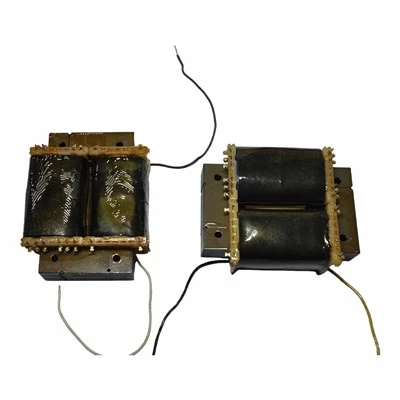
First, let’s briefly recap what a current transformer is. A current transformer is a type of instrument transformer specifically designed to produce an alternating current in its secondary winding that is proportional to the current flowing in its primary winding. This is extremely useful because it allows for the safe measurement of high currents. Instead of having to deal with the potentially dangerous high – current levels directly, electrical engineers and technicians can measure the much lower and safer current in the secondary winding and then calculate the primary current.
Definition of Rated Current
The rated current of a current transformer consists of two parts: the rated primary current and the rated secondary current.
The rated primary current is the value of the current that the current transformer is designed to carry continuously in its primary winding under normal operating conditions. It is a key specification as it determines the range of currents that the CT can accurately measure. For example, in a power distribution network, we might have current transformers with rated primary currents of 100A, 200A, 500A, or even higher values depending on the size of the electrical load and the capacity of the circuit.
When selecting a current transformer, it is vital to choose one whose rated primary current is appropriate for the expected load current. If the load current frequently exceeds the rated primary current, the CT may saturate. Saturation occurs when the magnetic core of the current transformer can no longer provide a linear relationship between the primary and secondary currents. This leads to inaccurate current measurement, potentially causing problems in power monitoring, protection relays not functioning correctly, and other issues in the electrical system.
On the other hand, the rated secondary current is the output current of the current transformer when the primary winding is carrying its rated primary current. The most common value for the rated secondary current is 1A or 5A. In North America, 5A is more prevalent, while in many other parts of the world, 1A is the standard choice. The use of a standardized secondary current simplifies the design of measurement and protection devices. Most ammeters, watt – meters, and protective relays are designed to work with these standard secondary current values.
Factors Affecting the Choice of Rated Current
Several factors influence the selection of the rated current for a current transformer.
-
Load Characteristics: The nature of the electrical load greatly impacts the choice of rated primary current. For example, in a factory with large motors, the load current can vary significantly depending on whether the motors are starting, running at full load, or idling. During motor starting, the inrush current can be several times higher than the normal operating current. In such cases, a CT should be selected with a rated primary current that can handle the peak inrush currents without saturating, while still providing accurate measurements during normal operation.
-
Accuracy Requirements: Different applications have different levels of accuracy requirements for current measurement. In power billing applications, high – accuracy measurements are essential to ensure fair billing for electricity consumption. Therefore, a current transformer with a rated current that closely matches the expected load current is typically chosen to achieve the highest possible accuracy. In some general – purpose monitoring applications, a slightly larger tolerance in accuracy may be acceptable, allowing for a wider choice of rated currents.
-
Circuit Capacity: The capacity of the electrical circuit where the current transformer will be installed is also a critical factor. In a high – capacity power system, a CT with a large rated primary current is necessary to accurately measure the high currents. Conversely, in a low – power circuit, a CT with a smaller rated primary current should be selected to ensure accurate and reliable measurements.
Calculations Involving Rated Current
The relationship between the primary current and the secondary current is determined by the turns ratio of the current transformer. The turns ratio (n) is defined as the ratio of the number of turns in the primary winding ($N_p$) to the number of turns in the secondary winding ($N_s$), i.e., $n=\frac{N_p}{N_s}$.
The relationship between the primary current ($I_p$) and the secondary current ($I_s$) is given by the formula $I_p = n\times I_s$. For example, if a current transformer has a turns ratio of 100:1 and a rated secondary current of 5A, the rated primary current is $I_p=100\times5 = 500A$.
When measuring an unknown primary current, one can measure the secondary current and then use the turns ratio to calculate the primary current. However, it’s important to note that in real – world applications, there may be some errors due to factors such as core losses, leakage inductance, and saturation, especially when the operating conditions deviate from the rated values.
Importance of Correct Rated Current Selection for Our Customers
As a current transformer supplier, I understand the crucial role that the correct rated current selection plays for our customers. When customers choose the right rated current for their CTs, they can enjoy accurate current measurements, reliable operation of their electrical systems, and efficient power management.
For industrial customers, accurate current measurement is essential for process control, equipment protection, and energy management. Incorrectly rated current transformers can lead to inaccurate data, which in turn can cause production delays, equipment damage, and increased energy costs.
In the utility industry, power companies rely on accurate current measurements for power flow analysis, load forecasting, and power system protection. Using CTs with improper rated currents can result in unreliable grid operation, which may lead to power outages and other serious consequences.
Technical Support and Customization
At our company, we don’t just supply standard current transformers. We also offer comprehensive technical support to help our customers choose the most suitable rated currents for their specific applications. Our team of experienced engineers can analyze the electrical characteristics of the customer’s system, including load profiles, accuracy requirements, and circuit capacities. Based on this analysis, we can recommend the optimal rated primary and secondary currents for the current transformers.
In addition, we understand that some customers may have unique requirements that cannot be met by standard CTs. That’s why we offer customization services. We can design and manufacture current transformers with non – standard rated currents to meet the specific needs of our customers. Whether it’s a special – purpose CT for a research project or a custom – designed CT for a unique industrial application, we have the capabilities to deliver high – quality products.
Encouraging Contact for Purchase and Negotiation
If you’re in the market for current transformers and still have questions about rated currents or any other aspects of CT selection, don’t hesitate to reach out to us. Our team is always ready to provide you with detailed information, technical guidance, and competitive quotes. Whether you’re a small – scale electrical contractor working on a local project or a large industrial corporation in need of bulk CTs, we have the products and expertise to meet your needs.
Transformer Contact us today to start a discussion about your current transformer requirements. We look forward to working with you to ensure the efficient and reliable operation of your electrical systems.
References
- "Electrical Power Systems Quality" by Roger C. Dugan, Mark F. McGranaghan, and Surya Santoso.
- "Transformer Engineering: Design, Technology, and Diagnostics" by V. K. Mehta.
- IEEE Standard C57.13 – 2016, "IEEE Standard Requirements for Instrument Transformers".
Dongguan Hensiron Electric Co., Ltd.
As one of the most professional current transformer suppliers in China, we have world-leading production equipment and strong manufacturing capabilities. Please feel free to buy high quality current transformer made in China here from our factory. Customized orders are welcome.
Address: Building 4, Xinxing Industrial Zone, Wangao Road, Wanjiang Street, Dongguan City, China
E-mail: jessica@dghensiron.com
WebSite: https://www.dghensiron.com/
