Hey there, if you’re in the market for stainless steel cold rolled sheets, you already know that thickness deviation is one of those tiny details that can make or break a project. I’ve been supplying these sheets for over a decade, and let me tell you—so many new buyers gloss over this, only to run into headaches later: parts that don’t fit right, inconsistent welds, or even entire batches that get rejected for not meeting specs. Today, I’m breaking down how we (and our clients, once they learn this stuff) actually detect thickness deviation—not just the basic lab test, but the real-world tricks we use daily on the shop floor. No fancy jargon, just what works, straight from a guy who’s handled way too many rolls that came back because of thickness issues. Stainless Steel Cold Rolled Sheet
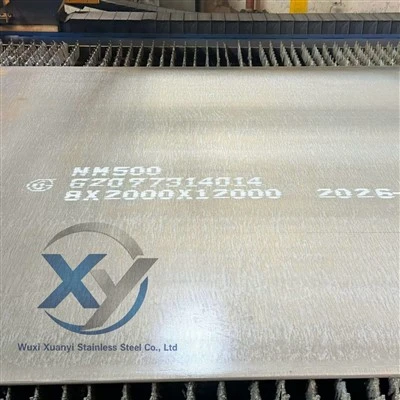
First, let’s cut to why this matters. Cold rolled stainless is made by reheating hot rolled steel, rolling it at room temp to get that tight, smooth finish, and it’s used for everything from automotive trim to food equipment, construction panels, and even medical devices. Every application has a strict thickness tolerance—like, if you’re making a kitchen sink, a deviation of 0.1mm might not sound like much, but it will warp when you bend it, or have thin spots that rust faster. We’ve had a client who ordered 100 sheets for dishwasher doors and got a 0.08mm deviation in one batch; by the time they stamped them, half the parts wouldn’t align, costing them thousands in scrap. So detection isn’t just a quality check—it’s saving you (and us, honestly) from wasted time and money.
Now, the first thing I want to clear up: there’s no one-size-fits-all test. It depends on whether you’re checking a small sample in a lab or inspecting a full truckload of sheets before delivery. Let’s start with the most common method that everyone (and we use it nonstop) uses: digital micrometers. But wait—don’t just grab any old micrometer and measure one spot. Here’s the mistake most people make: they measure the edge of the sheet, right where it’s been cut, or the exact middle, and call it a day. Thickness deviation is rarely uniform across a sheet, especially if there was a tiny issue with the rolling mill’s rollers. We measure at specific intervals—usually every 50cm along the length, and every 20cm across the width, plus a few random spots near the corners (those are the places rollers can flex the most). A good digital micrometer for stainless steel will have a resolution of at least 0.001mm, so you catch even small deviations. We calibrate our micrometers every week with a master gauge block—no exceptions. Last month, a new trainee skipped calibration and got readings that were off by 0.02mm, leading us to recheck a whole batch for no reason. Lesson learned, even the simplest tool needs maintenance.
Next up, if you’re dealing with high-volume sheets or need to check every inch, we use online thickness gauging systems on our rolling line. This isn’t something every small supplier has, but if you’re buying from a place that does, ask about it. These are non-contact systems that use either laser or X-ray technology (don’t worry, the X-ray ones are safe for the workers) that measure thickness as the sheet is being rolled, so we catch deviations mid-process, not after the whole roll is done. Laser gauging works great for austenitic stainless (304, 316) because they’re reflective, but ferritic stainless can be trickier because they absorb more light, so we’ll use X-ray for those. The cool thing about online gauging is that it’s real-time—if a roller is off by even a tiny amount, the system alerts our mill operator, and they adjust right away, so we don’t end up with a whole roll that’s out of spec. We had a roll a while back where the roller’s bearing started going bad; the online gauge picked up a 0.03mm deviation in 10 seconds, before the operator even noticed, so we only had to re-roll 20 feet instead of the whole 5,000-foot roll. That saves us a ton of money and makes our clients happy because we don’t have to charge them extra for scrap.
Then there’s ultrasonic testing, which is super useful for thicker cold rolled sheets (over 2mm). Ultrasonic works by sending sound waves through the metal, and the time it takes for the wave to bounce back tells you how thick the material is. It’s non-destructive, so you don’t have to cut a sample out of the sheet to test it—perfect if you’re dealing with custom orders where you can’t waste any material. We use ultrasonic testing for sheets that go into construction, like structural panels, because those are often thicker and need to be 100% consistent. A pro tip here: make sure the surface of the sheet is clean when you do ultrasonic testing. If there’s oil or debris on the surface, the sound waves won’t transmit properly, and you’ll get wrong readings. We always wipe down the spot we’re testing with a little isopropyl alcohol first—takes 10 seconds, avoids a lot of headaches.
Wait, but what if you don’t have access to all this fancy equipment? I know a lot of small fabrication shops might not have a full lab or an online gauge, so let’s talk about the old-school way that still works for spot checks. Thickness tapes. Yeah, those flexible steel tapes with measurements on them? Wait no, not the kind you use to measure your waist—there are specific thickness tapes for metal. They’re like thin, marked strips that you slide into a gap between two points, and you read the thickness right off the tape. It’s not as precise as a digital micrometer (it’s usually accurate to 0.01mm), but it’s great for a quick check when you’re unloadng a shipment. We keep a set of these in every delivery truck, just in case a client wants to do a pre-delivery check on-site. The key here is to use a thickness tape that’s rated for stainless steel—regular tapes will scratch the sheet’s finish, which is a big no-no because cold rolled stainless is sold on its smooth, polished look too.
Now, let’s talk about common pitfalls that people (even some suppliers) miss. First, temperature. Stainless steel expands when it’s warm, so if you measure a sheet that’s been sitting in the sun for an hour, your reading will be off. We always let sheets acclimate to room temperature for at least 24 hours before testing—especially if they’re coming from our warehouse, which is heated, to a client’s warehouse that’s cold in winter. We once had a client call us saying our sheets were 0.05mm thinner than what we quoted, but turns out he measured them right after unloading in 30-degree weather, and the sheets had shrunk. We sent a second batch, let them acclimate, and the readings were exactly on spec. That’s the kind of miscommunication that costs trust, so temperature control is non-negotiable.
Another pitfall: edge trim. When we cut sheets to the size a client orders, we trim off the very edge of the roll, because that’s where the thickness is always a little off from the rolling process. If you test right at the untrimmed edge, you’ll get a wrong reading and think the whole sheet is bad. We make sure to mark the trim lines on every roll so our inspectors know where not to measure. Also, surface imperfections—like scratches, dents, or oil pits—can make a micrometer reading wrong. A tiny dent might make the sheet measure thicker there, even though the base metal is the same thickness. So when you test, you have to measure on a flat, smooth part of the sheet, not over a defect. We always do a visual check first, and if we see a dent, we measure next to it to confirm the actual thickness.
Now, what about standards? As a supplier, we follow international standards—like ASTM A480 for stainless steel sheet, which sets the thickness tolerances for different grades and thicknesses. For example, a 1mm thick 304 sheet has a tolerance of ±0.05mm, so if it measures 0.96mm or 1.04mm, it’s good. A 2mm sheet has a tolerance of ±0.08mm, and a 5mm sheet is ±0.12mm. We keep a copy of ASTM A480 on file for every order, so clients can check our test results against the standard. I can’t stress enough how important it is to buy from a supplier who adheres to these standards—there are a lot of guys out there cutting corners, measuring only the middle of the sheet, or ignoring the trim edge, and that’s why people get bad batches.
Let me also give you a quick, at-a-glance checklist that anyone can use, whether you’re a fabricator, a client, or even just checking a delivery for a small project. First, let the sheet acclimate to room temp for 24 hours. Second, use a calibrated digital micrometer (or thickness tape if you don’t have a micrometer). Third, measure at intervals: every 50cm lengthwise, every 20cm crosswise, avoiding edges, dents, and trim lines. Fourth, compare your readings to the ASTM A480 tolerance for your specific grade and thickness. Fifth, if any reading is out of spec, retest a few more spots to make sure it’s not a fluke.
Now, if you’re working with a supplier, don’t be afraid to ask for their thickness test records. A good supplier will have batch test reports that show all the thickness measurements taken from that roll, not just a random one spot. We include those reports with every delivery we send out, no extra charge. Last month, a new client asked to see the test report before he even placed an order, and he was so happy with the detailed measurements that he placed an order for 50 tons right then. It’s not hard to do, and it shows the supplier is transparent about their quality.
I want to wrap this up by saying that thickness deviation isn’t something to be scared of—it’s something to be proactive about. Whether you’re on the buying side or the supplying side, knowing how to detect it correctly saves everyone time, money, and frustration. As someone who’s been in this game for years, I’ve seen suppliers cut corners on testing, and I’ve seen clients skip checks and end up with ruined projects. We take pride in our cold rolled sheets, and one of the ways we do that is by making sure every sheet leaving our facility meets the exact specs our clients need.
If you’re in need of stainless steel cold rolled sheets for your next project, don’t hesitate to reach out. We can provide custom sizes, grade options (304, 316, 430, and more), and full test reports for every batch. Whether you need 10 sheets or 100 tons, we’re here to make sure you get the right product for your needs.
Hot Rolled Reinforcing Bar References
ASTM International. (2022). Standard Specification for General Requirements for Flat-Rolled Stainless and Heat-Resisting Steel Plate, Sheet, and Strip (ASTM A480/A480M-22). ASTM International.
National Institute of Standards and Technology. (2021). Calibration of Dial Gauge Micrometers. NIST Handbook 145-2021.
Metal Forming Magazine. (2020). "Online Thickness Gauging for Cold Rolling Mills: Best Practices for Accuracy and Efficiency". Metal Forming Magazine, Vol. 56, No. 4, pp. 24-28.
Wuxi Xuanyi Stainless Steel Co., Ltd.
Wuxi Xuanyi Stainless Steel Co., Ltd. is one of the most professional stainless steel cold rolled sheet manufacturers and suppliers in China. With abundant experience, we warmly welcome you to wholesale bulk durable stainless steel cold rolled sheet made in China here from our factory. If you have any enquiry about cooperation, please feel free to email us.
Address: Room 1207, Building 11, Shengang Metropolis Plaza, No. 299 Fangcheng Avenue, Xinwu District, Wuxi City,China.
E-mail: jscherryxy@163.com
WebSite: https://www.xuanyisteel.com/
