If you’ve ever sourced microfiber leather for shoes, you know it’s lauded as a sustainable, durable alternative to genuine cowhide—something I’ve spent years standing behind as a supplier of this material for footwear manufacturers, indie shoe brands, and even small-batch cobblers. Every week, I field calls and emails from teams drawn to its consistent color, scratch resistance, and lower environmental footprint compared to full-grain leather. But here’s the unvarnished truth: microfiber leather isn’t a perfect material. I’ve navigated its pitfalls alongside my clients, watched brands misjudge its limits, and learned that selling it means being honest about its flaws, not just its benefits. Today, I want to break down the real disadvantages of using microfiber leather for shoes—from the perspective of someone who sells it, not just markets it—so you can make a more informed choice for your next collection. Microfiber Leather for Shoes
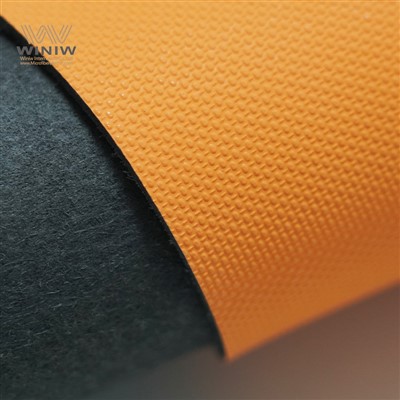
First, let’s get one thing straight: microfiber leather isn’t “vegan leather” in the purest sense many consumers assume. Most standard shoe-grade microfiber leather is built on a polyurethane (PU) base, and that PU layer is where a lot of its biggest weaknesses start. Wait, no—let’s back up. The structure of microfiber leather is deceptively complex. It’s made by weaving superfine nylon or polyester microfibers into a nonwoven fabric, then coating that fabric with a thick PU layer to give it the smooth, flexible look of real leather. The problem? That PU layer is not as breathable as it’s often promoted to be. For casual shoes that get worn on a 80°F day with no socks, or for athletic shoes that see hours of walking and sweating, this limited breathability is a non-negotiable downside. I’ve had multiple running shoe clients return test batches after 5K race participants complained of soggy, blister-prone feet. To be clear, this isn’t a flaw in all microfiber leather—high-performance, premium microfiber leather can add tiny perforations to boost breathability—but the standard, cost-effective grade most brands order for everyday shoes skips that step. It’s a tradeoff: unperforated microfiber is cheaper and more durable for light use, but useless for shoes designed to keep feet cool.
Next, let’s talk about water resistance that cuts both ways. Microfiber leather is often marketed as “waterproof,” and it does resist light rain, spilled coffee, or a quick puddle better than full-grain leather. But once water does penetrate that PU layer (say, if you step in a deep puddle and the seam opens), it’s nearly impossible to get out. Unlike genuine leather, which can absorb moisture and then air dry gradually, or even natural leather’s “give” that lets it breathe, microfiber leather traps water against the skin for hours. I remember a boutique brand that launched a line of casual boots using standard microfiber leather, and within two weeks, they got dozens of returns from customers who’d worn them in a light snowfall. The water seeped through the sole seams, got trapped inside the shoe, and the PU layer prevented it from evaporating. By the time customers noticed, their socks were soaked through, and the lining had started to smell a little. Worse, over time, repeated water exposure can break down the bond between the microfiber base and the PU top layer, leading to peeling. I’ve seen this happen on work boots that got rained on every day for a month: the PU flaked off in small patches, leaving the rougher, less durable microfiber base exposed. That’s a far bigger issue than with leather, which will develop a patina or a water mark instead of peeling apart.
Then there’s the stretch factor—and I don’t mean the good kind. Genuine leather has natural give; it molds to your foot’s shape after a few wears, which is why many people love breaking in a new pair of leather shoes. Microfiber leather, on the other hand, has almost no stretch at all, especially in the low-cost grades. I once worked with a small shoe brand that designed a pair of sleek dress shoes for narrow feet, using microfiber leather because it was easy to cut into sharp, clean lines. Their target customer had average-width feet, and when they launched, 30% of pre-orders came back as too tight in the toe box. Why? Microfiber doesn’t give as leather does, so even if you size correctly, the shoe feels stiff and restrictive for the first several wears. Even premium microfiber has minimal stretch compared to full-grain leather, so if you’re designing shoes for people with wider feet, or for styles that need to cradle a foot (like slippers or casual sneakers), microfiber leather might not be the best fit. It’s not impossible to use it for these styles—we can source stretch-treated microfiber—but that adds 15-20% to the cost, which eats into margins many small brands can’t absorb.
Let’s not ignore the durability tradeoffs, either. Wait, microfiber is supposed to be more durable than leather, right? Well, in some ways yes—but in others, it’s far more fragile. For example, microfiber leather is scratch-resistant, which is a win for shoes that get banged up in a closet or on sidewalks. But scuff it hard with a key or a piece of gravel, and the scratch shows up as a lighter, almost white mark that’s impossible to buff out. I’ve had brands come to me upset because a customer scuffed the toe of their new shoe, and instead of blending in like a leather scuff would, it stood out like a sore thumb. That’s because the PU top layer is dyed evenly, so when it’s scratched, you’re removing the top layer of pigment, leaving a lighter base. Full-grain leather scratches tend to darken, which is why they patina over time. Another durability issue: edge wear. When a shoe is constructed, the edges of the microfiber leather are exposed. Over months of wear, especially on high-traffic areas like the heel counter or toe cap, the PU layer on those edges starts to fray. Leather edges, if finished properly, hold up much better. I saw a work boot line last year that used microfiber leather, and after three months of use, half the boots had frayed edges around the toe. Fixing that would require re-coating the edges, which adds labor cost, so most brands just eat the returns or negative reviews.
Then there’s the hidden environmental angle, which I know is a big reason many brands switch to microfiber leather from genuine leather. On paper, microfiber is more sustainable: it uses less water and fewer toxic chemicals than leather tanning, and some grades are made from recycled polyester. But the problem is at the end of its life. Most microfiber leather isn’t biodegradable. The nylon and polyester microfibers take hundreds of years to break down, and the PU layer doesn’t decompose at all. Compare that to genuine leather, which—even with its tanning process—will biodegrade in a landfill over decades, especially if it’s chrome-free tanned. I recently consulted for a brand that’s focused on circularity, and they told me that their customers care deeply about end-of-life disposal. When they tested microfiber leather shoes against leather ones, the microfiber shoes got negative feedback from customers who didn’t want to contribute to microplastic waste. That’s a disadvantage I don’t see many suppliers talking about: microfiber leather might be better than virgin leather, but it’s not a closed-loop solution. If a brand is advertising its shoes as “eco-friendly,” microfiber’s waste profile is a hidden liability.
Wait, let’s also talk about sizing consistency. I’ve spent years refining our microfiber leather grades, so I can say with confidence that high-quality microfiber is consistent in thickness and texture across rolls—way more consistent than genuine leather, which can vary in thickness and grain from hide to hide. But that same consistency is a problem for a shoe’s break-in period. Because every panel of microfiber is identical, the entire shoe feels stiff at the same rate. With leather, you might have a panel that’s a little thicker or thinner, so parts of the shoe mold faster. With microfiber, there’s no variation, so the break-in period is longer and more uniform. For many customers, that feels like a downside: a shoe that’s supposed to be “instantly comfortable” ends up being just as stiff as a low-quality leather shoe. I’ve had a few clients pivot back to leather for their dress shoe line because their customers complained that microfiber shoes never felt “broken in” no matter how much they wore them.
Before I wrap this up, I want to clarify that this isn’t a bash on microfiber leather. I sell it, and I still believe it’s a great material for the right applications. But the biggest mistake brands make is treating it as a one-size-fits-all replacement for leather. If you’re making a sleek, formal dress shoe that will only be worn for special occasions, unperforated microfiber is perfect—it’s durable, has a consistent finish, and holds up well over years of occasional use. If you’re making a work boot or a casual sneaker that will get daily use, especially in wet conditions, you’ll need to source a high-grade, perforated microfiber leather with a water-resistant coating that prevents peeling. But if you’re making an athletic shoe that needs maximum breathability, or a wide-width shoe that needs stretch, microfiber might not be the best fit.
As someone who’s been in this industry for over a decade, my goal isn’t to sell you a material you don’t need. It’s to give you the honest, unvarnished truth about microfiber leather for shoes—because the last thing I want is for a brand to launch a collection based on my product, only to run into avoidable issues with breathability, water resistance, stretch, durability, or end-of-life waste. Microfiber leather has its flaws, but when paired with the right design choices and the right grade, it can be a game-changer for brands looking for a consistent, sustainable (relative to leather) shoe material.

If you’re currently sourcing microfiber leather for shoes, or curious how it might fit your next collection, I’d be happy to walk through our grades, discuss tradeoffs, and help you pick the right material for your specific needs. The key is transparency—knowing the disadvantages upfront means you can plan for them, not avoid them.
Suede Microfiber Leather References
- Sustainable Apparel Coalition. (2022). Material Performance Report: Microfiber Leather vs. Genuine Leather.
- International Footwear Association. (2023). Durability and Comfort Metrics for Shoe Upper Materials.
- Green Science Policy Institute. (2021). End-of-Life Impacts of Synthetic Leather Materials.
- Journal of Industrial Textiles. (2020). Breathability and Water Vapor Transmission in Microfiber Polyurethane Composites.
Winiw International Co., Ltd.
Winiw International Co., Ltd. is one of the leading microfiber leather for shoes manufacturers and suppliers in China. We warmly welcome you to wholesale high-grade microfiber leather for shoes made in China here from our factory. All products are with high quality and competitive price.
Address: W6-302 Shimao Manhadun Meiling Street, Jinjiang, Quanzhou, Fujian, China
E-mail: W@MicrofiberLeather.com
WebSite: https://www.winiwmicrofiber.com/
