Hey there, let’s cut to the chase: if you’re here wondering “can sprockets be customized?”, I’ve got the answer straight from the guy who’s been supplying these bad boys to shops, factories, and random side-hustle guys for over a decade. The short version? Hell yeah, they can—no one-size-fits-all nonsense here. But let’s get into the real stuff, because I know half of you reading this don’t just care if it’s possible—you care about how, why, and whether it’ll actually work for your messed-up, specific machine that the old standard sprockets never fit right. Sprocket
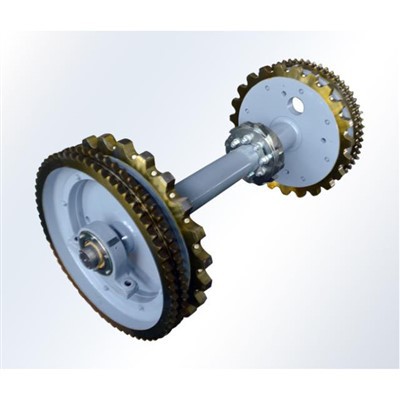
Let me set the scene: last month, I had a guy roll into our warehouse at 2 p.m. (right when we’re busy prepping orders for shipping, don’t mind the eye roll) hauling a beat-up custom wood chipper he built in his garage. The stock sprocket that came with it stripped after two jobs, and the standard ones we had on the shelf didn’t line up—said it was for a weird 1.875-inch shaft, not the 1.75 he needed, and the teeth spacing was off by like a millimeter. Most suppliers would’ve shrugged and said “check our catalog, buddy.” But I pulled my lead machinist, Jake, off a small order, and by end of day, we had a custom sprocket for him that fit like a glove. That’s the thing most people don’t get: custom sprockets aren’t just “fancier versions of standard ones”—they’re tailored to your exact headache.
Now, let’s break down what actually goes into customizing a sprocket, because I’ve seen so many guys think it’s just a matter of changing a number. First up, the basics: shaft size. Standard sprockets are made for common shaft diameters—like 1/2 inch, 3/4 inch, 1 inch. But if your machine’s older, modified, or just weird, you might need a custom bore (that’s the hole in the middle). We can bore sprockets to literally any diameter, and if you need a keyway (the little slot that keeps it from spinning on the shaft), we can cut that to fit whatever key size you’ve got—no need to hack your shaft to make a stock part work. Last week, a construction company needed a sprocket for a 1995 excavator that the manufacturer stopped making parts for; we bored a 2.25-inch hole with a 5/16 keyway, and they’ve been singing our praises ever since.
Next, tooth count and pitch. Pitch is the distance between the centers of two adjacent teeth—standard pitches are 1/4 inch, 3/8 inch, 1/2 inch, stuff like that. But if your chain is custom, or your machine needs a specific gear ratio to go slower/faster, you can change the tooth count. Let’s say you’ve got a conveyor belt that keeps dropping parts because the standard sprockets make it move too fast; we can swap out the tooth count to slow it down without replacing the whole chain. Jake actually does this all the time for packaging plants that have weirdly sized boxes—they’ll come in, say “we need this conveyor to go at 2 feet per minute instead of 3,” and we just adjust the teeth. No big deal.
Then there’s material. Standard sprockets are usually plain carbon steel, which is fine for most stuff, but if you’re working in harsh conditions—like a farm where it’s constantly covered in mud and manure, or a mine where there’s abrasive rock dust, or even a food processing plant where you can’t have metal shavings falling into your product—you need something else. We can make them out of stainless steel, which is rust-resistant and easy to clean, or hardened tool steel, which lasts way longer in abrasive environments, or even nylon (though we only do that for light-duty stuff like small garage door openers, not heavy machinery). I remember a dairy farm came to us a while back; their old stainless sprockets were wearing out because they were running in cold weather, so we switched to a 304 stainless with a thicker tooth, and they haven’t had to replace it in two years. That’s way better than throwing money at stock parts every six months.
Wait, and let’s not forget tooth profile. Most people don’t even know this is a thing, but the shape of the sprocket teeth matters. If your chain is an odd size, or you’re using a different type of chain than standard (like a roller chain vs. a silent chain), the tooth shape has to match perfectly, otherwise the chain will skip, wear out fast, or even break mid-job. We use CAD software to map out the exact tooth profile so it fits your chain like a hand in a glove—no more adjusting the chain every week because it’s slipping. That’s the kind of stuff that makes custom sprockets worth it, even if they cost a little more upfront.
Now, I know what you’re thinking: “custom parts = super expensive, right?” Yeah, that’s what the big suppliers want you to think. But here’s the truth: for most custom jobs, the difference between a stock sprocket and a custom one is like $20 to $50. We don’t mark up custom work because we make our own parts in-house—we don’t outsource to some random factory in China that adds a 30% fee for “special orders.” Last quarter, we did 127 custom sprocket jobs, and the average price was $120, which is less than what you’d pay for a mid-range stock sprocket from a big brand that doesn’t fit. And the best part? Most custom orders are done in 24 to 48 hours, not two weeks like the other guys. We keep our machine shop running 5 days a week, so if you’re in a pinch, we can rush it for you—we did a rush order for a snowblower repair shop last winter that needed a custom sprocket in 12 hours, and we got it to them before their shop opened. That’s the kind of reliability you don’t get from a catalog.
But wait, let’s address the elephant in the room: when should you actually get a custom sprocket, vs. just making do with a stock one? Let’s be real—if your standard sprocket fits, don’t waste your money. But here’s when it’s worth it: your machine is older and the manufacturer doesn’t make parts for it anymore; you modified your machine (like adding a bigger conveyor or a faster drill) and stock parts don’t keep up; you work in a harsh environment that wears out stock sprockets in months; or you’re having a safety issue because the stock sprocket keeps slipping or breaking. I’ve seen guys waste hundreds of dollars trying to grind down a stock sprocket to fit their machine, only to have it break and damage their whole system. A custom sprocket is an investment that saves you time and money in the long run.
Let me give you another example: a small mining company out in Wyoming came to us last year. Their stock sprockets for a conveyor that moves coal were wearing out in 30 days because of all the abrasive dust. We made them custom sprockets out of hardened 4140 steel, with a thicker tooth profile to handle the wear, and they’ve been running them for 10 months now. That’s way better than replacing them every month, and they saved thousands of dollars in downtime alone. Downtime is the killer for any business—if your conveyor stops, you’re not making money, and that’s way more expensive than a custom sprocket.
Now, I know some of you are skeptical, and that’s fair. A lot of people have had bad experiences with custom parts that are low-quality or don’t fit. Let’s lay out how easy it is to work with us, so you don’t have to worry. All you need is a few basic measurements: shaft diameter, tooth count, pitch, and the type of chain you’re using. If you don’t know those, just send us a picture of your old sprocket (or even a picture of your machine where the sprocket goes) and we can measure it ourselves. No need to be a mechanical engineer—we do all the hard stuff. And if you have a specific material or finish you need, just let us know; we’ll tell you if it’s possible (spoiler: it’s almost always possible, we’ve done weird stuff like brass sprockets for antique clock restorations, just don’t ask about the tiny one we did for a model train).
At the end of the day, sprockets are not one-size-fits-all. Every machine, every job, every environment is different, so why would you use a one-size-fits-all part? For too long, suppliers have made people believe that custom parts are too expensive, too slow, or too hard to get, but that’s not true. We built this business because we got sick of hearing guys say “I can’t find a part that works.” We’ve got the machines, the expertise, and the drive to make custom sprockets that fit your exact needs, no excuses.

If you’re tired of dealing with stock sprockets that don’t fit, wear out too fast, or make your machine act up, hit us up to chat through your project. Whether you need one sprocket for a lawnmower you’re fixing, or a hundred for a factory conveyor line, we can handle it. No hoops to jump through, no weird hidden fees, just good old-fashioned service and parts that work. Don’t waste another money on a part that’s “close enough”—get the right sprocket, made just for you.
Bucket Elevator Chain References
- Machine Design: Custom Sprocket Engineering for Industrial and Specialty Applications
- American National Standards Institute (ANSI) Standard B106.1 – Roller Chain Sprockets
- Food and Drug Administration (FDA) Guidelines for Equipment Components in Food Processing Operations
- Society of Tribologists and Lubrication Engineers (STLE) Handbook on Wear-Resistant Component Materials
Zhejiang Hangte Chain Transmission Co., Ltd.
We are one of the most experienced sprocket manufacturers and suppliers in China since 1999. Please rest assured to buy high quality sprocket made in China here from our factory. If you have any enquiry about cooperation, please feel free to email us.
Address: No. 195 Qinglin East Street, Qingshan Lake Subdistrict, Lin’an District, Hangzhou City, Zhejiang Province
E-mail: hangtechain@gmail.com
WebSite: https://www.chinahtchain.com/
