What Are the Effects of Customer Requirements on Magnesium Die Casting Products?
When a customer reaches out to our magnesium die casting shop, they rarely start with a simple request for “some magnesium parts.” More often than not, the first email or call is filled with specific details: the part’s final application, how it will hold up in use, the exact weight they’re targeting, and even the tiniest surface finish quirk that will make or break their product’s success. As someone who’s been in this trade for 12 years—running the die casting presses, troubleshooting porosity issues at 2 a.m., and sitting in far too many design reviews to count—I can tell you that every single one of these customer requirements doesn’t just guide our process; it shapes the magnesium die casting product from the first CAD drawing to the finished, shipped part. Magnesium Die Casting
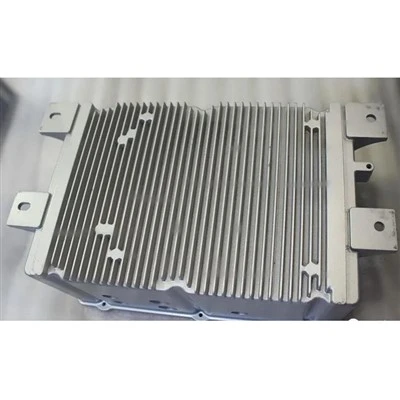
Magnesium is a tricky metal to work with, but its benefits are non-negotiable for industries chasing weight savings, strength, and durability. It’s 35% lighter than aluminum, has a high strength-to-weight ratio, and dissipates heat better than many other non-ferrous metals. But that only matters if we can align our die casting methods with what the customer actually needs. Let me walk you through how different customer requirements hit our shop floor, because this isn’t just a technical exercise—it’s the difference between a part that works for their product and one that ends up in a scrap bin.
Take a recent project for a customer making electric vehicle (EV) battery housings. Their non-negotiable requirement was that the part weigh no more than 4.2 kilograms, with zero porosity that could compromise battery sealing. Magnesium’s low density makes it perfect for this, but porosity is a classic risk in high-pressure die casting (HPDC) for magnesium because the metal solidifies so quickly. When we reviewed their requirements, we didn’t just adjust the press parameters—we changed everything. We switched from our standard AZ91D alloy to AM60B, which has better ductility and lower gas solubility, adjusted the shot profile to slow down the first phase of injection so air could escape before the metal solidified, and added venting channels to the die that our team had never used before. The customer’s requirement didn’t just change a setting; it forced us to innovate a small part of our process to deliver exactly what they needed. The final part passed their pressure tests with zero leaks, and they told us it helped their EV model’s range increase by almost 2%—that’s how impactful customer requirements can be.
Not all requirements are about performance, though. Some are about the end user’s experience, like the automotive customer we had that wanted parts for interior door handles with a “smooth to the touch, matte black” finish. Magnesium can be finished in a few ways: powder coating, wet painting, or e-coating. But each method reacts differently to the die casting process. If we’d used our standard shot blast pre-treatment, the matte finish would have come out too rough, and the powder coating would have left uneven coverage. So we adjusted the die’s surface finish to a finer grit, changed the post-casting pre-treatment to a chemical etching process that would give exactly the right texture, and even worked with our coating partner to tweak the paint thickness. The customer’s aesthetic requirement didn’t just affect the final step—it went all the way back to the die polishing stage, which added three days to our lead time, but it was worth it because the part fit their brand’s look perfectly.
Then there are the regulatory and compliance requirements, which most customers don’t always mention up front but are non-negotiable. A medical device customer contacted us for small magnesium parts that go into surgical tools, and their first requirement was full compliance with ISO 13485, plus RoHS and REACH certification. For us, that meant every step of the process had to be documented: the source of our magnesium ingots, the traceability of each die’s maintenance, the testing results for every batch of cast parts. We don’t usually track the origin of our ingots down to the mine, but for this customer, we had to switch to a certified supplier that could provide full documentation for every batch. We also had to adjust our waste management process because magnesium shavings are highly flammable, and medical-grade production requires strict control over particulate matter in the air. That requirement added layers of paperwork and process checks, but it was mandatory—if we’d cut corners, the part would have been unusable in their industry.
One of the most common requirements we see is cost. Customers often say, “I need this part as strong as possible, but keep the total cost under $2.50 per unit.” Magnesium die casting costs are driven by a few factors: die complexity, cycle time, scrap rate, and material usage. If a customer’s cost target is tight, we have to balance that with performance. For example, a customer making lawn equipment housings wanted a thin-walled part to save material, but their cost target meant we couldn’t use a higher-grade alloy that would handle the wall thickness without cracking. So we optimized the die’s gating system to distribute the metal more evenly, reduced the injection pressure just enough to avoid tearing, and adjusted the cooling lines to speed up cycle time, which cut per-part costs by 12%. The end result met their strength requirement and came in under their cost target, but it was a collaborative back-and-forth—we didn’t just say “yes” or “no”; we adjusted our process to meet both their performance and budget needs.
Customer requirements also shape our long-term approach to magnesium die casting. A few years ago, a customer in the consumer electronics industry wanted parts for their new line of lightweight laptops that were fully recyclable. At the time, we were using a mix of magnesium alloys and coatings that made recycling difficult—we’d have to strip the coating, separate different alloys, and spend extra time on processing. Their requirement pushed us to invest in new equipment that can recycle coated magnesium parts without stripping, and we switched to a single AZ91D alloy for their parts to simplify separation. Now, that recycling process is a standard part of our service, not just for that customer but for every client that asks for sustainable products. That’s the thing about customer requirements: they don’t just impact one project—they can change how our entire business operates.
Of course, there are times when a customer’s requirements clash with the inherent properties of magnesium, and that’s where our role as a supplier is to educate, not just comply. Last year, a customer wanted a magnesium part for a marine component, telling us it needed to resist saltwater corrosion for 10 years. We had to explain that while magnesium is corrosion-resistant, it’s not as durable as stainless steel in high-salt environments without additional treatment. We didn’t just say “no”—we offered a solution: a magnesium core with a ceramic coating that would meet their weight requirement and extend the corrosion life to 12 years, while staying within their budget. The customer was happy because we didn’t just take their requirements at face value; we used our expertise to adjust their needs to work with the material, rather than forcing the material to work against its natural limits.
Another area where customer requirements make a big difference is in lead times. A defense customer once needed 500 magnesium parts in two weeks for a prototype that was due for testing. Our standard lead time for die casting parts is four to six weeks, but they needed it faster. We had to reroute three of our presses from other projects, work extra shifts to polish the die, and prioritize their batch for testing. The requirement for a fast turnaround didn’t just change our schedule—it meant we had to temporarily pause other work, but it’s part of being a reliable supplier. We’ve since adjusted our workflow to have a “rapid prototype” process for customers with urgent needs, all because of that one project.
For us, the best part of working with customer requirements is that every project teaches us something new. We recently had a customer making parts for satellite components, where the requirement was that the part could withstand extreme temperature swings from -40°C to 120°C without warping. Magnesium’s coefficient of thermal expansion is higher than aluminum, so it can expand and contract more, leading to warping. To meet this requirement, we worked with the customer to adjust the part’s design—adding small ribs to distribute stress, changing the wall thickness at critical points, and even heat-treating the parts after casting to relieve internal stresses. That project led us to develop a new heat treatment process that we now offer to all our customers that need parts for extreme temperature environments. That’s how customer requirements drive improvement—they push us to get better at what we do.
At the end of the day, every customer that comes to our magnesium die casting shop has a goal. They’re not looking for a perfect die casting part—they’re looking for a part that will help their product succeed. And that’s where we come in: we take their requirements, whether it’s performance, cost, aesthetics, compliance, or timeline, and translate them into a finished product that fits exactly what they need. It’s not just about following specs; it’s about understanding their end goal and using our expertise in magnesium die casting to make it happen.
If you’re working on a project that needs magnesium die casting parts, I’ve seen every kind of requirement, from the simple to the complex. I know how small details can change everything, and I know how to balance your needs with the unique properties of magnesium. We can work together to build a product that meets all your requirements, no matter how specific they are.

If you’re ready to discuss your project, don’t hesitate to reach out for a conversation about how we can bring your vision to life.
Aluminum Die Casting REFERENCES
- American Foundry Society. (2020). Die Casting of Magnesium Alloys: Process Optimization and Quality Control. AFS International.
- Magnesium Association. (2021). Handbook of Magnesium Die Casting: Materials, Processes, and Applications. Magnesium Association.
- ISO 13485:2016. Medical Devices – Quality Management Systems – Requirements for Regulatory Purposes. International Organization for Standardization.
- Garry, F., & Gentleman, K. (2019). Effects of Design and Process Parameters on Magnesium High-Pressure Die Casting Performance. Journal of Materials Processing Technology, 271, 116-127.
- European Chemical Agency (ECHA). (2022). REACH Regulation: Restrictions on Substances of Very High Concern. ECHA.
Shenzhen Shunhaoda Technology Co., Ltd.
With abundant experience, we are one of the most professional magnesium die casting manufacturers and suppliers in China. If you’re going to buy bulk high quality magnesium die casting made in China, welcome to get free sample from our factory. Also, custom service is available.
Address: 902, Building A3, Tianrui Industrial Park, No. 35 Fuyuan 1st Road, Zhancheng Community, Fuhai Street, Bao’an District, Shenzhen
E-mail: sales@shdindustry.com
WebSite: https://www.shd-industry.com/
