If you’ve ever worked in a hospital, clinic, or even a home health setting, you’ve probably used or dealt with multi-lumen catheters and needle free connectors (NFCs) — maybe without fully connecting the two. Let’s break this down like we’re chatting in a supply closet after a long day, no stuffy jargon, just real talk from someone who’s been in the NFC game for years, and knows exactly why this combo matters so much. needle free connectors
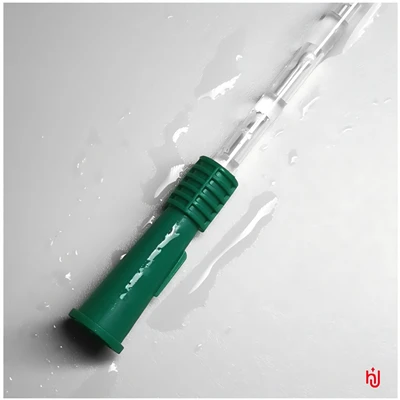
First, let’s get the basics straight. Multi-lumen catheters (MLCs) are those tubes with multiple tiny channels (lumens) inside, right? They go in patients for things like IV meds, fluids, blood draws, nutrition, or even monitoring vital signs all at once — way better than sticking a patient with a dozen separate IVs, which is a win for everyone involved. But here’s the problem: every time you have to hook a syringe or an IV bag to a catheter, you’re poking a needle in, which leaves a tiny gap that bacteria can sneak through. That’s where needle free connectors come in — our product, for context, and we’ve been refining these bad boys for over a decade, so we know the ins and outs.
So how do these two actually work together? Let’s start with how MLCs themselves function, because you can’t talk about the pair without knowing what each lumen is doing. A typical MLC might have 2, 3, or even 4 lumens, each sized for a specific job. The smallest ones are usually for blood draws or sensitive meds, like insulin or chemo, while the larger ones handle big fluids like saline or antibiotics. Each lumen has its own opening at the hub — the part you hook into — and that’s where the NFC attaches. No matter how many lumens you have, each one gets its own NFC, right? Wait, actually, some hubs have a split design where you can connect one NFC to cover all, but 9 times out of 10, clinical teams use separate NFCs per lumen to keep things organized and avoid cross-contamination. That’s a key point I see new teams messing up sometimes, so it’s worth mentioning.
Now, let’s dive into the actual science of how an NFC works with a single lumen first, because once you get that, multi-lumen is just scaling that up. The core of every good NFC is that self-sealing silicone valve — think of it like a tiny, flexible rubber door that only opens when you push something through it, then slams shut the second you pull away. No needles, no piercings, no gaps. When you hook up a syringe or IV line, the tip of that line is called a male luer, right? You twist it into the female end of the NFC, and that male luer pushes the silicone valve open, creating a tight, leak-proof seal that lets fluid or blood flow through. The second you twist that line off, the silicone springs back closed — even so tight that it’s almost impossible to get fluid to leak out, and bacteria can’t slip in. That’s the magic, and it’s the same for every lumen on an MLC.
But wait, multi-lumen adds extra layers. Let’s say you’ve got a 3-lumen catheter in a patient’s arm: one for IV antibiotics, one for daily blood draws, one for a nutrition infusion. Each of those lumens exits the catheter hub in separate little ports, so you connect a separate NFC to each port. Why separate? If you use one NFC for all three, you run the risk of cross-contaminating all lumens if one line has bacteria, or accidentally pushing meds meant for one lumen into another. We’ve seen that mistake lead to wasted supplies, and even minor patient issues, so we design our NFCs to be color-coded and labeled for each lumen size — like blue for the blood draw lumen (smallest), green for the med lumen (medium), yellow for the big fluid lumen — so teams don’t mix them up. That’s a small design choice that makes a huge difference in busy hospital wards, where nurses are juggling 5 things at once.
Now, what about when you’re switching things out? Like, if a patient’s antibiotic is done, and you need to hook up a new one. With an MLC, you don’t have to touch the other lumens’ lines — you just disconnect the old NFC from that one lumen, wipe the port (important for infection control, always wipe!), and hook up the new NFC. The NFC’s self-sealing valve means you don’t have to flush that lumen every single time, right? Wait, actually, you do need to do a routine flush, but that’s less because of leakage and more because meds can stick to the lumen walls. But the NFC keeps bacteria out between flushes, which is the big win over old needle connectors.
Let’s talk about real-world scenarios, because that’s what matters most. Last year, we worked with a group of pediatric nurses who were dealing with super tiny patients — kids with MLCs because they needed multiple meds, but their veins were so small, they couldn’t handle separate IVs. They told us that before switching to our NFCs, they were having 2 or 3 cases of central line-associated bloodstream infections (CLABSIs) a month, which is a huge deal for kids, who are way more vulnerable to infections. After switching, that dropped to less than 1 a month, and eventually zero for a 6-month stretch. Why? Because the NFC eliminated the needle sticks every time they accessed the catheter, so there was no way for germs to get in. And since each lumen had its own NFC, they didn’t have to worry about accidentally accessing the wrong line (which happens way more than people realize when you’re working with a multi-port hub).
Another thing: pressure. MLCs have different pressure needs depending on what’s going through them. The big lumen for IV fluids needs to handle high pressure, like when you’re flushing with a 10mL syringe, or even rapid fluid resuscitation in an emergency. Our NFCs are tested to handle those pressures — we do over 1,000 uses at max pressure, and they still seal tight, no leaks. That’s critical, because if an NFC fails under pressure, you’ve got fluid spraying everywhere, or worse, air getting into the patient’s line, which is a nightmare. We’ve had ER teams tell us they’ve used our NFCs during code blues, hooking and unhooking in the middle of an emergency, and they never once had a leak or a break in the seal. That’s the kind of reliability you can’t fake, and it’s exactly what you need with MLCs, since they’re often used for urgent, high-stakes care.
Wait, there’s also a common question I get all the time: do NFCs work with all types of MLCs? The short answer is, almost all. We design our NFCs to fit standard luer connectors, which is what 99% of MLC hubs use — from peripheral MLCs (the ones in arms or legs) to central venous catheters (the big ones in the chest for long-term use). We do make a few custom ones for really specialty MLCs, like the ones used in cardiac care, where pressures are even higher, but for the most part, our off-the-shelf NFCs work with whatever MLC a team is using. We also do free testing for hospitals that want to try with their specific catheters — no hoops, just send us a sample, we test it, and send you a report. That’s how confident we are in our products.
Let’s also address the cost side, because everyone cares about that. Old needle connectors aren’t cheap, but NFCs save money long-term. Think about it: before NFCs, every time you accessed an MLC with a needle, you’d use a needle, a syringe, and then have to discard the entire line if there was a problem. With NFCs, you can disconnect and re-use the same NFC multiple times (as long as it’s cleaned properly, per protocol) so you’re not wasting as much. Plus, as we mentioned earlier, CLABSIs are super expensive — each CLABSI costs a hospital an average of $45,000, according to the CDC. Cutting down on those with NFCs pays for the connectors dozens of times over. We have a whole page on our site (we don’t post links, but you can search our name) that breaks down the cost savings, but even if you don’t read that, just knowing you’re saving patients and money is a big deal.
Now, let’s talk about common mistakes teams make when using NFCs with MLCs, because no one’s perfect, and we’ve seen it all. First, not wiping the port before connecting the NFC. Even with the self-sealing valve, the hub of an MLC can have bacteria on the outside, so you need to rub it with an alcohol wipe for 15 seconds and let it dry before attaching the NFC. We actually include a free pack of alcohol wipes with every bulk order we ship, because we want teams to have that on hand. Second, forcing the NFC into the port. If it’s hard to twist, don’t yank — check if the lumen is clogged, or if you have the wrong size NFC. Forcing it can damage the silicone valve, which means it won’t seal properly. Third, not changing the NFC on schedule. Most hospitals have a protocol to change NFCs every 7 days, or after a blood transfusion or chemotherapy. Skipping that can lead to buildup in the valve, which can make it leak or let bacteria in. We send reminder stickers with every order, so you can put them on your work cart and not forget.
As a supplier, our whole thing is supporting teams, not just selling products. We don’t just ship NFCs and disappear — we have a 24/7 support line for any questions, whether it’s how to attach to a specific MLC, troubleshooting a leak, or ordering bulk for a clinic or hospital. We also do free training sessions for new teams, whether it’s a group of nurses at a small clinic or a big hospital’s staff. Last year, we trained over 2,000 healthcare workers across the country, and most of them told us they had no idea how easy using NFCs with MLCs could be until they tried our products. That’s the feedback that keeps us going.
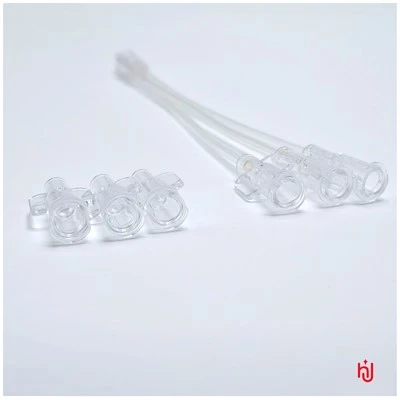
Wait, let’s wrap this up so it’s not just a list of facts. The big picture is: multi-lumen catheters are essential for giving patients multiple treatments without multiple IVs, but they need a way to access them safely and repeatedly without introducing germs. Needle free connectors are that solution, because they create a sealed, self-closing barrier for each lumen, eliminating the risk of needle sticks and CLABSIs. When paired with an MLC, color-coded, pressure-tested, easy-to-use NFCs make the whole process faster, safer, and cheaper for everyone involved.
manufacturing tooling / raw materials If you’re a nurse, clinic manager, hospital supply director, or anyone who works with MLCs, and you’re tired of dealing with needle sticks, infection risks, or wasted supplies, we’re here to help. We can send you a free sample pack to test with your current MLCs, walk you through our bulk pricing, or answer any questions you have about how our products work with your specific catheters. Just reach out to us — we’re here to make your job easier and keep patients safe.
References
- Institute for Healthcare Improvement. (2022). Reducing central line-associated bloodstream infections: A guide for clinical teams.
- Centers for Disease Control and Prevention. (2021). Guideline for the prevention of intravascular catheter-related infections.
- Society of Interventional Radiology. (2020). Multi-lumen catheter use and maintenance best practices.
- World Health Organization. (2019). Needle-free connectors for vascular access: Evidence summary for infection prevention.
Guangdong Huaju Medical Technology Co., Ltd.
Guangdong Huaju Medical Technology Co., Ltd. is one of the most professional needle free connectors manufacturers and suppliers in China, featured by quality products and good service. Please rest assured to buy bulk premium needle free connectors made in China here from our factory.
Address: FLOOR 3-4-5, BLOCK B, ZHONGJING RD #12, ZHONGSHAN, GUANGDONG, CHINA 528437
E-mail: celia@endotra.com
WebSite: https://www.endotra.com/
