In the realm of electrical engineering and testing, resistance testers play a crucial role. As a supplier deeply involved in the production and distribution of resistance testers, I’ve witnessed firsthand the diverse applications and the high – stakes nature of accurate resistance measurement. This article aims to delve into the question: How accurate is a resistance tester? Resistance Tester
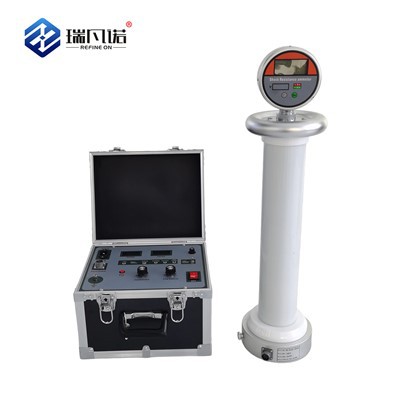
Understanding the Basics of Resistance Testing
Resistance, measured in ohms (Ω), is a fundamental electrical property that quantifies the opposition to the flow of electric current in a circuit. Resistance testers, also known as ohmmeters, are devices designed to measure this resistance. They work on the principle of applying a known voltage across a component and then measuring the resulting current. Using Ohm’s Law (V = IR, where V is voltage, I is current, and R is resistance), the resistance value can be calculated as R = V/I.
The accuracy of a resistance tester depends on several factors. Firstly, the internal components of the tester itself play a significant role. The precision of the voltage source, the quality of the current – measuring circuitry, and the stability of the internal resistors all contribute to the overall accuracy. For example, a high – quality voltage source with low ripple and excellent regulation will ensure a more stable input for the resistance measurement, reducing errors.
Secondly, environmental conditions can have a substantial impact on the accuracy of resistance measurement. Temperature, humidity, and electromagnetic interference (EMI) are all factors that can cause fluctuations in the measured resistance values. For instance, most materials exhibit a change in resistance with temperature. The temperature coefficient of resistance (TCR) describes how the resistance of a material changes with temperature. If the resistance tester is not calibrated to account for temperature variations, the measured values may deviate significantly from the actual resistance.
Types of Resistance Testers and Their Accuracy
There are several types of resistance testers available in the market, each with its own level of accuracy and application scenarios.
Analog Resistance Testers
Analog resistance testers use a moving pointer on a scale to indicate the measured resistance value. These testers are relatively simple in design and are often used for basic resistance measurements. However, their accuracy is typically limited. The main source of error in analog testers is the readability of the scale. The human eye may misinterpret the position of the pointer, leading to measurement errors. Additionally, the internal components of analog testers may have relatively large tolerances, further reducing their accuracy. Generally, the accuracy of analog resistance testers can range from around ±2% to ±5% of the measured value.
Digital Resistance Testers
Digital resistance testers, on the other hand, display the measured resistance value numerically. They offer higher accuracy compared to analog testers. Digital testers use advanced integrated circuits and microprocessors to perform the measurement and display the results. The accuracy of digital resistance testers can be as high as ±0.1% or even better in some high – end models. These testers are also less prone to human error in reading the measurement results.
Precision Resistance Testers
Precision resistance testers are designed for applications where extremely high accuracy is required, such as in calibration laboratories or research facilities. These testers use state – of – the – art technology and high – quality components to achieve accuracies of up to ±0.01% or even lower. They often have features like auto – ranging, temperature compensation, and high – resolution displays to ensure the most accurate measurements possible.
Calibration and Accuracy Maintenance
Calibration is a critical process for ensuring the accuracy of resistance testers. Over time, the internal components of a resistance tester may drift due to factors such as component aging, temperature variations, and electrical stress. Calibration involves comparing the measurements of the tester against a known standard resistance. If the measured values deviate from the standard, the tester can be adjusted to correct the error.
Regular calibration is recommended to maintain the accuracy of resistance testers. The frequency of calibration depends on the type of tester and its usage environment. For example, a resistance tester used in a harsh industrial environment with high levels of EMI and temperature variations may need to be calibrated more frequently than a tester used in a controlled laboratory environment.
In addition to calibration, proper handling and storage of the resistance tester are also important for maintaining its accuracy. Testers should be stored in a clean, dry environment at a stable temperature. They should be protected from physical shock and vibration, as these can damage the internal components and affect the accuracy of the measurements.
Applications and the Need for Accuracy
The accuracy requirements of resistance testers vary depending on the application. In some applications, a relatively low level of accuracy may be sufficient. For example, in basic electrical troubleshooting, an accuracy of ±2% to ±5% may be acceptable. Electricians can use a resistance tester with this level of accuracy to quickly identify open circuits, short circuits, or faulty components.
However, in other applications, high accuracy is essential. In the aerospace and automotive industries, for example, the resistance of electrical components can have a significant impact on the performance and safety of the systems. In these industries, resistance testers with accuracies of ±0.1% or better are often required to ensure the quality and reliability of the electrical systems.
In the field of semiconductor manufacturing, even higher levels of accuracy are needed. The resistance of semiconductor devices can affect their electrical performance, and small variations in resistance can lead to significant differences in the functionality of the devices. Precision resistance testers with accuracies of ±0.01% or lower are used to measure the resistance of semiconductor components during the manufacturing process to ensure that they meet the strict quality standards.
Our Resistance Testers: A Commitment to Accuracy
As a supplier of resistance testers, we understand the importance of accuracy in resistance measurement. Our product line includes a wide range of resistance testers, from basic analog testers to high – precision digital testers.
We use only the highest – quality components in the manufacturing of our testers to ensure their accuracy and reliability. Our digital testers are equipped with advanced microprocessors and high – resolution analog – to – digital converters to provide accurate and stable measurements. We also offer temperature compensation features in many of our testers to minimize the impact of temperature variations on the measurement results.
In addition to the quality of our products, we also provide comprehensive calibration services. Our calibration facilities are equipped with traceable standards to ensure that our testers are calibrated to the highest levels of accuracy. We offer both on – site calibration services and calibration at our facilities, depending on the customer’s needs.
Conclusion
The accuracy of a resistance tester is a complex issue that depends on many factors, including the type of tester, the quality of its internal components, environmental conditions, and calibration. While basic resistance testers can provide sufficient accuracy for many applications, high – precision testers are required for applications where small variations in resistance can have a significant impact.
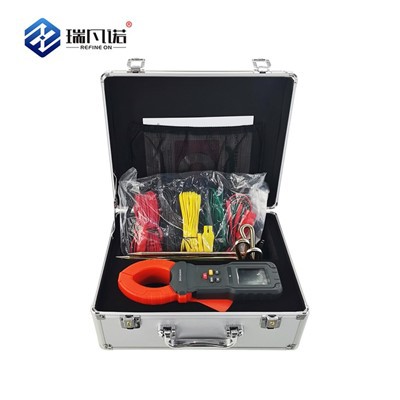
As a supplier, we are committed to providing our customers with resistance testers that offer the highest levels of accuracy and reliability. Whether you are an electrician performing basic troubleshooting or a researcher working in a high – end laboratory, we have the right resistance tester for your needs.
Partial Discharge Tester If you are interested in our resistance testers or have any questions about resistance measurement, we encourage you to contact us to discuss your requirements and explore potential purchasing opportunities. We look forward to working with you to meet your resistance testing needs.
References
- Horowitz, P., & Hill, W. (1989). The Art of Electronics. Cambridge University Press.
- Boylestad, R. L., & Nashelsky, L. (2002). Electronic Devices and Circuit Theory. Prentice Hall.
Refine On (Hebei) Electric Power Technology Co., Ltd.
Refine On (Hebei) Electric Power Technology Co., Ltd. is one of the most reliable resistance tester manufacturers and suppliers in China, also supports customized service. Please feel free to wholesale advanced resistance tester at competitive price from our factory. Contact us for quotation.
Address: Building 13, Liandong U Valley, No.64, Jing SAN South Street, Economic Development Zone, Mancheng District, Baoding City, China
E-mail: victor@transformer-test.com
WebSite: https://www.transformer-test.com/
