Short-wave infrared (SWIR) imaging technology has emerged as a powerful tool across various industries, from industrial inspection and surveillance to medical diagnostics and scientific research. As a leading provider of SWIR imaging solutions, I am often asked about the key components that make up a SWIR imaging system. In this blog post, I will delve into the essential elements of a SWIR imaging system, highlighting their functions and importance. SWIR Imaging
SWIR Detector
At the heart of every SWIR imaging system is the detector. This device is responsible for converting incident SWIR light into an electrical signal that can be processed and displayed as an image. There are several types of SWIR detectors available, each with its own unique characteristics and applications.
One of the most common types of SWIR detectors is the InGaAs (Indium Gallium Arsenide) detector. InGaAs detectors offer high sensitivity in the SWIR range, typically from 900 nm to 1700 nm, making them well-suited for a wide range of applications. They also provide excellent quantum efficiency, which means they can convert a large percentage of incident photons into electrons, resulting in a high signal-to-noise ratio and clear images.
Another type of SWIR detector is the extended InGaAs detector, which has an extended spectral response range up to 2.5 µm. These detectors are particularly useful for applications that require imaging in the longer SWIR wavelengths, such as gas detection and spectroscopy.
Quantum well infrared photodetectors (QWIPs) are also used in some SWIR imaging systems. QWIPs offer advantages such as high uniformity and low noise, but they typically have a lower quantum efficiency compared to InGaAs detectors.
Optics
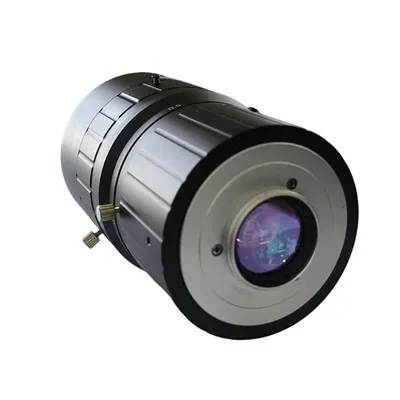
The optics in a SWIR imaging system play a crucial role in focusing the SWIR light onto the detector and ensuring high-quality image formation. The choice of optics depends on the specific application and the requirements of the imaging system.
Lenses are the primary optical components in a SWIR imaging system. They are designed to collect and focus the SWIR light onto the detector. SWIR lenses are typically made from materials that are transparent in the SWIR range, such as germanium, zinc selenide, and chalcogenide glasses. These materials have unique optical properties that allow them to transmit SWIR light efficiently and correct for aberrations, resulting in sharp and clear images.
In addition to lenses, other optical components such as mirrors, beam splitters, and filters may also be used in a SWIR imaging system. Mirrors can be used to redirect the SWIR light path, while beam splitters can divide the light into multiple paths for different purposes. Filters are used to select specific wavelengths of SWIR light and block unwanted wavelengths, improving the image quality and reducing noise.
Image Sensor Integration
Once the SWIR light is focused onto the detector, the electrical signals generated by the detector need to be processed and converted into a digital image. This is where the image sensor integration comes into play.
The image sensor integration board is responsible for amplifying the weak electrical signals from the detector, converting them into digital signals, and transferring them to the image processing unit. It also provides power to the detector and controls its operation, such as setting the gain and exposure time.
Modern image sensor integration boards often use advanced technology such as complementary metal-oxide-semiconductor (CMOS) or charge-coupled device (CCD) readout integrated circuits (ROICs). These ROICs offer high-speed data transfer, low noise, and good linearity, ensuring accurate and reliable image acquisition.
Image Processing Unit
The image processing unit (IPU) is responsible for processing the digital images captured by the detector and enhancing their quality. The IPU can perform a variety of tasks, such as noise reduction, image enhancement, and feature extraction.
Noise reduction algorithms are used to remove random noise from the images, which can improve the signal-to-noise ratio and make the images more clear and distinguishable. Image enhancement techniques, such as contrast adjustment and sharpening, can be used to improve the visual appearance of the images and highlight important features.
Feature extraction algorithms are used to identify and analyze specific features in the images, such as edges, contours, and objects. These algorithms can be used for a variety of applications, such as object recognition, defect detection, and measurement.
Cooling System
In some SWIR imaging applications, such as high-sensitivity imaging and long-exposure applications, it is necessary to cool the detector to reduce thermal noise and improve its performance. A cooling system is used to maintain the detector at a low temperature, typically below -20°C or even lower.
There are several types of cooling systems available for SWIR detectors, including thermoelectric coolers (TECs), Stirling coolers, and liquid nitrogen cooling systems. TECs are the most commonly used cooling system for SWIR detectors due to their compact size, low power consumption, and easy integration. Stirling coolers offer higher cooling efficiency but are larger and more expensive. Liquid nitrogen cooling systems provide the lowest temperatures but are also the most complex and costly to operate.
Software Interface
A user-friendly software interface is essential for operating a SWIR imaging system and analyzing the captured images. The software interface allows the user to control the camera settings, such as exposure time, gain, and focus, and to display and process the images in real-time.
Modern SWIR imaging software often provides a variety of advanced features, such as image stitching, color mapping, and spectral analysis. These features can enhance the usability and functionality of the imaging system and enable the user to perform complex tasks with ease.
Applications of SWIR Imaging Systems
SWIR imaging systems have a wide range of applications across various industries. Here are some of the key applications:
- Industrial Inspection: SWIR imaging is used for non-destructive testing and inspection of electronic components, solar cells, and semiconductor wafers. It can detect defects, cracks, and impurities that are not visible in the visible range, improving the quality control and yield of manufacturing processes.
- Surveillance and Security: SWIR imaging is used for night vision and surveillance applications. It can provide clear images in low-light conditions and through haze, fog, and smoke, making it ideal for perimeter security, border surveillance, and transportation security.
- Medical Diagnostics: SWIR imaging is used for medical imaging applications, such as breast cancer screening, skin cancer detection, and blood oxygenation monitoring. It can provide deep tissue penetration and high contrast images, enabling early detection and diagnosis of diseases.
- Scientific Research: SWIR imaging is used in scientific research fields such as astronomy, spectroscopy, and environmental monitoring. It can provide valuable information about the composition, structure, and properties of materials and objects, advancing our understanding of the natural world.
Conclusion
In conclusion, a SWIR imaging system consists of several key components, including the detector, optics, image sensor integration, image processing unit, cooling system, and software interface. Each component plays a crucial role in the performance and functionality of the imaging system.

As a leading provider of SWIR imaging solutions, we offer a wide range of high-quality SWIR imaging systems that are designed to meet the diverse needs of our customers. Our systems are based on the latest technology and are backed by our team of experienced engineers and scientists.
Electro-optic POD If you are interested in learning more about our SWIR imaging systems or would like to discuss your specific requirements, please contact us. We would be happy to provide you with more information and help you choose the right imaging system for your application.
References
- Rogalski, A. (2009). Progress in InGaAs focal plane arrays for short-wave infrared imaging. Infrared Physics & Technology, 52(4), 291-316.
- Hume, J. D., & Kruer, W. L. (1990). Quantum well infrared photodetectors: Status and prospects. Applied Physics Letters, 57(11), 1059-1061.
- Schowengerdt, R. A. (2007). Remote Sensing: Models and Methods for Image Processing. Elsevier.
- Wilson, T. (2017). Handbook of Optical and Digital Image Processing. Elsevier.
Xi’an Zhongke Lead Ir-Tech Co., Ltd.
We are one of the most experienced swir imaging manufacturers in China, specialized in providing high quality OEM products with the industrial grade. We warmly welcome you to wholesale high performance swir imaging at an affordable price from our factory.
Address: Building 8,Hard Technology Enterprise Community No.3000,Biyuan 2nd Rd,High-Tech Zone Xi’an,Shaanxi,China
E-mail: sales@lead-ir.com
WebSite: https://www.leadinfrared.com/
