If you’ve spent any time in metal fabrication—especially in industries where precision isn’t just a perk, it’s non-negotiable—you’ve probably heard the chatter around pump-controlled servo CNC press brakes. Most of the noise about these machines centers on heavy-duty work: automotive frame bends, large-scale structural steel, parts that need to hold up under extreme load. But last month, I got a call from a small, family-owned jewelry shop in Providence, Rhode Island, that threw me a curveball they’d been asking for months: “Can your high-speed pump-controlled servo press brake do jewelry work?” At first, I’ll admit, I blinked. For years, I’d targeted our sales pitches to fabricators making 10-ton brackets and farm equipment, not delicate gold necklaces or silver earrings thinner than a sheet of paper. That conversation turned into the deep dive I didn’t know I needed—and now it’s the reason I’m writing this. As someone who’s spent 12 years designing, building, and selling high-speed pump-controlled servo CNC press brakes, I’m here to break down exactly why these machines aren’t just for heavy fabrication. They’re perfect for jewelry manufacturing—once you look past the stereotypes. High-speed Pump-controlled Servo CNC Press Brake

First, let’s get clear on what a high-speed pump-controlled servo CNC press brake actually is, because a lot of folks mix it up with generic press brakes. Unlike old hydraulic press brakes that guzzle electricity even when they’re not bending metal, our machines run on a direct-drive servo motor that powers a variable displacement pump. That means energy use drops by up to 70% when the brake is idling, and we get precise control over every movement: bend speed, tonnage, hold pressure, even the speed the ram descends. For traditional press brakes, you get a few fixed speed settings—fast for thick steel, slow for thin—but in jewelry work, you need to adjust that speed for every single part. Bend a 24-gauge sterling silver hoop? You need a ram that moves at 0.2 inches per second, not 2 inches per second, otherwise you’ll stretch the metal or leave a noticeable crease. Our servo system lets us program that exact speed, and it adjusts on the fly. The Providence jeweler I talked to, Clara Bennett, told me she’d been using a 30-year-old hydraulic press brake for her custom wedding bands, and she was wasting 3 hours a day just waiting for the ram to slow down and speed back up between bends. With our high-speed pump-controlled model, she’s cut that time to 20 minutes a day. That’s not a trivial win for a small shop with 4 employees turning out 50 custom bands a week.
Now, let’s talk about the needs of jewelry manufacturing, because they’re way different from what most press brake manufacturers cater to. Jewelry parts are tiny. We’re talking about bends on pieces that are often less than 2 inches wide, with tolerances of ±0.001 inches. If your press brake is off by even a hair, a custom ring won’t fit a finger, a pair of cuff links won’t align, or a delicate bracelet will look lopsided. Traditional mechanical press brakes use a clutch to engage the ram, which means you get sudden jerks at the start and end of a bend—enough to make soft gold or silver spring back, or warp thin metal sheets. Old hydraulic brakes have similar issues, plus they bleed fluid over time, leaving tiny marks on polished metal that require extra polishing work after bending. Our pump-controlled servo system, though, operates at a closed-loop pressure control. That means we can adjust the tonnage to within ±1% of what’s programmed, and the ram movement is smooth, no jerks, no fluid leaks. Clara told me that after she tested our brake, she eliminated 2 hours of extra polishing per day because the bends were sharp and even right out of the machine. That’s not just convenience—for a jewelry maker, that’s the difference between turning a profit on a custom order and losing money because you have to rework every third piece.
Wait, but what about speed? Jewelry manufacturing often feels like it’s the opposite of high-speed, right? Most people think jewelers work slowly, carefully, one piece at a time. But here’s the thing: modern jewelry is shifting. Mass-produced silver earrings, custom small-batch pendants, even parts for luxury watch cases—they need consistency, not just care. A large jewelry brand I spoke to last quarter, based in New York City, makes 20,000 pairs of dainty silver drop earrings a month. They were using a manual bending process where each earring bend was done by hand, resulting in 15% of pairs being mismatched or out of alignment. They tested a standard hydraulic press brake, but it was too slow—each pair took 12 seconds to bend, and it wasted material because it couldn’t adjust for minor thickness variations in 26-gauge silver sheet. Our high-speed pump-controlled servo brake can bend a pair of those earrings in 1.2 seconds, and it has a built-in thickness sensor that adjusts the bend depth automatically if the silver is 0.0002 inches thinner or thicker than programmed. That brand’s quality control team cut their defect rate to less than 2% after switching to our machine, and they’ve increased their monthly output by 40% without adding a single employee. That’s high-speed manufacturing for jewelry—not the brute force of bending 1-inch steel, but the precise, repeatable speed needed for consistent small parts.
Another big pain point in jewelry manufacturing is material versatility. Jewelers work with gold, silver, platinum, palladium, even specialized alloys like titanium for medical-grade jewelry. Each of these materials has different springback, different hardness, different reactions to bend pressure. Titanium, for example, is 3 times harder than 14k gold, so bending it requires 5 times the tonnage, but you have to move the ram slower to avoid cracking the metal. Traditional press brakes can’t handle that kind of adjustment mid-run. If you switch from bending silver to titanium, you have to change pressure settings, speed, even die size, and that can take 20 minutes or more. Our pump-controlled servo system, though, stores up to 1,000 custom bend programs. Clara, the Providence jeweler, told me she had 17 different bend programs for different ring sizes, band widths, and metals on her old hydraulic brake, each stored on a paper chart that she had to manually set every time. On our machine, she’s saved those programs digitally, and she can switch between bending a 14k gold wedding band, a sterling silver cuff, and a titanium earring in 10 seconds. No more misprogrammed settings that lead to cracked metal or bad bends. No more wasting expensive material because you messed up the pressure settings. For jewelers, gold and silver aren’t cheap—scrap material costs can eat up 10-15% of a project’s budget. Our brake cuts that scrap rate by almost half, because every bend is exactly as programmed.
I know what some of you are thinking: “This sounds great, but what about tooling?” Most press brakes use V-dies, right? For thick steel, you need a wide V-die, so the ram can apply pressure across the whole thickness. For jewelry, you’re bending thin metal, so you need a smaller V-die—sometimes a 1mm V-die, which is tiny. Traditional press brakes have tooling that’s not built to handle small, precise dies; the tool holders are loose, so the die shifts during the bend, leading to uneven pressure. Our high-speed pump-controlled servo brakes use precision ground, clamping-style tool holders that lock the die in place to within ±0.0005 inches. That means when you use that tiny 1mm V-die for a 24-gauge silver hoop, the die doesn’t shift, so the bend is even on both sides. I saw a test run last month where a jewelry maker used our brake to bend 500 small sterling silver charms, each with a 1mm bend. Every single one was identical in angle and shape, which would have been impossible with a standard press brake. The tooling is compatible with all standard small-bend tool sets, too—so you don’t have to buy specialized, expensive tooling just to use our machine. That’s a big plus for small shops that don’t have big budgets for new equipment.
But let’s get real—there are reasons some jewelry manufacturers might be hesitant to switch. I’ve heard the complaints: “Press brakes are too big for my small shop.” “Servo machines are too expensive.” “I don’t need all that automation for one piece at a time.” Let’s address those head-on. First, size. Our compact high-speed pump-controlled servo CNC press brake models are 8 feet long, with a footprint of just 10×5 feet. That’s smaller than many workbenches you’d find in a small jewelry shop. We don’t build the big, bulky 20-foot machines you see in auto factories—we build machines designed for tight spaces, with easy access for tool changes and material loading. Second, cost. I’m not going to lie: a high-speed servo brake is a bigger investment than a 10-year-old used hydraulic brake. But the savings add up fast. The Providence jeweler I mentioned earlier spends $12,000 a year on scrap material and overtime pay. After 3 years with our brake, she’s saved $42,000—way more than the cost of the machine. The New York jewelry brand we worked with recovered their investment in 18 months, thanks to lower labor costs, less scrap, and higher output. Third, automation. You don’t need to fully automate your shop to use our machine. We have manual control modes for small-batch custom work, so if you’re bending one unique ring at a time, you can adjust the ram exactly how you want it, just like a manual press brake. But when you need to run 50 identical pendants, you can pull up the pre-programmed bend and let the machine run it hands-free. That flexibility is key for jewelry manufacturing, where you have both one-off custom pieces and high-volume small-batch parts.
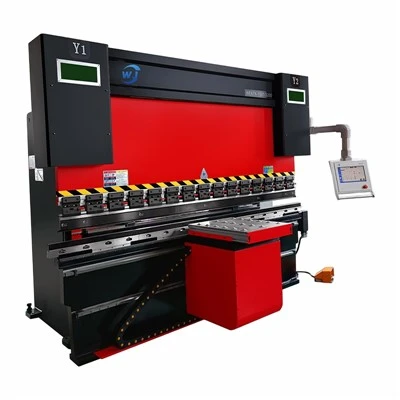
I’ve been in this industry for a long time, and I’ve seen a lot of machine manufacturers target specific sectors, claiming their product is the only solution. But the jewelry space is full of makers who need precision, speed, flexibility, and cost savings—all at the same time. For too long, press brake manufacturers have written off jewelry as a small, niche market that doesn’t need advanced equipment. But that’s changing. Luxury brands and small custom shops alike are tired of wasting material, wasting time, and losing orders because their bending process can’t keep up with demand. Our high-speed pump-controlled servo CNC press brake isn’t just a heavy fabrication machine. It’s a tool built for the unique needs of jewelry manufacturing: smooth, precise bends, fast program changes, minimal scrap, and enough flexibility to handle both a custom ring and 10,000 pairs of earrings.
Pure Electric Servo CNC Bending Machine If you’re a jewelry maker who’s been struggling with slow bends, high scrap rates, or inconsistent parts, or if you’re looking to upgrade your bending process without losing that artisanal touch, I’d love to hear from you. We can run a free, no-obligation test of our machine with your material, so you can see exactly how it works for your specific parts. No sales pitch, no pressure—just a chance to see if our press brake can solve the problems you’re dealing with every day.
References
- Jewelers of America. 2023. "State of the U.S. Jewelry Manufacturing Industry."
- Precision Metalforming Association. 2022. "Advancements in Servo Press Brake Technology for Small Batch Manufacturing."
- International Journal of Advanced Manufacturing Technology. 2021. "Tolerance Analysis of CNC Bending Processes for Thin Metal Sheets in Jewelry Applications."
- Hydraulic and Pneumatic Systems Magazine. 2020. "Energy Efficiency of Pump-Controlled Servo Drives in Metal Fabrication."
Tianjin Wujia CNC Machine Tool Co., Ltd.
Tianjin Wujia CNC Machine Tool Co., Ltd. is one of the most reliable manufacturers and suppliers of high-speed pump-controlled servo CNC press brake in China. As we have world-leading production equipment and strong manufacturing capabilities, we warmly welcome you to wholesale advanced equipment at competitive price from our factory. For more cheap products, contact us now.
Address: No. 8 Yonglian Road, Shuangtang High-end Hardware Products Industrial Park, Jinghai District, Tianjin
E-mail: leo@wujiamachine.cn
WebSite: https://www.wujiacncmachine.com/
