If you’ve ever stood next to an industrial furnace running at full capacity, you know it’s not just a big metal box that heats things up. It’s the backbone of so many processes—from forging automotive parts to sintering ceramic tiles, from treating metal alloys to processing refractory materials. For our team here at the industrial furnace company I run, the quality of every furnace we sell hinges on rigorous testing before it ever leaves our yard. Over 12 years in this business, we’ve seen too many clients cut corners on testing, only to end up with furnaces that underperform, break down mid-production, or waste energy. Today, I want to pull back the curtain on the testing methods we use to make sure every furnace we build works as hard as our clients do. Industrial Furnace
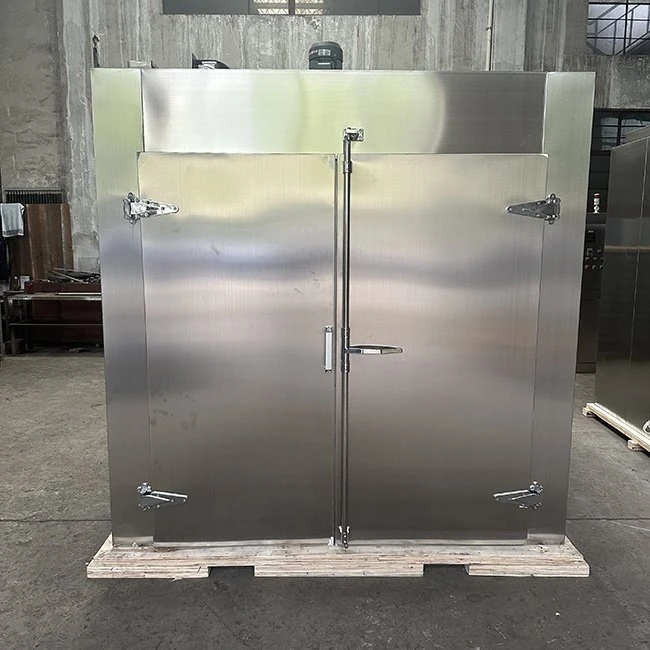
First, let’s start with something non-negotiable: our factory acceptance testing (FAT). This is the first real test a furnace goes through, right after assembly is complete, and it’s something we never skip. The FAT happens on our shop floor, so we can watch every part of the process. We test three core things here: temperature consistency, heating rate, and load capacity. Let me walk you through how that works. We load our test furnaces with calibrated thermocouples—we use 12 of them, placed on the floor, walls, and ceiling of the heating chamber, plus one buried in a dummy load of the type our client will actually use. That dummy load isn’t just scrap metal; it’s the same material, same size, same weight as what the client will run, because a furnace’s performance changes with its load. We heat the furnace to its maximum operating temperature, hold it there for four hours, and then check the temperature readings across all those thermocouples. If there’s a 10-degree difference between spots? We go back to adjust the heating elements or airflow before the furnace leaves. We also test the heating rate—how fast it can ramp from room temp to 1200°C, for example—without overshooting the target temperature. Overshooting is a killer for precision work; if you’re heat-treating aerospace parts, a 50-degree overshoot can ruin a whole batch. Last, we simulate a full load test: we stack 80% of the furnace’s maximum rated load, run a full production cycle, and check how the furnace handles the extra strain on its heating elements, burners, and insulation. A few years back, we had a client who insisted we skip the FAT to save on time. When their furnace arrived on-site, we found a misaligned burner that would have caused 15% more energy waste and uneven heating. We fixed it before they ever turned it on, but it was a reminder that FAT isn’t just a box to check—it’s how we build trust.
Next, there’s thermal performance testing, which we do after the FAT but before delivering the furnace. This one is more focused on efficiency than just basic function. Industrial furnaces are energy hogs; some use 10,000 cubic feet of natural gas an hour, so a 5% efficiency gain adds up to thousands in savings a year for clients. Our thermal testing follows standards set by the American Society of Heating, Refrigerating and Air-Conditioning Engineers (ASHRAE) and the Industrial Furnace Manufacturers Association (IFMA), so the results are consistent no matter where we test. We use a heat flux meter to measure how much heat is escaping through the furnace walls, doors, and flue. Insulation quality is key here—if our refractory insulation is too thin, heat bleeds out fast. We also test the combustion efficiency for gas-fired furnaces: we measure oxygen, carbon monoxide, and nitrogen oxide levels in the exhaust to make sure we’re burning fuel completely. Too much oxygen means wasted fuel; too much carbon monoxide means incomplete combustion, which is both inefficient and a safety hazard. We also test the furnace’s cooling cycle—how fast it can cool down to room temperature after a production run, which matters for turnaround time between batches. Last year, we tested a custom furnace for a steel forging client, and our thermal testing found that their flue draft was set wrong, leading to 12% more fuel use. We adjusted the damper on-site before delivery, and that client has saved over $18,000 a year on energy costs. That’s the kind of value testing delivers, way beyond just making the furnace work.
Then there’s pressure testing, which might sound boring, but it’s critical for safety—especially for high-temperature furnaces or those that process gases. For furnaces that use inert gases, like the ones we build for heat-treating titanium, any air leaking in can contaminate the parts being processed, ruining expensive materials. For furnaces that run under positive pressure (so hot air doesn’t escape through gaps), we test the pressure integrity by sealing the chamber and pressurizing it with nitrogen to a set level, then watching how fast the pressure drops. If it drops more than 1% in 10 minutes, we go over every seam, door gasket, and flange to find the leak. We use a soap solution on small leaks, or a helium detector for tiny, hard-to-find leaks that would cause gas contamination. For furnaces that run under vacuum (common in specialty metal processing), we do vacuum decay testing: we pull a deep vacuum, then isolate the chamber and measure how quickly the pressure rises. A vacuum leak in a furnace running at 10^-6 torr can turn a batch of $50,000 titanium parts into scrap. We had a client last quarter who almost skipped pressure testing because they were on a tight deadline, and we caught a tiny leak in a door gasket during our shop test. Replacing that gasket for free was way better than them having to scrap a $20,000 aluminum alloy batch on startup. Pressure testing isn’t glamorous, but it’s non-negotiable for our team.
We also do operational control testing, because a furnace is only as good as its controls. Modern industrial furnaces have PLC (programmable logic controller) systems that manage temperature, airflow, and cycle times, and a glitch in the controls can shut down an entire production line. We test every control feature: how the furnace responds to a set temperature change, how it alerts operators if there’s a power outage or a faulty heating element, how it logs cycle data for quality control. We simulate all kinds of worst-case scenarios: a partial power loss mid-cycle, a sudden draft change in the building, a thermocouple failing. For example, if a thermocouple goes bad, the furnace should trigger an alarm and shut down in a controlled way, not just keep running blind. We also test the human-machine interface (HMI) to make sure it’s intuitive—operators shouldn’t have to go through 10 menus to check a cycle time. Last year, we upgraded our control testing to include remote monitoring: we built in a basic remote access feature so our team can check the furnace’s performance after delivery, and we tested that during FAT by simulating a remote check from our office. That’s helped us troubleshoot small issues before they become big ones for our clients.
Finally, there’s on-site commissioning testing, which is the final step before a furnace goes into full production. No matter how perfect a furnace tests in our shop, the factory floor’s environment matters—ambient temperature, humidity, even nearby equipment that could affect airflow. When our techs arrive at a client’s plant, we don’t just set up the furnace and walk away. We run all the same tests we did at our factory, but this time with the client’s process control team there to train them. We work with their specific material needs: if they run 100kg of brass billets, we use that exact load instead of a dummy, to make sure the furnace adjusts correctly. We also do a trial production run: we process 10 test parts, check their hardness, composition, and finish, to confirm the furnace meets their quality standards. A few months back, we delivered a furnace to a pottery manufacturer in Michigan, and on-site testing found that the plant’s natural gas pressure was lower than our shop’s. We adjusted the burner orifice size to match their pressure, so the furnace hit their required sintering temperature perfectly on the first run, no reworks needed. That’s the difference between a furnace that works in a controlled factory and one that works for your unique production space.
I know some clients see testing as an extra cost, especially when they’re trying to get a project online fast. But over 12 years, I’ve learned that every hour we spend testing saves our clients thousands in downtime, scrap, and energy costs later. Our furnace testing process is built on real-world experience, not just textbooks—we’ve fixed so many issues that don’t show up in standard test guides, because we’ve seen what happens when a furnace runs for 12 hours a day, 7 days a week.
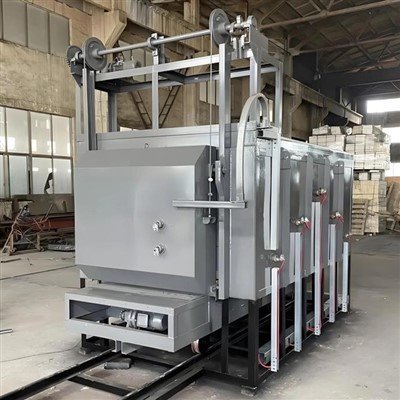
If you’re in the market for an industrial furnace, don’t just ask the supplier what their testing process is. Ask to see their FAT results, ask about pressure testing protocols, ask how they handle on-site commissioning. At our company, we’re always happy to walk through our testing process with potential clients, because we know that a tested furnace is a furnace that will keep your production running smoothly, and your costs low. If you’re ready to talk about a custom furnace for your specific process, or just have questions about testing methods, reach out to our team to schedule a consultation. We’re here to make sure your furnace works as hard as you do, from the first test run to years down the line.
Industrial Furnace References
- American Society of Heating, Refrigerating and Air-Conditioning Engineers. ASHRAE Handbook: HVAC Systems and Equipment. 2022.
- Industrial Furnace Manufacturers Association. Standard Practices for Testing Industrial Furnaces. 2021.
- Dravnieks, A. Testing for Gaseous Leaks in High-Vacuum Systems. Journal of Vacuum Science and Technology, vol. 12, no. 1, 1975, pp. 78-85.
- National Fire Protection Association. NFPA 86: Standard for Ovens and Furnaces. 2023.
Nanjing Ranran Tiancheng Drying Equipment Co., Ltd.
As one of the most professional industrial furnace manufacturers and suppliers in China, our products have good reputation in the market. Please feel free to buy advanced industrial furnace for sale here from our factory. All customized products are with high quality and competitive price.
Address: No. 5 Xinhua Road, Shangba Village, Longtan Street, Qixia District, Nanjing City
E-mail: rrtc@rrtcoven.com
WebSite: https://www.rrtcoven.com/
