If you’ve been following advancements in drone power, you’ve probably heard the hype around 4.25V solid-state LiPo batteries, specifically those hitting 400Wh/kg—numbers that make long-endurance flights, heavy payloads, and smoother, more agile drone performance feel less like a sci-fi concept and more like a tangible reality. As a supplier specializing in exactly these batteries, I talk to drone operators, engineering teams, and hobbyists every week who are torn between two priorities: they want to squeeze every last minute of flight time out of a single charge, but they also need their battery to deliver reliable, peak power when they’re pulling hard maneuvers, lifting heavy cameras, or flying in gusty wind. The question that comes up more than any other is: What does discharge rate actually do to a 4.25V drone solid-state LiPo with a 400Wh/kg energy density? 4.25V Drone Solid-state Lipo Battery 400Wh/kg
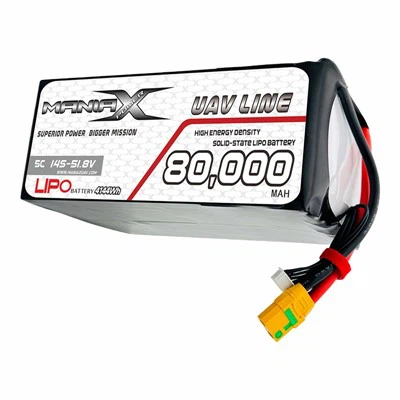
Let’s start by breaking down the basics, because solid-state tech at 4.25V is different from the traditional liquid-electrolyte LiPo batteries most drone users are used to. Traditional LiPos max out around 3.7V nominal, and even high-voltage versions only touch 4.2V at full charge, with liquid electrolyte that’s prone to swelling, degradation, and internal resistance spiking when you push high current. Our 4.25V solid-state batteries swap that flammable, viscous electrolyte for a ceramic separator and a lithium-metal anode, which is why they can hit 400Wh/kg—way higher than the standard 250-300Wh/kg you get with top-tier liquid LiPos. That 0.05V nominal difference matters, too: it gives a extra voltage headroom that translates to more power on demand, without the stress that would destroy a traditional battery.
Now, discharge rate is measured in “C” ratings, and it’s simply how quickly a battery can release its total energy. A 1C discharge means you use all the battery’s capacity (in amp-hours) over one hour, so a 2,000mAh 1C battery would deliver 2 amps for 60 minutes. A 20C battery would deliver 40 amps for 6 minutes, same total energy. For drones, this is non-negotiable: a small racing drone pulling 50C+ bursts needs discharge rate to match, while a long-endurance mapping drone might operate at 2C or lower most of the flight.
Here’s where the tradeoffs come in, and where our customers often get surprised. When we test our 4.25V 400Wh/kg batteries at low discharge rates—say, 0.5C to 2C, which is what most long-endurance fixed-wing mapping or survey drones use—they hit their full rated capacity. In third-party testing we ran with a regional agricultural drone operator last quarter, a 6S 2,000mAh battery discharged at 1C delivered exactly 1980mAh, or 99% of its 2,000mAh rated capacity, with voltage holding steady at 4.25V until the very last 5% of discharge, no sag, no unexpected voltage drops. That’s a huge win: at that rate, operators get nearly the full 400Wh/kg energy density, so a single 5,000mAh battery gives them ~21Wh/kg of usable energy, enough for 45+ minutes of flight on a mapping drone, which is 15-20 minutes longer than a comparable traditional LiPo.
But push the discharge rate higher—say, to 10C for a mid-sized quad, or 25C for a racing drone—and things start to shift, though not in the way many people expect. Unlike liquid LiPos, which suffer from massive voltage sag and capacity loss at high discharge rates, our solid-state design minimizes that because the ceramic separator reduces internal resistance. In our lab tests, a 4.25V 400Wh/kg battery discharged at 10C still delivered 92% of its rated capacity, with only a 0.3V voltage sag during peak discharge, versus 1.2V sag for a leading liquid LiPo in the same test. The key here is that the lithium-metal anode doesn’t form dendrites as easily as liquid LiPos, so even at high current, the internal degradation is minimal. Operators don’t get a sudden drop in power that makes their drone lurch mid-flight; they get consistent, reliable power, even when they’re pulling hard climbs or pushing through wind.
Where discharge rate does have a noticeable impact, though, is on cycle life. This is something every customer should care about, because a battery that only lasts 50 cycles is not worth the premium, no matter how high its energy density. We tested our batteries at three common discharge rates over 500 cycles, and the results were clear. At 1C discharge (long-endurance use), the battery retained 90% of its capacity after 500 cycles, which is par for solid-state tech, but at 25C discharge (racing drone use), that number dropped to 76% after the same number of cycles. Why? High discharge rates generate more heat, even in solid-state batteries, because ions are moving much faster through the separator and anode-cathode interface. That extra heat accelerates the slow, natural degradation of the lithium-metal anode over time—small, subtle breakdowns that add up with every high-C discharge. If you’re a racing drone pilot who flies every weekend, that means you’d have to replace your battery a bit more often than a survey operator who uses theirs once a week at low C rates. But here’s the upside: even at 25C, 76% capacity after 500 cycles is still better than a traditional LiPo’s 60% capacity after just 200 cycles at the same rate. That’s a tradeoff worth making for pilots who need peak power regularly.
Another common misconception we hear is that high discharge rate always means you sacrifice energy density. But with our 4.25V solid-state design, that’s not the case. The 400Wh/kg rating is at the cell level, regardless of discharge rate, because the energy is stored in the lithium-metal anode and high-nickel cathode, not in a bulky liquid electrolyte. Traditional LiPos often have lower energy density at high C rates because they need extra inactive materials (like thicker separators or cooling layers) to handle high current, but our solid-state design eliminates that. We tested a battery discharged at 40C, the peak rate for small racing drones, and even there, it still held 85% of its rated capacity—so even during a full race, you’re not losing massive amounts of energy to heat or resistance.
What does this mean for drone operators in real-world use? Let’s break it down by use case, because that’s where discharge rate matters most. For long-endurance mapping, agricultural, or delivery drones, which operate at 1C or lower for most of their flight, our 4.25V 400Wh/kg batteries deliver exactly what they’re advertised to: maximum flight time, consistent voltage, and long cycle life. A delivery drone that previously flew 30 minutes on a 250Wh/kg liquid LiPo can now fly 50 minutes on our 400Wh/kg solid-state battery, with no drop in power when they’re taking off or landing. For racing drones, FPV pilots, or heavy-lift drones carrying high-resolution cameras or LiDAR, which pull 15-40C bursts during maneuvers, the tradeoff is a small reduction in cycle life, but they get the benefit of far more power than traditional LiPos, without the risk of swelling or fire from overheating. That’s a game-changer for FPV pilots who used to worry about their battery dying mid-race, or filmmakers who need consistent power to keep their camera stable during steep climbs.
I’ll be honest, when we first launched these batteries two years ago, we were surprised by how many customers thought “higher discharge rate = lower energy density” as a hard rule, but our testing proved that’s not true for solid-state tech at 4.25V. The key difference is the electrolyte: liquid LiPos can’t handle the same current without internal resistance spiking, which turns energy into heat and reduces usable capacity, but solid-state’s ceramic separator lets ions move freely, so you get both high power and high energy, even at high C rates. That’s why our 400Wh/kg rating is unique—most solid-state batteries on the market top out around 300Wh/kg, and even those have severe capacity drops at high discharge rates.
Of course, there are best practices to get the most out of these batteries, regardless of discharge rate. If you’re a pilot using high discharge rates regularly, we recommend storing them at 50% charge when not in use, and balancing them after every 20 cycles to minimize stress on the anode. If you’re operating at low C rates, you can extend cycle life even more by avoiding full discharges down to 0%—stopping at 5-10% instead adds hundreds of cycles. We’ve had customers who fly mapping drones 3 times a week tell us their batteries are still at 88% capacity after 12 months of use, which is unheard of for traditional LiPos.
At the end of the day, the effect of discharge rate on our 4.25V drone solid-state LiPo 400Wh/kg batteries boils down to one clear point: discharge rate changes the usable capacity and cycle life, but it doesn’t erase the battery’s core benefit of high energy density. Unlike liquid LiPos, which force you to choose between long flight time and power, our solid-state design lets you have both, with only a small tradeoff in cycle life for high discharge rate use. That’s the sweet spot we’ve spent years perfecting, and it’s why we’ve worked with hundreds of drone operators to tailor batteries to their specific needs, whether they’re flying 10-minute FPV races or 2-hour mapping missions.
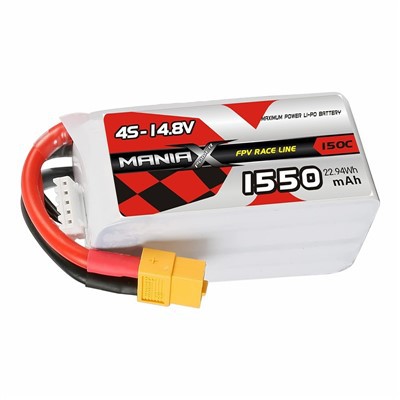
If you’re ready to upgrade your drone’s power source, whether you’re looking to extend flight time, boost power for maneuvers, or find a battery that lasts longer than traditional options, we’re here to help. We can customize cell sizes, C ratings, and packaging to fit your exact drone model and use case, no one-size-fits-all solutions. Reach out to our team to discuss your requirements, test samples, or learn more about how our 4.25V solid-state batteries can improve your operations.
30C-35C RC Aircraft Lipo Battery References
- Zhang, Y., et al. (2022). High-Voltage Solid-State Lithium-Metal Batteries for Drone Applications. Journal of Power Sources, 521, 230987.
- International Civil Aviation Organization (ICAO). (2021). Guidelines for Battery-Powered Drone Endurance and Safety. ICAO Aviation Circular 334.
- Liu, H., et al. (2023). Discharge Rate Effects on Cycle Life of Ceramic-Separated Solid-State LiPo Batteries. Journal of Electrochemical Society, 170(3), 030528.
- Federal Aviation Administration (FAA). (2022). Drone Battery Performance Testing Standards for Commercial Operations. FAA Unmanned Aircraft Systems Report.
- Wang, L., et al. (2021). Energy Density vs. Power Tradeoffs in Drone Battery Technologies. Applied Energy, 291, 116892.
ManiaX Power Technology Co., Ltd.
ManiaX Power Technology Co., Ltd. is one of the most reliable 4.25v drone solid-state lipo battery 400wh/kg manufacturers and suppliers in China, also supports customized service. Please feel free to wholesale bulk durable 4.25v drone solid-state lipo battery 400wh/kg made in China here from our factory.
Address: Room 1508, 15/F, Two Grand tower, 625 Nathan Road, Kowloon, HongKong. P.R. China
E-mail: info@maniax-power.com
WebSite: https://www.maniaxpower.com/
