Hey everyone, it’s Jake here from the feed pellet mill team – before I get into today’s post, let’s be real: if you’re messing around with animal feed, you know that pellets aren’t just easier to ship or feed. They save you so much money on waste, make nutrition way more consistent, and even keep your livestock happier (no more picking through a pile of mash to find the bits they like). But here’s the thing that stops so many folks dead in their tracks: choosing the right pellet mill. It’s not like grabbing the first one on Amazon that has a 4.8-star rating. There are way too many factors that’ll make or break how smoothly your operation runs, how much money you spend, and even how good your end pellets turn out. I’ve seen guys drop $10k on a mill that’s way too small for their farm and another that’s overkill for a backyard setup – and both of them regretted it. So let’s break this down like we’re chatting over a coffee, no jargon, no fluff. Feed Pellet Mill
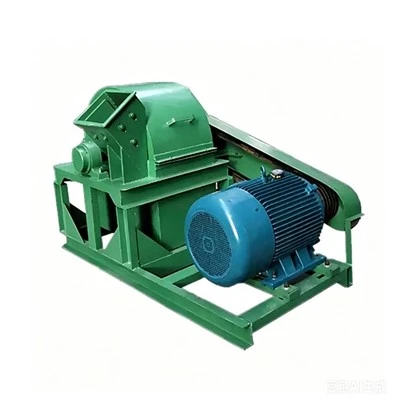
First off, let’s talk about throughput. That’s just a fancy word for how much feed you can crank out in an hour, right? And this is the #1 mistake I see new buyers make: sizing for what they need today, not what they’ll need in a year. If you’re a small hobby farm with 50 goats and 20 chickens, a 100kg/hour mill is perfect. But if you’re a mid-sized operation with 500 cows or a small feed mill that’s looking to add pellets to your line, you’ll want something closer to 500-1000kg/hour. Wait, but don’t just go big – a friend of mine runs a 2,000-sow pig farm and bought a 2,000kg/hour mill because he thought it’d be faster. Problem is, his daily demand only hits 1,200kg, so he’s got a $20k machine sitting idle 12 hours a day. Total waste. I always say: calculate your peak daily feed needs, then add 20-30% extra. That gives you room for growth, but not so much that you’re throwing money at unused capacity. And here’s a pro tip: if you’re mixing different types of feed (like poultry vs. cattle), make sure the mill can handle switching formulations without needing a full 2-hour deep clean every time – that’ll save you so much downtime.
Next up, die and roller specs. This is the secret sauce of a pellet mill, honestly. The die is the round plate with little holes in it, right? And rollers press the feed mash through those holes to make pellets. Let’s start with the die: hole size is non-negotiable for what you’re feeding. If you’re making chicken feed, you want holes that are 3-5mm. For cattle or horses, it’s 6-12mm. For small pets like rabbits or hamsters, you might even go down to 1.5-2mm. Get this wrong, and your pellets’ll be too crumbly or too big for the animals to eat. Then there’s die thickness – thicker dies mean more pressure, so harder, more durable pellets, but they also slow down throughput. Thinner dies are faster, but pellets might be softer and break easier. If you’re shipping pellets long-distance, go thicker; if you’re feeding them straight to your own livestock, thinner works fine. And don’t sleep on die material. We use hardened steel for all our dies, because regular steel dies wear out super fast, especially if you’re feeding stuff with a lot of fiber (like alfalfa or corn stalks). A hardened steel die might cost a little more upfront, but it’ll last 2-3 times longer, so you save cash in the long run. Rollers are important too – they need to be properly spaced and aligned with the die. If they’re too tight, they’ll burn out the motor; too loose, they’ll waste feed and make messy pellets. Ask the supplier if the rollers are adjustable – that way you can tweak them for different feed types, which is a game-changer if you switch up your formulations often.
Motor power is another big one, and it’s tied straight to throughput. Let’s keep this simple: a 100kg/hour mill needs around 5-7.5 kW, a 500kg/hour is 15-22 kW, and a 2,000kg/hour is 55-75 kW. But here’s the catch – that’s under ideal conditions. If you’re feeding really dry, fibrous mash, you’ll need a little more power. If your power supply at your farm is inconsistent (like if you’re in a rural area with old wiring), get a mill with a variable speed motor. That lets you adjust the speed to match the power you have, so you don’t blow a fuse mid-run. I’ve had customers with big mills get tripped up by this – they bought a cheap mill with a fixed speed motor, and their local grid can’t handle it when they run it at full power, so they have to run it at half speed all day. Total headache. Also, check if the motor is electric or diesel. Electric is way cheaper to run long-term, but if you don’t have reliable power (like if you’re operating off-grid), diesel is the only way to go. Some mills even have both, which is a great middle ground if you live in an area where power cuts are common.
Now, style of mill. There are three main types, and picking the wrong style is just as bad as sizing wrong. First, there’s flat die mills – these are the small to mid-sized ones, super popular for hobby farms and small commercial ops. They’re cheaper, easier to move around, and simpler to maintain. Most flat die mills can be tabletop or mounted on a skid, so you can haul them to a different part of the farm if you need to. The downside? They’re not great for super high throughput (max around 1,500kg/hour), and the dies do wear a little faster than other types. Then there’s ring die mills – these are the big boys, for mid-sized to large commercial feed mills or farms with massive daily demand. The die is a big rotating ring, and rollers press the mash against the inside of the ring. They’re way more efficient for high volume, make way more consistent pellets, and the dies last longer. But they’re also way more expensive, heavy, and need way more maintenance. You can’t just move a ring die mill – it needs a permanent spot in your facility, plus you need to hire someone who knows how to service it. Third, there’s the extruder style, which is more for specialty feeds (like floating pellets for fish or slow-release pellets for pets). Extruders cook the feed as they pellet it, which makes the pellets more durable, but they’re overkill for most livestock feed unless you’re targeting a niche market. I always ask customers: “Are you making feed for 100 chickens or 10,000? Do you need to move this mill around or keep it in one spot?” That’s how you pick the style.
Maintenance and parts availability. This is something almost no one thinks about until their mill breaks down and they can’t get a replacement part for two weeks. Imagine this: it’s feeding time, your mill dies, and the part you need is made in a factory that takes 10 days to ship. All your livestock go without feed, you lose money, and you’re stressed out of your mind. That’s why I always tell people to go with a supplier that keeps parts in stock locally. We have parts warehouses in North America, Europe, and Southeast Asia, so if a customer’s roller breaks, they get a new one in 2 days max. Also, check how easy it is to clean and maintain. Pellet mills get caked with feed mash, especially between runs, and if you don’t clean them right, the old feed goes bad and ruins your next batch. Look for mills with quick-release panels, no hard-to-reach crevices, and parts that you can swap out without needing a mechanic. Some cheap mills require you to disassemble half the machine just to change a die – that’s a huge waste of time. Also, ask about training. A lot of new mill operators don’t know how to adjust the rollers or set the die speed, which leads to bad pellets or broken parts. Good suppliers will give you free training, either in person or over a video call, and have a support team that can answer questions at 9pm when you’re panicking because your pellets won’t form.
Budget, let’s be real, this is the elephant in the room. You can get a cheap flat die mill for $2,000, or a ring die mill for $50,000 – and everything in between. But here’s the rule: don’t go for the absolute cheapest option if you can avoid it. I’ve seen guys buy a $1,500 mill on Alibaba that broke after 3 months, and they had to spend another $1,000 on repairs plus lose a week of feed production. Total cost way more than if they’d spent $3,500 on a reliable mill from a trusted supplier. But also, don’t overspend on features you don’t need. If you’re a hobby farm, don’t drop $10k on a mill with remote monitoring and automatic cleaning – you’ll never use those features. Figure out your “must-have” list, not your “nice-to-have” list. Must-haves could be: parts in stock, enough throughput for your needs, adjustable rollers. Nice-to-haves could be: mobile, variable speed, off-grid capability. Prioritize those, and you won’t waste money. One more thing to consider: return policies. A lot of suppliers don’t let you return a mill once it’s used, but some will let you test it for a week. Take that opportunity! Run a few batches of your actual feed through it, see if it forms good pellets, if it’s easy to use, if it keeps up with your demand. If it doesn’t work, you can send it back – way better than being stuck with a machine that’s wrong for you.
Wait, let’s circle back to a few quick extra points that I almost forgot. First, pellet quality additives? No, the mill’s quality matters more than any additive, but make sure your mill can handle steam conditioning if you want to add molasses or other binders. Steam makes pellets more durable, so if you’re shipping long-distance or making pellets for cattle that might knock them around, a mill with a conditioner is a good call. Second, noise level. If you’re operating the mill near your house or other farms, a loud mill can be a pain. Look for mills with sound-dampening covers – modern ones are way quieter than the old clunky ones. Third, warranty. A good warranty is non-negotiable. We offer a 2-year warranty on all our mills, including parts, because we stand behind our stuff. If a supplier only offers a 30-day warranty, that’s a red flag – they don’t expect the mill to last.
At the end of the day, choosing the right feed pellet mill isn’t rocket science – it’s just about knowing your own operation, asking the right questions, and not cutting corners on stuff that matters. If you’re still unsure, or you’ve got a specific setup in mind (backyard hobby farm, mid-sized pig operation, fish feed plant), don’t overthink it. Reach out to our team, we can walk you through sizing, specs, everything, no pressure. We’ve helped hundreds of guys get the right mill for their needs, not just sell them the biggest, most expensive one.
Before I wrap this up, let’s recap the quick cheat sheet so you don’t forget:
- Sizing: Peak daily demand + 20-30% extra, not what you use today.
- Die & Rollers: Match hole size to your animal, hardened steel dies, adjustable rollers.
- Power: Variable speed for inconsistent grids, electric if possible, diesel if off-grid.
- Mill Style: Flat die for small/mid, ring die for large, extruder only for specialty feeds.
- Maintenance: Local parts availability, easy to clean, good support.
- Budget: Don’t go cheapest, don’t overbuy features you won’t use.

That’s all for today, guys. If you’ve got questions, or you’re ready to start looking at mills, get in touch with our team to talk through your needs. No sales pitch, no pressure, just straight answers about what’ll work best for you.
Chaff Cutter References:
Feed Manufacturing Technology, 5th Edition. American Feed Industry Association, 2021.
Pellet Mill Selection Guide for Small and Medium Scale Livestock Operators. USDA Natural Resources Conservation Service, 2022.
Maintenance Best Practices for Feed Pellet Mills. International Feed Industry Federation, 2023.
Zhengzhou Xinyihaotong Machinery Manufacturing Co., Ltd.
As one of the most professional feed pellet mill manufacturers in China, we also support custom service. We warmly welcome you to buy high quality feed pellet mill for sale here from our factory. For price consultation, contact us.
Address: Rooms 2301–2312, Jiayi Building, Xinxiang City, Henan Province, China
E-mail: zhaoyixuan5566@gmail.com
WebSite: https://www.xyhtmachinery.com/
