Let’s cut through the technical jargon and get straight to what a pigtail cable assembly actually is—because if you’ve ever worked in telecom, renewable energy, data centers, or even just tried to set up a home Wi-Fi mesh, you’ve almost certainly interacted with one without realizing it. For the past seven years, I’ve run this small cable assemblies and accessories supply business, and I can’t tell you how many times a new client has called, saying, “We need a short cable with connectors on one end?” only to realize they’re describing a pigtail. Let’s break this down like we’re sitting in my warehouse, drinking that gas station coffee that’s way too strong but gets us through late order runs. Cable Assemblies & Accessories
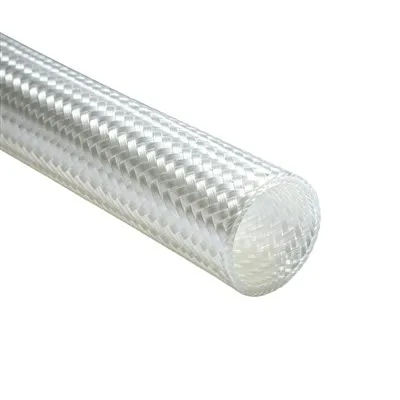
First, let’s get the basics right. A pigtail cable assembly is a pre-terminated electrical or fiber optic cable that’s short (usually 1 to 10 feet, though we make custom lengths for niche projects) with a connector attached to one end—and bare, exposed conductors or stripped fiber strands on the other. Wait, hold on—some people mix this up with patch cords, right? Patch cords have connectors on both ends, that’s the easy way to tell them apart. A pigtail is literally a “tail” of cable with one connector, meant to be spliced or terminated to another component, not plugged directly into two devices. That’s the core difference, and it’s what makes pigtails so essential for so many industries.
Let’s start with the most common type people ask about these days: fiber optic pigtails. Back in 2016, when we first started specializing in telecom cable components, fiber pigtails were mostly used for telco network outside plant (OSP) installations. But now? Every data center, rooftop 5G small cell, and even residential fiber to the home (FTTH) setup relies on them. Here’s how that works: when a telecom technician runs a 1,000-foot underground fiber cable from a curb to a neighborhood, they don’t want to terminate the entire cable at the curb with a big connector. They’ll pull a 2-foot LC (Lucent Connector, that’s the small, square one you see in data center racks) pigtail, strip the fiber, and fusion-splice it to the main fiber run. The other end of the pigtail plugs into the neighborhood’s optical network terminal (ONT), which is what gives your home internet. Without that pigtail, you’d be splicing the main 1,000-foot fiber directly to the ONT, which is way harder to do in a tight, messy utility box. We make LC, SC (Subscriber Connector, the bigger square one), ST (Straight Tip, the old-school circular one), and MPO (Multi-fiber Push On, for high-density data centers) fiber pigtails, all with 9/125 or 50/125 micron fiber, depending on if it’s single-mode or multi-mode.
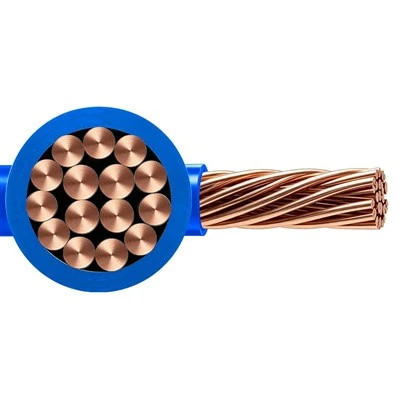
Then there’s copper pigtails, which are just as important, if not talked about as much. Copper pigtails are used for power distribution, control systems, and even low-voltage data networks. For example, in a solar panel array—you know, those big commercial ones in the desert? Each panel has a junction box, and the wiring between panels needs to be connected reliably. We make 14-gauge and 10-gauge copper pigtails with MC4 connectors, the standard for solar applications, because MC4 connectors are weatherproof and can handle the outdoor heat and UV. A solar installer will wire each panel to a pigtail with an MC4 on one end, then connect that to another pigtail from the next panel. Without these pigtails, installers would have to strip and crimp every single solar wire on-site, which takes hours and introduces a lot of human error. We had a big solar company come to us last year because their previous supplier was cutting corners on the MC4 connectors—we tested our pigtails to hold up to 1,000 thermal cycles, which is more than the industry standard, and they’ve been a repeat client ever since. Copper pigtails are also used in industrial control systems, like those in manufacturing plants, where they connect sensors to PLCs (programmable logic controllers). Short, sturdy, pre-terminated means less downtime, which is huge when a factory is losing $10,000 an hour if the line stops.
Wait, let’s talk about why pigtails exist in the first place, because it’s not just convenience. Back in the day, technicians would buy bulk cable, strip the ends, and crimp or solder connectors on-site. But that had so many issues: inconsistent crimping (too loose and it comes apart, too tight and it cracks the connector), human error that leads to signal loss or power leaks, and wasted time in the field. Pigtails standardized that process. As pre-made assemblies, they’re tested in our factory before they ever leave the warehouse—we check for continuity, signal strength, connector retention, even pull-test the ends to make sure they don’t come apart. That’s a game-changer for people working in hard-to-reach places: if you’re 50 feet up a cell tower, you don’t want to be fumbling with a crimp tool and a roll of cable. You just grab a pre-made pigtail, plug one end, and terminate the other to the main line.
Now, there are a lot of misconceptions about pigtails. Some people think they’re only for short runs, but we’ve made pigtails up to 50 feet for special applications—like connecting large radar systems in military facilities, where the main cable run is long, but you need a standardized connector at the end to link to the radar unit. Others think all pigtails are the same, which is definitely not true. A fiber pigtail for data centers has to use ultra-low-loss fiber to handle 10Gbps, 40Gbps, even 100Gbps signals. A solar pigtail has to be UV-resistant and rated for outdoor temperatures from -40°F to 185°F, which is way harsher than the home wiring you have in your walls. We also make specialty pigtails, like medical grade ones for diagnostic equipment, where the cable has to be flexible enough to fit inside a MRI machine and non-toxic for sterile environments.
Let me share a quick story that shows how important pigtails are. Last year, we got an emergency call from a data center client in Chicago. A power outage had taken out a rack of servers, and the techs found that a copper pigtail connecting the server to the power distribution unit (PDU) had corroded. The pigtail was a custom length—18 inches, with a specific connector that the data center used for high-power servers. We had it in stock, but the client needed it that day because a 4-hour delay would cost them over $200,000 in lost e-commerce revenue. We loaded up a van, drove 3 hours to Chicago, and delivered it that afternoon. That’s the kind of work we do, and pigtails are at the center of that because they’re the quick, reliable fix that keeps critical infrastructure running.
Now, if you’re a project manager, installer, or engineer reading this, you might be wondering: what should I look for when choosing a pigtail cable assembly? First, match the connector type to your application—don’t use an LC fiber pigtail if you need an SC, that’s a simple mistake that causes big headaches. Second, check the cable rating: for outdoor use, make sure it’s riser-rated or plenum-rated, depending on where it’s going. Plenum-rated cables are required in air handling spaces in buildings because they don’t release toxic fumes when they burn. Third, look for a supplier that tests their assemblies—we test every pigtail for signal integrity (for fiber) and continuity (for copper) before shipping, and we keep test records for every order, in case someone needs to reference it later. Fourth, don’t settle for generic pigtails if you have custom needs. We do custom lengths, custom connectors, even modified jackets—like adding a steel core for extra strength in areas where rodents might chew on cables, which is a big problem in rural telecom networks.
Wait, let’s address a common question: can I make my own pigtails? Technically, yes, but most people don’t because of the risks. Crimping a connector wrong on-site can lead to signal loss that you can’t see until the system is running, which means you have to dig up the line or climb the tower again to fix it. Fusion splicing fiber (the process of melting two fiber ends together) requires expensive equipment and training—you can’t just use a crimp tool on fiber like you do on copper. For copper, crimping tools for large gauge wires are heavy and require practice to get right. It’s almost always more cost-effective in the long run to buy pre-made, tested pigtails from a reputable supplier, than to do it yourself and deal with downtime later.
Looking ahead, pigtails are only going to get more important. As 5G networks roll out globally, we’re seeing more demand for small cell pigtails that can handle high-frequency signals without interference. Renewable energy projects—especially utility-scale solar and wind—need more pigtails to connect panels and turbines. Even electric vehicle (EV) charging stations use pigtails to connect the charging cable to the grid, because those cables need to be rugged and reliable for thousands of uses. We’ve already expanded our product line to include EV charging pigtails, and it’s been one of our fastest growing segments in the last two years.
Data Communication Cable At the end of the day, a pigtail cable assembly is a small, simple part, but it’s the link that makes all the big systems work. Whether you’re streaming a show from a data center, charging your electric car, or getting internet from a cell tower, there’s a good chance a pigtail is sitting there connecting everything together. If you’re working on a project and need pigtails—whether standard, custom, for telecom, solar, data centers, or industrial applications—we’re here to help. Our team has over a decade of experience working with different industries, so we can help you pick the right pigtail for your needs, get you a quote fast, and ship on time, even for emergency orders. Don’t hesitate to reach out to our team to discuss your requirements and find the right cable assembly solution for your project.
References
- Federal Communications Commission. (2021). Fiber Optic Deployment and Maintenance Best Practices for FTTH Networks. FCC Office of Engineering and Technology.
- International Electrotechnical Commission. (2019). Standard for Fiber Optic Connector Interfaces (IEC 61753-1). IEC Central Office.
- National Electrical Manufacturers Association. (2020). Standard for Copper Pigtail Assemblies for Solar Photovoltaic Systems (NEMA FC 1-2020). NEMA.
- Data Center Industry Association. (2022). High-Density Cabling Standards for Hyperscale Data Centers. DCiA Technical Report.
Yangzhou Huayu Cable Co., Ltd.
Yangzhou Huayu Cable Co., Ltd. is one of the most professional cable assemblies & accessories manufacturers and suppliers in China, also supports customized service with low price. Please feel free to wholesale advanced cable assemblies & accessories made in China here from our factory. Contact us for pricelist.
Address: No.9 Jingang Road, Yangzhou City, Jiangsu Province, China
E-mail: info@huayucabletech.com
WebSite: https://www.huayucabletech.com/
