When I first started as a stretch film supplier, I didn’t just sell rolls of plastic to warehouse managers and logistics leads. I’d stand in loading bays and watch them struggle: a pallet of electronics shifting during transport, boxes leaning so far they almost toppled, that sinking feeling when a driver calls saying your inventory’s damaged. Back then, I thought stretch film was just “that plastic wrap we use to hold stuff together.” Now, after 12 years on the floor, I know it’s way more than that—it’s a quiet, engineering-backed workhorse that turns messy stacks of products into secure, transport-ready loads. Let’s break down how it actually works, and why choosing the right one matters more than you think. Stretch Film
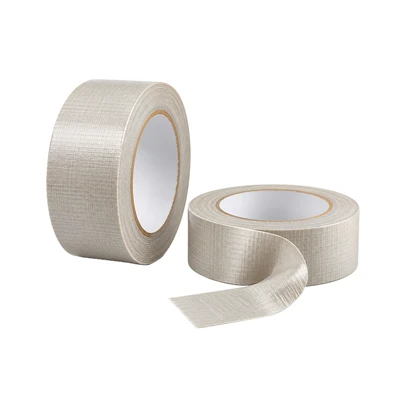
First, let’s start with what stretch film is, because not all wraps are created equal. Unlike shrink film, which shrinks when heated to conform to a load, stretch film is a thin, flexible polymer (usually linear low-density polyethylene, or LLDPE) that’s stretched on purpose before applying it to a pallet. That intentional stretch is the core of its superpower. Most people don’t realize this: when you stretch the film, you’re not just making it longer—you’re rearranging the molecular structure of the plastic itself. Think of it like a bunch of spaghetti noodles tangled loosely together. If you pull gently, those noodles align straight, and they pull tighter against each other. That’s exactly what happens with LLDPE molecules. When the film is stretched 100% to 300% of its original length (that’s standard for hand or machine application), the long polymer chains align parallel to the direction of the stretch. This alignment is where tensile strength comes from. Tensile strength is the amount of force a material can withstand before breaking, and aligned LLDPE has way more of it than un-stretched plastic. That’s why a thin 80-gauge stretch film (gauge is just a way to measure thickness, for reference) can hold hundreds of pounds of product without tearing.
Next, there’s something called “pre-stretch,” which is a big differentiator between hand wrap and machine wrap, and why suppliers like us invest so much in equipment. Hand stretch wrap tools can only get about 100% pre-stretch, meaning you pull the film until it’s twice its original length. But machine stretch wrappers? They can hit 300% pre-stretch, sometimes even more with high-performance films. That extra stretch isn’t wasted—it multiplies the holding force. Let me do the math simply: if a load needs 500 pounds of containment force to stay secure, with 100% pre-stretch, you’d need to use twice as much film to get that force. With 300% pre-stretch, that same force comes from just a third of the film. That’s why machine wrapping is not only more consistent but also cheaper per load. I’ve seen customers switch from hand wrap to pre-stretch machine lines and cut their film costs by 30 to 40% in the first year, all while securing loads better. It’s counterintuitive, but stretch film works better when you stretch it more—up to a point, of course. Too much stretch, like pulling the film so tight it almost breaks, and you lose that molecular alignment; the film snaps back less, and the holding force drops. That’s where our team’s expertise comes in—we help customers find the sweet spot for their specific loads.
Now, how does that translated to actually holding a load together? When you wrap a pallet, you’re overlapping layers of stretch film, creating a continuous, taut blanket around the entire stack. Each time you apply a layer, the stretched film wants to snap back to its original length—this is called “memory,” and it’s the second key force that secures the load. That snapping-back force, called “relaxation force,” pulls each box tight against the ones below it and against the pallet itself. No more shifting, no more gaps between boxes that let them slide around. For example, a pallet of corrugated boxes: if you just stack them, each box can move half an inch in transit. But with 10 layers of stretched stretch film, each pulling at 20 pounds, that total containment force adds up to 200 pounds, locking every box in place. I’ve seen loads that would have shifted so bad they damaged products turn into loads that get to the other end with not a single box out of place, all because of that memory force.
Wait, but there’s a lot more factors that affect how well this works, right? The load itself matters. A load with heavy, dense products like metal parts is different from lightweight, fragile items like glassware. For heavy loads, you need a higher-gauge film, or a film with better tear resistance, because the relaxation force has to be strong enough to hold the weight without sagging. Sagging is a real issue—if the film is too thin for a heavy load, it will stretch so much that the middle layers pull down, creating gaps at the top or bottom of the pallet, which makes the load unstable. That’s why we often test sample rolls with customers: we’ll help them test a small wrap of their actual load on a test pallet, see if the film holds up, if there’s sagging, if it tears at the corners. No one wants to find out during a cross-country trip that their film is too weak.
Another thing people overlook: the number of wraps and the pattern. You can’t just wrap a pallet twice and call it a day. The standard is 6 to 8 vertical layers for a small pallet, 10 to 12 for a large or heavy one, plus 3 to 5 horizontal layers at the top and bottom to cap the load. The top layers are extra important because that’s where loads are most likely to shift during braking or cornering. I once had a customer who was wrapping a pallet of furniture with only 4 layers total, and every third load had a sofa sliding off the back of the truck. We adjusted their wrap pattern to 12 vertical layers and 5 horizontal top layers, and the issue stopped entirely. It’s simple, but it’s science in action.
Now, let’s talk about common mistakes I see customers make, because a lot of the time, stretch film isn’t working as well as it could because of how it’s used. One big one is over-stretching. I mentioned earlier that there’s a sweet spot, and when you go past it, the memory force drops. I’ve seen operators pull film so tight it’s almost translucent, thinking they’re making the load more secure, but actually, that film will snap back barely at all, so it’s just a thin layer of plastic, not a secure wrap. Another mistake is using the wrong gauge for the load. A lot of people buy the cheapest film they can find, which is often a thin 50-gauge hand wrap, and wonder why it breaks on heavy pallets. We carry films from 50 gauge up to 150 gauge, all formulated for different uses, so there’s no one-size-fits-all. Even color matters—clear film vs. black film. Black film blocks UV rays, so it’s great for outdoor storage or loads that will sit on a dock for a few days, because UV radiation breaks down LLDPE, making it brittle. Clear film is better for indoor use, since it’s cheaper and you can scan barcodes easily through it.
But let’s get back to the core question: how does it work, exactly, from a scientific perspective? I mentioned molecular alignment, but let’s dive a little deeper. LLDPE is a thermoplastic, meaning it softens when heated and hardens when cooled. When you stretch it, you’re applying a mechanical force that aligns the amorphous polymer chains (the disordered ones) along the axis of the stretch, while the crystalline regions (the ordered ones) resist further deformation. This alignment increases the film’s ultimate tensile strength, elongation at break, and puncture resistance—all the properties you need to secure a load. When the applied tension is released, the chains try to return to their original disordered state, which creates the relaxation force that compresses the load. That’s not marketing talk; that’s what every polymer engineer at a stretch film manufacturer will tell you. I’ve worked with our R&D team for years, and they’ve walked me through lab tests showing that aligned LLDPE has 2x the tensile strength of un-stretched film, which is why that pre-stretch is non-negotiable for secure loads.
What about when it fails? I’ve had customers come to me after a load broke loose, and 9 times out of 10, it’s not the film’s fault—it’s application error. Punctures from sharp box corners, too few wraps, wrong pre-stretch, or storing rolls in direct sunlight before use. I once had a customer leave a roll of stretch film out on a loading dock for a week in summer, and when they used it, it tore on the first wrap. UV exposure breaks down the polymer chains, so the film was brittle. That’s a preventable mistake, but it’s common. That’s why we always tell customers to store rolls in a cool, dry place, away from direct sunlight, and to train their team on proper wrapping technique. As a supplier, we don’t just sell product—we provide that expertise, because if your load is damaged, you’ll come back to us for a better solution.
Now, let’s circle back to why this matters in the real world. For small businesses, a damaged pallet means lost inventory, delayed shipments, angry customers. For large logistics companies, it means thousands of dollars in damage claims, missed delivery windows, and damaged brand reputation. Stretch film is one of those things that’s so ubiquitous people don’t think about it, but it’s critical to every step of the supply chain. A well-wrapped pallet doesn’t just hold products together—it protects them, reduces fuel costs (since a secure load is aerodynamic, slightly), and cuts down on labor time because you don’t have to restack loads or deal with damage. I’ve seen a family-owned distribution center that switched to machine-applied pre-stretch film go from 10 damaged pallets a week to 0, all while saving $1,200 a month on film costs. That’s the impact of understanding how stretch film works.
If you’re reading this, chances are you’re dealing with loads that need to get from point A to point B without breaking, or you’re looking to cut costs on your packaging supplies. We’ve helped everyone from small e-commerce businesses to Fortune 500 manufacturers find the right stretch film for their needs—whether that’s hand wrap for occasional use, high-performance machine wrap for heavy pallets, UV-stabilized film for outdoor storage, or anti-static film for electronics that need extra protection. Our team doesn’t just push the cheapest option; we listen to your specific challenges: do you have loads that shift? Do you wrap heavy items? Do you store pallets outdoors? We’ll test films, walk through application techniques, and make sure you get the right product that works for your operation.
At the end of the day, stretch film isn’t magic—it’s a combination of polymer science, intentional application, and getting the right product for the job. It’s the quiet workhorse that keeps supply chains moving, products safe, and businesses running. If you’re tired of damaged loads, overspending on packaging supplies, or just want to make sure your pallets are as secure as possible, we’re here to help. Reach out to our team to learn more, test samples, and find the stretch film solution that fits your needs.
Packing Tape References:
- Andrews, J. (2019). Polymer Packaging Materials: Properties and Applications. CRC Press.
- Han, C. D. (2000). Multiphase Morphology and Mechanics of Polyolefins. Springer.
- Logistics Packaging Association. (2022). Best Practices for Unit Load Securing. LPA Industry Guidelines.
- Rosato, D. V., & Rosato, M. G. (2004). Packaging of Pharmaceuticals and Healthcare Products. Kluwer Academic Publishers.
Zhejiang Yongyang Adhesive Package Materials Co., Ltd.
As one of the most experienced stretch film manufacturers and suppliers in China, we also support customized service. Please rest assured to wholesale bulk durable stretch film in stock here from our factory. Welcome to contact us for quotation.
Address:
E-mail: yongyang.export1@outlook.com
WebSite: https://www.yongyang-pack.com/
