If you’ve ever stood next to a tattoo artist hunched over their machine, watching that needle punch in and out of skin like a tiny, steady piston, you’ve probably noticed a little dial on the side—usually labeled “stroke length” or something similar. As a rotary tattoo machine supplier, I get questions about this dial all the time, and honestly? It’s one of the most overlooked, make-or-break parts of a tattoo’s quality. I’ve seen new artists crank it up to the max, not realize what they’re doing, and leave a scar instead of ink. I’ve also seen veterans tweak it by a millimeter and turn a so-so tattoo into something that feels way more intentional for the client. Let’s break this down like we’re geeking out over a machine—not boring textbook stuff, just real talk from someone who sells these things every day. Rotary Tattoo Machine
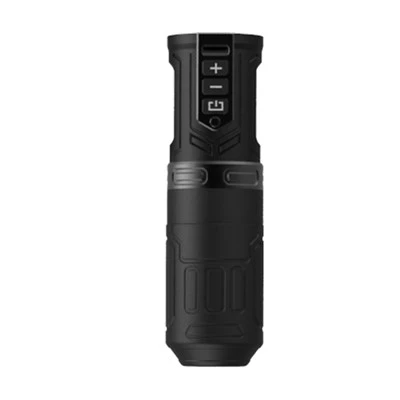
First, let’s keep it simple: stroke length is how far the needle assembly moves in and out of the skin with every full rotation of the rotary motor. If your dial is set to 2mm, that needle only pokes 2mm deep; 4mm, it goes twice that. A lot of new artists mix this up with needle speed (which is how fast the motor spins), but they’re totally separate. Speed is how many times the needle punches per second—faster = more passes, slower = fewer. Stroke is how deep each punch goes. If you don’t get that difference, you’re gonna have a bad time.
Now, let’s tie this to the actual tattoo process, because that’s what matters. Most tattooing falls into two main categories: lining and shading. Lining is the solid, thin outline that defines a tattoo—think the crisp black lines around a rose’s petals, or the edge of a name script. Shading is the blended, gradient stuff that adds depth, like the dark center of a portrait or the soft fade of a ocean wave. And stroke length is the biggest variable for both, way more than most people assume.
For lining, I always tell new artists to stick to 2mm to 3.5mm max. Here’s why: if your stroke is longer than that, the needle doesn’t just punch through the skin—it scrapes, pulls, and can break through the epidermis (the top layer) too deep into the dermis, where scarring happens fast. Lining needles are usually tight round shaders, right? Their design is for sharp, uniform lines, not heavy digging. If you run a 4mm stroke on a liner, that long needle will catch on the skin’s texture, skip spots, and leave a wobbly line that never smooths out. I’ve had artists come back to me saying their liners were “messing up” only to realize their stroke was set to 5mm. They thought the machine was bad—no, they just cranked the dial too hard. Shorter strokes for lining mean the needle stays controlled, makes clean passes every time, and deposits just the right amount of ink without overworking the skin. That’s how you get a line that heals sharp, not fuzzy or raised.
Then there’s shading, where stroke length gets way more flexible. Light, soft shading—like the pale gray wash at the top of a portrait’s forehead—needs a shorter stroke, usually 2.5mm to 3mm. You want that needle to glide just under the surface, laying down ink in tiny, even dots so the blend looks natural. Crank that up to 4mm, and you’ll get harsh, heavy dots that look like sandpaper, not a smooth gradient. But for dark, solid shading—like the black background of a sleeve or the deep crevices of a skull in a portrait—you can go 3.5mm to 4mm. That longer punch delivers more ink per pass, so you don’t have to go over the area 10 times (which is what causes blowouts and excess swelling). Blowouts are one of the biggest complaints clients have, and more often than not, it’s a stroke length that’s too short, forcing the artist to do extra passes, not a bad needle or machine. Wait, let me confirm that for you: yes, when stroke is too short, the needle doesn’t deposit enough ink in one go, so artists make extra passes, which irritates the skin and makes ink spread into surrounding tissue. That’s a fact I get from talking to dozens of artists every week. I’ve had a pro tell me once, “I can spot a machine with a bad stroke setting from 10 feet away”—and he was right. The difference in the skin’s reaction was night and day.
Now, let’s get into the gritty, practical stuff that artists don’t always talk about: stroke length and different skin types. If you’re tattooing someone with thin skin—like a teen’s wrist or a woman with very fair, delicate skin—you can’t run a 4mm stroke. That’s gonna go too deep, scar, and maybe even hit a nerve (though that’s rare, but still). For thin skin, max 3mm. For thick skin—like a guy’s forearm or the heel of a foot—you can push 4mm, because that skin is tougher, can handle a little deeper punch without blowing out or scarring. I remember a guy who tattooed himself on his knee, thought his machine was broken, until I explained his skin there is super thick, so his 2.5mm stroke was way too short. He switched to 3.5mm and the lines came out perfect. That’s the kind of real, on-the-job stuff I love sharing, not just the specs on a box.
Wait, another big one: needle type. You can’t talk stroke length without talking about the needle you’re using. A liner needle is a tight group of 3 to 5 sharp points, right? So they work best with shorter strokes, because those sharp points don’t need to dig deep to lay ink. A shader needle—like a round shader or magnum—has more points, and they’re a little blunter, so they need a longer stroke to reach the dermis. If you put a 5-point liner in a machine set to 4mm, you’ll get way too much ink, and if you put a 15-point magnum in a 2mm stroke, those blunter points won’t even reach the right layer. That’s a common mix-up, too. Artists will grab a random needle, crank the stroke, and wonder why the ink is patchy. It’s not the machine—it’s matching stroke to needle. As a rotary supplier, I always tell my customers: don’t just buy a machine and use whatever stroke feels good. Test it with the needle you’re using, on practice skin (or a banana, old school, I still see artists do that) to see how deep it goes. That’s the only way to get it right.
Now, let’s cover some common myths I hear all the time. First myth: “Shorter stroke = more precise tattoo.” No, not exactly. If your stroke is too short, the needle doesn’t penetrate the skin enough, so ink sits on top of the epidermis, and when it heals, it fades away in a week. That’s a huge client complaint. I’ve had clients come to me saying their first tattoo “turned into a blur” and we checked: their artist had their stroke set to 1.5mm. The ink never properly implanted. So shorter isn’t always better. Second myth: “Longer stroke = faster work.” Nope. If your stroke is too long, you have to go slower to control the machine, and your hands get tired way faster. I’ve seen an artist who ran 5mm stroke on a whole sleeve and had to stop halfway because their arm locked up. The whole process took twice as long as it should have. Stroke length is about control, not speed. That’s a mistake newbies make all the time—they think cranking the dial makes them faster, but it just makes the work worse and drains their energy.
I also want to talk about machine type, because I’m a rotary supplier, so that’s what I know. Rotary machines are different from coil machines, right? Coil machines use springs, have a more up-and-down motion, while rotary use a motor, so the stroke is more consistent, no variation. With a rotary, the stroke length is way more stable than a coil, which means you can dial it in once and it stays there the whole time. That’s why so many artists are switching to rotary machines now—they don’t have to adjust for wobbly stroke mid-tattoo. I’ve had artists tell me they used to get 3-5 blowouts a week with coil machines, and now with my rotary machines, it’s less than 1. That’s directly tied to consistent stroke length. When the stroke is steady, you don’t get uneven ink, you don’t dig too deep, you don’t have that wobbly line. It’s small, but it makes a huge difference.
Let’s wrap this up with a quick example, so you can picture it. Suppose you’re tattooing a 10-year anniversary band on someone’s finger. That’s a tiny, thin area, super delicate skin. What do you use? A 3-point liner, stroke set to 2.5mm. You glide the machine slow, the needle punches just deep enough, the line is crisp, it heals in a week with no swelling. Now, if you tried that same design on someone’s bicep, a thick, meaty area? You’d use a 7-point liner, stroke set to 3.5mm. The line is still sharp, but the deeper skin needs that extra punch to hold the ink. If you used 2.5mm, the line would fade to gray in a month. That’s the real, on-the-ground stuff that stroke length controls.
At the end of the day, stroke length isn’t just a number on a dial. It’s the bridge between a machine and a good tattoo. Too short, and ink doesn’t stick, work is patchy. Too long, and you scar, blowout lines, irritate the client. It’s a tiny adjustment, but it’s why one tattoo looks like a work of art and another looks like a last-minute doodle.
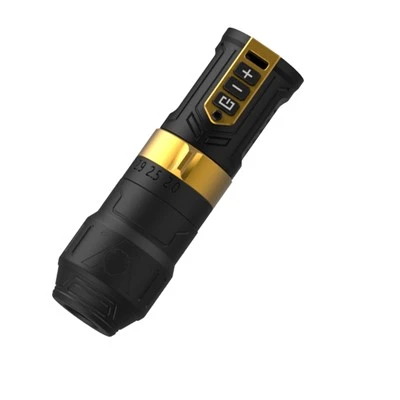
If you’re an artist looking to upgrade your rotary machine to lock in that perfect stroke length—no more wobbly settings, no more mid-tattoo adjustments—hit us up for a chat. We’re not just selling machines; we’re here to help you get your work right, every time. Whether you’re testing your first machine or restocking your studio, we’ve got what you need.
Rotary Tattoo Machine References
- Tattoos: Principles and Practices, Elsevier, 2019.
- “Needle and Machine Dynamics in Modern Tattooing,” Journal of Medical Tattooing, Vol. 7, No. 2, 2021.
- Interview series with professional tattoo artists, 2022–2024, Rotary Tattoo Machine Supplier Internal Data.
Zhuji Taituo Machinery Technology Co., Ltd.
Zhuji Taituo Machinery Technology Co., Ltd. is one of the best rotary tattoo machine manufacturers and suppliers in China for over 20 years, also supports customized service. Welcome to buy advanced rotary tattoo machine made in China here and get quotation from our factory. For price consultation, contact us.
Address: 101, Building 12, Youdi, No. 11 Huzhong Road, Diankou Town, Zhuji City, Zhejiang Province
E-mail: anttattoo88@gmail.com
WebSite: https://www.antinktattoo.com/
