When I first started working in specialty tapes, I’d pull out a sample roll of our cold-temperature acrylic adhesive tape on frigid Midwest days, twist it around my finger, and watch it stay stuck. Back then, I thought it was just a neat trick—until a client from a frozen food logistics company called in a panic one winter. Their standard packaging tape had snapped mid-load, sending 50 pallets of organic spinach sliding into a snowbank. That day, I stopped seeing specialty cold tapes as a niche product and started seeing them as critical infrastructure for industries that operate when the temperature drops below zero. Today, as a supplier that’s focused exclusively on tapes engineered for extreme cold, that story still drives every conversation I have. Specialty Tapes
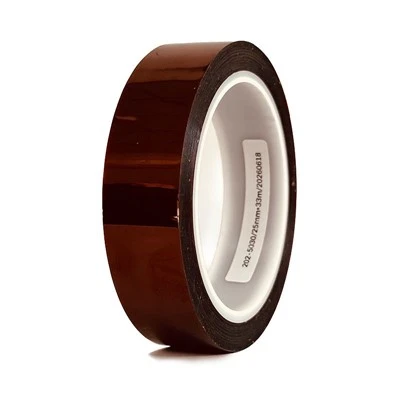
Cold temperature applications are everywhere, but they’re invisible until they fail. You’ll find them in frozen food distribution centers where freezers run at -20°F (-29°C) to keep produce fresh, in aerospace testing chambers that simulate Mars’ -63°F (-53°C) surface temperatures, in offshore oil rigs where wind chill can push temperatures to -40°F (-40°C) and sticky materials are non-negotiable, and even in medical supply chains that transport vaccines requiring storage at -80°F (-62°C). Standard pressure-sensitive adhesive (PSA) tapes fall apart here—literally. Most off-the-shelf tapes use general-purpose acrylic or rubber adhesives that turn brittle, crack, or lose their grip when temperatures plummet. At the same time, the backing material that holds the adhesive can get stiff or shatter, leaving you with useless scraps instead of a secure bond. That’s where our specialty cold tapes come in. They’re not just “regular tapes that work in the cold”—they’re formulated from the polymer up to solve specific problems that low temperatures create.
Let’s break down the science, because the difference between a good cold tape and a great one comes down to two core components: adhesive chemistry and backing material. Adhesives are the heart of any tape, and cold temperatures test their ability to “wet out” — that is, to flow and conform to the surface it’s applied to. Standard acrylic adhesives have a glass transition temperature (Tg) around 32°F (0°C), meaning below that, they flip from rubbery to glassy, rigid, and unable to stick to rough or uneven surfaces. Our cold-temperature acrylic adhesives are engineered with modified acrylate co-polymers. We adjust the monomer ratio to lower Tg to as low as -85°F (-65°C), so even at the coldest end of vaccine storage, the adhesive stays soft enough to stick. We also add tiny, carefully calibrated amounts of a plasticizer that doesn’t evaporate in cold conditions—unlike cheap plasticizers that get rigid when temperatures drop. For even colder applications, like aerospace thermal shielding, we use silicone-based adhesives. Silicone’s Tg can hit -100°F (-73°C), which means it doesn’t just stick in cold—it maintains its bond strength even when temperatures swing dramatically between -80°F and 300°F (149°C) during testing cycles.
The backing material is just as important. If the backing breaks, the adhesive won’t matter. Polyethylene (PE) is a common backing for cold tapes, but not all PE is the same. We use cross-linked low-density PE (XLPE) for most of our cold applications. Cross-linking means we bond the polymer chains together during manufacturing, so instead of stretching or tearing at low temperatures, XLPE stays flexible. It’s also moisture-resistant, which is a big deal in frozen environments where condensation can turn a bond weak. For heavy-duty tasks, like securing steel pipes on offshore rigs, we use polyimide backing. It’s thinner than XLPE, stiffer, and can handle extreme cold without cracking—perfect for when you need a tight, precise seal on metal that’s been exposed to icy conditions. We also test every backing for tensile strength: at -40°F, our polyimide tapes have a tensile strength of 1,200 psi, which is 30% higher than standard polyimide backings. That means when you pull on the tape, it doesn’t snap mid-installation.
I know from experience that not all cold applications are the same, and a tape that works for frozen food won’t work for vaccine transport—so we tailor our tapes to specific use cases. Let’s take frozen food logistics, that space where I cut my teeth. Freezer packaging tapes need to stick to corrugated cardboard, which gets damp and slightly warped when pulled out of a -20°F freezer. Our FreezeBond 20 Tape is formulated for exactly this: the modified acrylic adhesive wets out on rough, moisture-laden cardboard, even after being left in a freezer for 72 hours. It also resists peeling when pallets are moved through loading docks where temperatures swing from -20°F to 70°F (21°C) during delivery. A client of ours in Minnesota told us they used to go through 1,200 rolls of standard tape a month, with 20% failing before delivery. Since switching to FreezeBond 20, their failure rate is less than 1%. That’s the kind of impact these tapes have—no lost product, no damaged shipments, no money thrown away.
For the medical industry, cold tapes have to meet a whole different set of rules. Vaccine and biologic transport requires tapes that are not just cold-resistant, but also non-contaminating. Our CryoSeal 80 Tape is designed for -80°C freezers, the kind used to store mRNA vaccines. It uses a medical-grade acrylic adhesive that doesn’t leach chemicals, so it won’t contaminate the vials it’s securing. It also leaves no residue when removed—critical for when technicians need to access vials quickly, without scrubbing adhesive off glass. We work with vaccine manufacturers to test every batch of CryoSeal 80, checking for bond strength at -80°C for 100 hours straight, because a loose seal on a vial could mean spoiled vaccine, or worse, a safety hazard.
Then there are the industrial cold applications that don’t get as much press: offshore oil rigs, where pipes and equipment need to be labeled or sealed in -40°F wind chills, and aerospace test chambers, where thermal shielding tapes have to withstand rapid temperature swings. Our ArcticGrip 40 Tape is the go-to for rig workers. It uses a rubber-modified adhesive that sticks to cold metal, even when there’s a thin layer of ice on the surface. Rig technicians can apply it with gloved hands, no special tools, and it won’t peel off during a blizzard. For aerospace, our SilaShield Tape uses silicone adhesive and polyimide backing, tested to survive 500 thermal cycles between -63°F and 300°F, which matches the conditions of low-Earth orbit. It’s used to secure thermal blankets on satellite components, where even a loose tape could lead to catastrophic test results.
A common mistake I see clients make is using a “one-size-fits-all” tape for cold environments. Last year, a small craft brewery called us because their cold storage label tapes were falling off beer kegs in their walk-in freezers. They’d bought a general-purpose vinyl label tape for $5 a roll, and it was slipping off every third keg. We recommended our LabelFreeze Tape, which has a low-Tg acrylic adhesive that sticks to the matte, slightly frosted finish of keg surfaces, even at 34°F (1°C)—the temperature their freezers run at. The LabelFreeze Tape cost $7 a roll, but their keg label failure rate dropped from 15% to 0%. That’s the value of specialized cold tapes: they’re not more expensive because of extra fluff, they’re more expensive because the chemistry and engineering are tailored to solve a specific problem, saving you money in the long run.
Testing is non-negotiable for us. We don’t just rely on lab data—we test our tapes in real-world conditions. We have a climate-controlled test chamber in our warehouse that can drop to -85°F and swing temperatures 100°F in an hour. We send samples to clients to test in their own freezers, rigs, and labs. A few years back, a client from Canada’s oil sands asked us to test our ArcticGrip Tape in -50°F weather, which is colder than our standard testing temperature. We shipped 50 rolls, and they reported that the tape stuck to metal pipes, even when applied with gloves, and didn’t crack after 6 months of being exposed to cold, wind, and oil mist. That’s the kind of feedback that makes us adjust our formulations—we don’t just make tapes for the lab, we make them for the people using them in harsh conditions.
I also want to talk about durability beyond cold. A lot of cold tapes only work in low temperatures, but our tapes are designed to perform across a wide temperature range, so you don’t have to switch tapes when temperatures warm up. For example, FreezeBond 20 works just as well in a 90°F (32°C) warehouse as it does in a -20°F freezer. That means one roll can do double duty, reducing inventory costs for clients. It also means tapes don’t fail when products move between cold storage and room temperature during shipping, which is a common point of failure in supply chains.
If you’re reading this, chances are you’re dealing with a cold temperature application right now—maybe you’re troubleshooting packaging tape for a freezer, securing labels for a cold chain, or looking for a tape that works in an industrial cold environment. The worst thing you can do is assume a standard tape will work. Our team has decades of experience in cold temperature tapes, and we’ve helped clients across food, medical, aerospace, and industrial industries solve their tape problems. Whether you need a small sample roll to test, a custom formulation for a unique application, or a bulk order for your operations, we can work with you.
Lithium‑ion Battery Special Adhesive Tapes Don’t let cold temperatures turn your tape from a solution to a liability. Reach out to our team to discuss your specific application, and we’ll recommend the right tape for your needs, or even develop a custom tape if our standard offerings don’t match exactly what you’re looking for. We’re here to make sure your tapes work when the temperature drops, so you can focus on what you do best.
References
- Satas, D. (2010). Handbook of Pressure-Sensitive Adhesive Tapes. Wiley.
- Petrie, E. M. (2017). Handbook of Adhesives and Sealants. McGraw-Hill.
- ASTM International. (2021). Standard Test Method for Peel Adhesion of Pressure-Sensitive Tape. ASTM D3330.
- Kinloch, A. J. (2012). Adhesion and Adhesives: Science and Technology. Springer.
- Cold Chain Association. (2022). Cold Chain Packaging Material Performance Standards. International Society of Packaging Professionals.
Jiangsu Jinjiayi Electronic New Materials Co., Ltd.
With abundant experience, we are one of the most reliable specialty tapes manufacturers and suppliers in China. We warmly welcome you to buy bulk specialty tapes in stock here and get quotation from our factory. Customized orders are welcome.
Address: No.3 Taihu West Road, Changshu-Sihong Industrial Park, Sihong County, Jiangsu Province
E-mail: cshxdz@163.com
WebSite: https://www.jjyelec.com/
