If you’ve ever walked the shop floor of a plant that runs round-the-clock, or stood in a basement flooded after a storm, you know a self-priming pump only works as good as its suction line. I’ve spent 12 years selling, troubleshooting, and standing behind these pumps—first as a field tech, then as a supplier, and now as the guy on the phone when a plant’s pump is giving up mid-shift. The question I get more than any other is this: “What’s the right suction line size for my self-priming pump?” And the answer isn’t a number pulled out of a spec sheet. It’s a mix of fluid dynamics, site conditions, and the little real-world tricks I’ve learned from watching pumps fail when someone cut corners on the suction side. Self-priming Pump
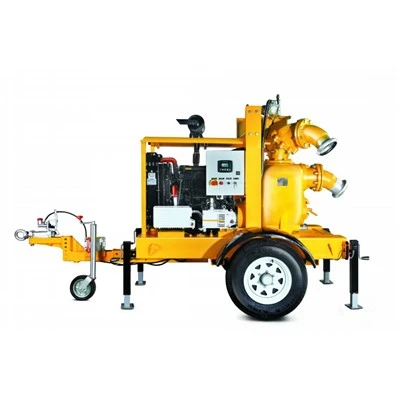
Let’s start with the basics most suppliers gloss over. A self-priming pump doesn’t just push fluid—it has to pull it, all the way from the source up to the pump’s impeller. Unlike a standard centrifugal pump that’s mounted below the fluid level (so it submerges the impeller before start-up), self-priming pumps rely on their internal chamber to create a vacuum, air-fluid mix, and build enough pressure to pull fluid in. If the suction line is too small, that vacuum builds too fast, cramming air through the line faster than fluid can replace it—no prime, or a prime that breaks mid-operation. If it’s too big? You’ve just added unnecessary friction, and that extra volume of air you have to evacuate at start-up means longer priming cycles, especially on vertical lifts.
The first rule I drill into every customer is: suction line size should never be smaller than the pump’s suction nozzle. That’s a hard line, but I’ve seen what happens when someone tries to cram a 2-inch suction nozzle into a 1.5-inch line to save a few bucks on piping. Once, a municipal water treatment plant came to me in a panic—their new self-priming pump wouldn’t pull water from a 10-foot deep well. The installers had downsized the suction line to skip an adapter, and the pump couldn’t create enough flow to maintain a vacuum. We re-piped it to match the nozzle, adjusted a couple of priming valve settings, and they were back up running in 48 hours. That mistake cost them three full days of downtime and thousands in lost production. Avoid that at all costs.
But matching the nozzle isn’t enough. I’ve also seen customers use the same size line across every application, regardless of how far the pump is from the fluid source, or how high they have to lift it. Let’s break down the variables that shift that number. First: flow rate. The pump’s rated flow is non-negotiable here. For most clean, thin fluids like water, the recommended suction line velocity is 1.5 to 2.5 feet per second (fps). That’s not a random number. At below 1.5 fps, air bubbles can separate from the fluid, rise in the suction line, and form pockets that break the prime. At above 2.5 fps, you’re increasing friction loss in the pipe, which makes the pump work harder to pull fluid, and that can lead to cavitation—damaging the impeller and wearing out the pump prematurely.
Let’s do a quick example to make this concrete. Suppose you have a self-priming pump rated for 100 gallons per minute (GPM) of water. A 2-inch pipe has an inside diameter of roughly 2.067 inches. To find velocity, the formula is: (0.4085 x GPM) / (diameter squared). Plugging in the numbers, (0.4085 x 100) / (2.067²) = around 9.6 fps. That’s way over the 2.5 fps max for suction lines. So a 100 GPM pump actually needs a 3-inch suction line to hit that optimal velocity: (0.4085 x 100) / (3.068²) = around 4.3 fps. Wait, that’s still a little high? For thin fluids at shallow lifts, you can get away with that, but if you’re lifting 15 feet or more, or moving thicker fluid like wastewater or light oil, you might bump up to a 4-inch line to keep velocity under 2.5 fps.
Next, vertical lift and horizontal run. The higher you have to pull fluid, the larger the suction line needs to be. The vacuum required to lift fluid 10 feet is about 4.3 psi. Lift it 20 feet, and you’re at 8.6 psi. If your suction line is too small, friction loss adds to that required vacuum, and you might exceed the pump’s maximum suction lift capacity. Same goes for horizontal runs—every 10 feet of straight pipe adds friction, and every elbow, valve, or reducer adds even more. A single 90-degree elbow can add as much friction as 10 feet of straight pipe. If your pump is 50 feet away from the sump, that’s an extra 50 feet of pipe plus a couple of elbows—you can’t use the same line size as a pump 10 feet away. Last year, a construction company called me about a pump for a dewatering project 40 feet from the excavation. They’d used a 2-inch line for their 80 GPM pump, and it couldn’t pull water above 8 feet, half its rated lift. We upsized to 3-inch line, cut the elbows down to two instead of four, and now it pulls water 18 feet without breaking a sweat.
Fluid properties matter too. If you’re moving anything thicker than water—like sewage, slurry, or viscous oils—suction line velocity needs to be lower, often 1 to 2 fps. Thicker fluids move slower, so they’re more prone to settling in the line if velocity is too low, and they create more friction, so higher velocity adds more strain. A pump moving 80 GPM of wastewater, for example, will need a 4-inch line instead of a 3-inch to keep velocity under 2 fps, preventing solids from clogging the suction line and breaking the prime.
There are also common misconceptions I hear every week. One is that using a reducer on the suction side is fine as long as it’s concentric. Wait—concentric reducers are great on the discharge side, but on suction side? You need an eccentric reducer, installed with the flat side up. That keeps air from getting trapped at the top of the reducer, which would create an air pocket and break the prime. I’ve seen customers use concentric reducers and wonder why their pump won’t prime on a regular basis—don’t be that guy.
Another misconception is that larger is always better. I once had a customer who installed a 4-inch suction line for a 100 GPM pump that only needed 3 inches. They were proud of their oversized line, but their priming cycle went from 30 seconds to 2 minutes. That might not sound like a big deal, but if you’re cycling the pump on and off multiple times an hour, that extra priming time adds up, wears out the priming check valve faster, and wastes energy. Oversizing also means more pipe, more fittings, more installation cost—you’re wasting money you could spend on a better pump or extra maintenance.
So how do you figure out the exact size for your application? Let’s walk through the step-by-step process I use with every customer:
First, note the pump’s rated flow (GPM) and rated suction lift (feet). Second, measure the total equivalent length of your suction line—add the straight pipe length to the equivalent length of all valves, elbows, and fittings. For example, a 90-degree elbow is about 5 feet of straight pipe, a globe valve is about 10 feet, a gate valve is 2 feet. Third, calculate the required velocity for your fluid: 1.5 to 2.5 fps for thin fluids (water, light chemicals), 1 to 2 fps for thick fluids (wastewater, oil, slurry). Fourth, use the velocity formula to match that line size to your flow rate, then adjust for your total equivalent length. If the total length is over 50 feet, or the vertical lift is over 10 feet, bump up one line size to account for friction loss. If there are lots of fittings (like in a complex industrial piping system), bump up another size.
Let’s test that process with a real-world job I worked on last month. A food processing plant needed a self-priming pump to move 120 GPM of light cooking oil from a storage tank 30 feet away, with a 12-foot vertical lift. The fluid is thin, so target velocity is 2 fps. The total equivalent length of the suction line: 30 feet straight pipe, two 90-degree elbows (10 feet total), one gate valve (2 feet) = 42 feet total. Using the velocity formula, a 3-inch line would have a velocity of (0.4085 x 120) / (3.068²) = around 5.2 fps—way too high, friction loss would make the pump work too hard. A 4-inch line: (0.4085 x 120) / (4.026²) = around 3 fps. Close, but our total length is 42 feet, plus a 12-foot lift, so we need to account for extra friction. Bumping up to a 5-inch line gives a velocity of around 2 fps, perfect for their application. We suggested the eccentric reducer, fewer fittings where we could, and they haven’t had a prime issue in three weeks.
If you’re still not sure, here’s my rule of thumb for most standard applications: 50 GPM = 2-inch line, 100 GPM = 3-inch line, 150 GPM = 4-inch line, 200 GPM = 5-inch line. But always double-check for lift and length. For example, a 100 GPM pump with a 20-foot lift and 60 feet of suction pipe will need a 4-inch line, not 3-inch, to account for friction.
Wait—what about special cases? If you’re moving fluid with a lot of entrained air, like from an open tank that’s being aerated, you’ll want a slightly larger line to give that air time to separate, so it doesn’t get pulled into the pump and break the prime. If you’re dealing with a suction lift over 25 feet, that’s a deep-lift application, and you’ll need to upsize by at least one line size to compensate for the higher vacuum requirement. And if you’re installing a pump that will be running intermittently, make sure the line size is large enough to fill the pump’s priming chamber quickly when it starts, so you don’t have long delays between cycles.
I can’t stress enough how much this matters. I’ve seen pumps last 10 years because their suction line was sized right, and pumps die in 18 months because someone skimped on the suction side. Cavitation, broken primes, excessive energy use—all of that starts with a bad suction line. The discharge line size matters too, but it’s not nearly as critical as the suction. On the discharge side, you can control flow with a valve; on the suction side, you can’t. The flow is determined by the pump’s design, so the line has to handle it exactly.
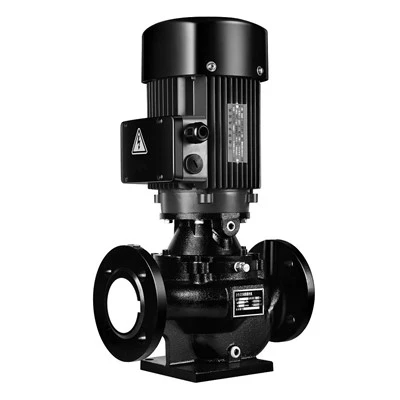
Inline Pump If you’re installing a new self-priming pump, or troubleshooting an old one that’s not performing, don’t guess at the suction line size. Send me your pump model, your flow rate, lift height, and suction line length and fittings, and I’ll help you figure out the right size for your application. We’ve been supplying self-priming pumps to industries from construction to food processing for years, and we don’t just sell a pump—we help you get it set up right so it works for you, not against you. Don’t let a bad suction line ruin your next project or your downtime. Reach out to discuss your needs and find the perfect suction line size for your self-priming pump.
References
- Self-Priming Centrifugal Pump Selection Guide. Hydraulic Institute, 2020.
- Pump Suction Line Sizing Best Practices. American Water Works Association, 2019.
- Fluid Dynamics for Piping Systems. McGraw-Hill Professional, 2018.
- Self-Priming Pump Installation and Maintenance Manual. National Pump Manufacturers Association, 2021.
Hangzhou Nanfang Ouke Pump Industry Co., Ltd.
As one of the most experienced self-priming pump manufacturers in China, we have world-leading production equipment and strong manufacturing capabilities. Please feel free to wholesale bulk customized self-priming pump from our factory. Welcome to contact us for pricelist.
Address: No.46, Renhe Subdistrict, Yuhang District, Hangzhou City
E-mail: Gy656169@outlook.com
WebSite: https://www.oukegroup.com/
