If you’ve ever stood in front of a cooling unit, a ventilation system for a manufacturing line, or even the fan that keeps your HVAC running on a sweltering day, you’ve probably not given much thought to the impeller inside. But as someone who’s spent the last 12 years supplying fan impellers—designing, testing, and shipping them to factories, HVAC contractors, and aerospace shops—I can tell you that impellers aren’t one-size-fits-all parts. The question I get most often these days is this: Can a fan impeller be customized? The short answer is yes, and for good reason. Today, I want to walk you through why customization matters, what actually goes into building a custom impeller, and why it’s not just a luxury—it’s a necessity for most industries that rely on air movement. Fan Impeller
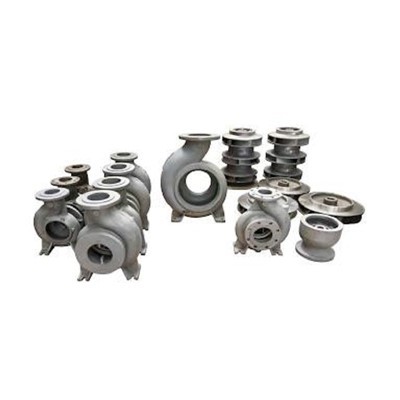
Let’s start with the basics, because it’s easy to gloss over what an impeller does. At its core, an impeller is the rotating component inside a fan that moves air (or gas, depending on the application). It’s made up of a central hub, blades, and sometimes a shroud or cover to contain airflow. The shape, size, angle, and material of those blades determine how much air moves, how much energy the fan uses, and how long the entire system lasts. A standard off-the-shelf impeller works fine for a space where conditions are predictable: a small office building where the temperature stays between 60 and 80 degrees Fahrenheit, or a retail store with consistent foot traffic. But most industrial applications? They’re anything but predictable.
Take a food processing plant, for example. The ventilation system here has to move air that’s humid, coated in food particles like flour or sugar, and exposed to occasional washdowns with harsh chemicals. A standard galvanized steel impeller will corrode after a few months, trap food debris between the blades, and eventually wobble, wasting energy and risking downtime that can cost thousands of dollars an hour. Or think about a greenhouse for tropical plants: the fan system needs to move large volumes of air at a low speed to avoid damaging delicate leaves, but it also has to resist mold and mildew growth. An off-the-shelf impeller, designed for high-speed industrial use, will blast air too hard, dry out soil faster than needed, and create unnecessary strain on the motor. That’s where customization comes in—it’s not about changing the impeller for the sake of change; it’s about matching it exactly to the unique conditions of the space it’s going to serve.
Now, let’s break down what a custom impeller actually entails, because it’s not just a quick tweak to blade length. The first step is always a site assessment or a detailed product specs request. Last year, a paper mill reached out to us because their existing impellers were causing consistent pressure drops in their paper drying lines. Their production line runs 24/7, and a pressure drop meant slower drying times, which ruined entire batches of paper and cost them $12,000 a day in losses. Our team didn’t just look at their old impeller and copy it with a larger blade—we sent a technician to their mill to measure the exact airflow requirements of the drying hood, test the motor’s maximum safe load, and analyze the moisture content of the air being moved. We found that their old impeller’s blade angle was forcing air to collide with the hood walls, creating turbulence that cut efficiency by 18%. We designed a backward-curved blade impeller with a 15-degree adjustment to the blade angle, made from a corrosion-resistant aluminum alloy that could handle the paper dust. The result? Their pressure drop went down by 22%, energy use dropped by 14%, and they haven’t had to replace an impeller in 18 months—way beyond the standard 6-month lifespan of their old units.
Another example is the aerospace industry, where impellers have to balance two conflicting needs: high-speed rotation to move air for cabin pressurization, and extreme light weight to avoid adding unnecessary load to aircraft components. A standard impeller made of steel would add too much weight, so our team worked with an aerospace engineer to design a impeller from a carbon fiber composite, with a tapered blade shape that optimized airflow while reducing total weight by 40%. We ran 1,200 hours of durability tests in our in-house lab, simulating the vibration and temperature fluctuations of commercial flight, and the impeller passed with zero structural issues. That’s the kind of customization that can’t be done with an off-the-shelf part—it requires collaboration, testing, and a deep understanding of both impeller design and the end application.
But let’s be clear: not every customer needs a fully custom impeller from scratch. We also offer semi-custom options for customers who have most of their specs sorted but need a small adjustment. Maybe you have an existing fan housing that can only accommodate a 12-inch impeller instead of the standard 14-inch, so you need to shorten the blade length without losing airflow. Or maybe you need to switch from steel to stainless steel because your facility uses corrosive cleaning chemicals, but you want to keep the same blade shape to avoid re-calibrating your motor. These adjustments take days, not weeks, and they’re a cost-effective middle ground between off-the-shelf and fully custom.
I’ve heard a lot of misconceptions over the years about custom impellers. Some people think they’re too expensive, that off-the-shelf parts are cheaper, but that’s a short-sighted view. A custom impeller might cost 20% more upfront, but if it reduces energy use by 15% and doubles the lifespan, you’ll make that money back within a year. I had a customer in the HVAC industry a few years ago who switched from off-the-shelf to custom impellers for 50 units across a chain of grocery stores. Within 12 months, their energy bills dropped by $18,000, and they only needed to replace 2 impellers instead of 25. The downtime savings alone from not having to send technicians to fix 25 units added another $10,000. Another misconception is that customization takes forever. We have a team of in-house designers and 3D printers that can create a prototype in 3 to 5 days, and full production runs in 2 to 3 weeks—far faster than most people expect. That’s not to say every custom order is quick; if it’s a one-of-a-kind design for a specialty application, it might take a bit longer. But for most industrial and commercial needs, we can turn around a custom impeller faster than you can wait for a replacement off-the-shelf part to be shipped.
What I’m most proud of about our work is that we don’t just build impellers—we solve problems. Last quarter, a customer in the pharmaceutical industry reached out because their impellers were generating too much noise in their cleanroom facility. Cleanrooms require very low noise levels to avoid disrupting sensitive equipment and maintaining a sterile environment. Their old impeller was a standard forward-curved blade design, which tends to create more turbulence and noise. Our team redesigned the blades to be curved backward, with a rounded tip that reduced the noise level by 12 decibels—almost unnoticeable to the human ear, but a huge win for their operations. They told us later that the noise reduction also made the work environment easier on their staff, who had to be on the floor for 12-hour shifts. That’s the kind of impact customization has: it’s not just about moving air, it’s about making a process safer, more efficient, and more human.
Of course, there are limits to what we can customize, and that’s something I’m always upfront about with customers. We can’t design an impeller that defies the laws of physics—you can’t move 10,000 cubic feet of air with a 6-inch impeller, no matter how much we tweak the blades. We also have to work within the constraints of your existing fan motor and housing; if your motor can only handle 1 horsepower, we can’t build an impeller that requires 2 horsepower to run. But within those parameters, there’s almost always a way to adjust a standard design to meet your needs. The key is to be transparent about your constraints and your goals: are you trying to save energy, reduce downtime, improve airflow, or meet a specific noise level? The more details you can share, the better we can design a custom impeller that works for you.
At the end of the day, the question “Can a fan impeller be customized?” isn’t just a yes or no—it’s a conversation. For over a decade, I’ve worked with customers across every industry, from small bakeries to large manufacturing plants, to design impellers that solve their specific problems. If you’re dealing with consistent airflow issues, high energy bills, or frequent impeller replacements, an off-the-shelf part might not be the solution. A custom impeller is tailored to your space, your equipment, and your unique conditions, delivering better performance, lower long-term costs, and less downtime.

If you’re ready to stop settling for impellers that don’t quite fit your needs and start working with a team that will design a solution for your exact application, don’t hesitate to reach out to our team. We’ll walk through your requirements, share our process, and help you figure out if a custom or semi-custom impeller is the right fit for you. Your operations don’t have to adapt to a one-size-fits-all part—and neither should your ventilation or cooling system.
Fan Impeller References
- ASHRAE Handbook: HVAC Applications. American Society of Heating, Refrigerating and Air-Conditioning Engineers, 2022.
- Fluid Mechanics and Thermodynamics of Turbomachinery, 7th Edition. S.L. Dixon and C.A. Hall. Elsevier, 2019.
- “The Impact of Impeller Design on Fan Energy Efficiency.” International Journal of Ventilation, vol. 18, no. 2, 2019, pp. 112-125.
- Corrosion Resistance of Aluminum and Aluminum Alloys for Industrial Applications. National Association of Corrosion Engineers, 2021.
- “Custom Impeller Design for Industrial Ventilation Systems.” Journal of Manufacturing Processes, vol. 45, 2019, pp. 345-352.
Shandong Shunye Stainless Steel Co., Ltd.
Shandong Shunye Stainless Steel Co., Ltd. is one of the most professional fan impeller manufacturers and suppliers in China, also supports customized service. Welcome to buy bulk cheap fan impeller made in China here and get quotation from our factory. For price consultation, contact us.
Address: Shandong Province, Binzhou City, Wudi County, Liubao Town, Zhangdong Road, Duliucun Village
E-mail: sales@wdshunye.com
WebSite: https://www.shunyecasting.com/
