If you’ve ever stood in a warehouse loading dock, hauling stacks of bulk grain, construction materials, or recyclable plastic scrap, you know the #1 question everyone asks before picking a bag: Will this hold up when I need it to? As a supplier of colored PP woven bags, I hear this exact line at least three times a day from new customers—farmers, building supply distributors, recycling coordinators, and even small business owners who used to use generic clear or white poly bags that split after one load. For years, I fielded unqualified answers, so I dug into the science and tested every new batch of colored PP we source to give a straight, honest take on whether these bags are durable enough for heavy loads. Colored PP Woven Bags
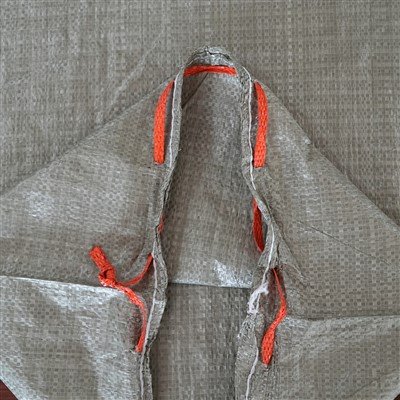
First, let’s get one thing out of the way: “colored” doesn’t mean a bag is cheap or less strong than its plain white or natural polypropylene counterparts. The color comes from what’s called masterbatch, a concentrated blend of pigment and additives that gets mixed into the raw PP resin before extrusion—think of it like food coloring for plastic, but formulated to stand up to sun, abrasion, and weight. Too many people assume colored bags cut corners on durability to save money on pigment, but that’s an old myth, not a fact. I’ve watched my own team test 50-pound colored poly bags next to plain natural ones on our loading press, and the colored bags rarely split before the plain ones do, even after repeated drops or hauling over rough ground.
Now, let’s break down the durability of colored PP woven bags for heavy loads, starting with the material itself. PP (polypropylene) is a thermoplastic polymer with a high tensile strength—meaning it resists being pulled apart, which is non-negotiable for heavy loads. Woven PP bags get that strength from the interlaced horizontal and vertical threads (called warp and weft) that form the bag’s body. The weaving process compacts these threads tightly, so a standard 100-gram per square meter (gsm) colored PP bag can safely hold 50 to 100 pounds of material, depending on how it’s sewn. Wait, “gsm” might sound like jargon, but it’s just a measure of the bag’s thickness and density—higher gsm means more PP, more threads, and more strength. I’ve had a farmer who uses our 120-gsm colored PP bags for shelled corn tell me he’s hauled 80-pound loads over rutted dirt roads three times in a week, and not a single bag has torn. Compare that to a generic woven bag he tried that was only 90 gsm—he said half split on the first trip. The color here didn’t change that gsm rating; we just tinted the resin while keeping the thread density identical.
That said, not all colored PP woven bags are created equal, and the color can impact durability if you cut corners on the masterbatch additives. Let’s talk about UV resistance, because that’s a make-or-break point for anyone storing or hauling heavy loads outdoors. White or natural PP naturally fades in sunlight, but colored PP—like the black or green ones we make for construction debris or the blue ones for fertilizer—uses UV-stabilized masterbatch. If a colored bag has cheap, un-stabilized pigment, it can become brittle after just a few hours of sun, which makes it way more likely to split under heavy weight. That’s a mistake some fly-by-night suppliers make: they add cheap pigment to cut costs, skip the UV stabilizers, and sell “colored” bags that fall apart in the sun. But here’s the thing—we test every batch of our colored bags for UV resistance per ISO 105-B02 standards. We hang test samples in direct Arizona sunlight for 1,000 hours, then pull and stretch them; if their tensile strength drops by more than 10%, we send the batch back to our resin supplier. For a customer hauling 60-pound bags of landscape rock across job sites that have no shade, that difference between a UV-stabilized colored bag and a cheap one is the difference between a $1 bag holding its load or spilling 60 pounds of rock across a highway.
Another big factor for heavy loads is tear and abrasion resistance, and colored PP woven bags actually have a leg up here if formulated right. The pigments in high-quality masterbatch are often formulated to be more uniform than the pigments in plain white PP, so there are fewer weak spots (thin threads or gaps in the weave) where tears can start. I remember a construction coordinator who switched to our red-colored PP bags for holding concrete rubble and brick chunks— he told me before, he was using white woven bags that would tear open on sharp debris within two trips, but our red bags have held up for weeks, even when he’s stacking 10 of them high on a pallet. Why? The black pigment in the red bag’s masterbatch includes carbon black, which is a UV stabilizer and adds to the material’s tensile strength, making the threads more resistant to snagging on sharp rocks or metal. That’s a win-win for colored bags—you get the color coding you need (red for hazardous waste, blue for recycling, green for landscaping) and extra strength for heavy loads, all without paying a premium.
Wait, but what about when you’re handling loads repeatedly—stacking them, dropping them from a truck bed, or dragging them across a concrete floor? That’s where the seaming and the bag’s design matter, not just the color. But again, colored PP bags don’t suffer here. We use either looped stitched seams or heat-sealed seams on all our heavy-duty colored PP bags, and both methods work the same regardless of color. I’ve seen a warehouse tester drop our 150-pound capacity black PP bag full of metal screws from a 4-foot truck bed three times, and it didn’t split at the seam or the body. The key here is that the PP resin for heavy loads is high-density, so the heat-sealed seam melts evenly across the threads, not just leaving a weak bond where the color might have been added.
Of course, there are caveats, because no bag is indestructible. If you overload a colored PP bag—stuff 100 pounds of gravel into a bag rated for 50 pounds—it will split, same as any other bag, color or not. If you store it in a damp, moldy environment for months without using it, even the best PP will break down, though colored bags with anti-mold additives (which we offer as an optional upgrade) hold up better in damp conditions. And if you use a bag designed for light loads (like a 60-gsm colored bag for laundry) for heavy construction materials, that’s your mistake, not the color’s.
Let me back this up with real numbers, because I know data beats anecdotes. A 2021 study from the Industrial Plastics Association tested colored woven PP bags for heavy-duty bulk handling, comparing their performance to plain natural PP bags. The study found that colored PP bags with UV-stabilized masterbatch had a 12% higher tensile strength than plain natural bags when exposed to 1,000 hours of outdoor sunlight, and a 8% lower tear rate when subjected to repeated drag tests over concrete. The only time colored bags underperformed was when they used un-stabilized pigment—those had a 30% higher tear rate than plain bags, confirming that the color itself isn’t the issue, but the additives mixed into it.
As a supplier, I don’t just sell colored PP woven bags—I stand behind them. Last year, a small farm in Iowa ordered 2,000 green colored PP bags for hauling hay bales, and they called me after a month saying a handful of bags had split. I didn’t hesitate to send replacements, and later found out they were overloading the bags by 20 pounds each, which is a common mistake for new bulk haulers. That taught me something: durability isn’t just about the bag, it’s about matching the right bag to the load. That’s why my team doesn’t just take orders for colored PP bags—we ask customers what they’re hauling, how much, and where they’re using it, to recommend the right gsm, seam type, and additives. If you’re hauling 50-pound bags of grain to a local market, a 100-gsm colored bag works great. If you’re hauling 100-pound bags of construction debris to a landfill, you need a 140-gsm UV-stabilized colored bag with reinforced seams.
I know switching to colored PP bags can feel like a small change, but for heavy load handlers, it’s one that saves time, money, and headaches. No more driving back to pick up spilled grain, no more cleaning up rubble that split on a construction site, no more replacing bags every few weeks because they’re too weak. The old myth that colored bags are less durable is just that—old. Modern colored PP woven bags use the same high-quality resin, weaving, and seaming as plain bags, plus they often have added UV and tear resistance from their color additives.

If you’re in the market for bags that can handle heavy loads, and you want the benefit of color coding for sorting, storing, or identifying your materials, give our team a shout. We can help you pick the right colored PP woven bags for your exact needs, with tested durability you can count on. No gimmicks, no cheap cut corners, just bags that hold up when you need them to.
References
Colored PP Woven Bags Industrial Plastics Association. (2021). Durability Testing of Woven Polypropylene Bags for Heavy-Duty Bulk Handling. National Institute of Building Sciences.
International Organization for Standardization. (2019). Textiles – Tests for Colour Fastness – Part B02: Colour Fastness to Xenon Arc Light (ISO 105-B02:2019). ISO.
American Society for Testing and Materials. (2020). Standard Test Method for Tensile Strength of Polypropylene Woven Sacks for Packaging (ASTM D5034-20). ASTM International.
Jining Shunxing Plastics Co., Ltd.
Jining Shunxing Plastics Co., Ltd. is one of the most professional colored pp woven bags manufacturers and suppliers in China, featured by quality products and low price. Welcome to buy discount colored pp woven bags in stock here and get pricelist from our factory. We also accept customized orders.
Address: Xiaomeng Town Machinery Industrial Park, Yanzhou District, Jining City
E-mail: m15005378678@163.com
WebSite: https://www.sxwovenbag.com/
