If you’ve ever stared at a stack of metal parts, rusted bolts, or a beat-up wooden project and thought, “Man, I need to grind this down, but my air compressor’s already hooked to the nail gun,” you’re not alone. I get at least a dozen questions a week from guys (and gals) rolling into my shop—you know the ones, covered in sawdust or weld splatter, holding a beat-up die grinder like it’s a puzzle piece—asking: “Can I actually run this die grinder with my air compressor, or am I gonna blow a line, or worse, break the grinder?” Air Compressor
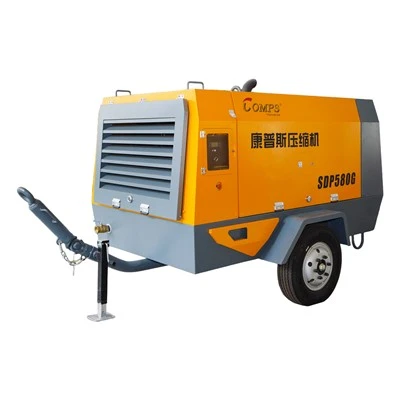
Let me cut to the chase: Yeah, you can, but there’s a lot of fine print most online guides skip over. I’ve been selling air compressors for 12 years, seen every disaster (and every win) when people pair their compressors with power tools, so I’m gonna break this down like I’m chatting with you over a cold beer after a long day on the job. No fancy jargon, no fluff, just the stuff that actually matters.
First, let’s get the basics straight for anyone who’s not a total tool nerd. A die grinder is that small, handheld rotary tool—super common for metal grinding, deburring welds, cutting plastic, even shaping wood. It runs on compressed air, which means it’s pneumatic, not electric. That’s key, because electric tools have a cord and a plug, but pneumatic ones depend entirely on your air compressor’s output.
Every pneumatic tool, including die grinders, has two non-negotiable specs: CFM and PSI. CFM stands for Cubic Feet per Minute, which is basically how much air your compressor pumps out at a given pressure. PSI is Pounds per Square Inch, the pressure of that air when it hits the tool. If you’ve ever checked the label on a power tool, that’s where those numbers live.
Here’s the thing most people mess up: They look at their compressor’s max PSI and assume that’s all they need, but die grinders care way more about CFM than PSI. A lot of entry-level air compressors (like those little 1-gallon pancake jobs you pick up at the hardware store for $100) have a high max PSI—like 150 PSI—but only push 2 CFM at 90 PSI. That’s too low for even the smallest die grinder. Most standard die grinders need at least 3.5 CFM at 90 PSI to run smoothly. If you’re running a bigger, heavy-duty die grinder for metal work, you’re looking at 5-6 CFM.
Wait, let me test that with an example. Last month, a guy came in with a 2-gallon compressor he used for inflating tires, trying to run a die grinder to clean up a rusty truck frame. He cranked the compressor up, fired the grinder, and it sputtered, died, then blew a seal in the tool’s air line. Turned out, his compressor only put out 2.8 CFM at 90 PSI—way less than the grinder’s required 4 CFM. He skipped the CFM check, and boom, broken tool, wasted $80, and a rusty truck frame that still needed fixing.
Another common mistake: Your compressor’s “rated CFM” is at 40 PSI, not 90 PSI. Manufacturers often brag about their high CFM numbers at low pressure, but pneumatic tools run best at 90 PSI. So when you calculate, always check the CFM at 90 PSI— that’s the number you need. If your compressor’s only rated CFM is at 40 PSI, it’s like a car that only gets 30 MPH on a downhill; it doesn’t apply to how it performs on flat ground.
Now, what about PSI? Most die grinders need 90 PSI to run, but some heavy-duty ones can take up to 100 PSI. If your compressor’s max PSI is 150, that’s fine—most air tools have a regulator you can hook up between the compressor and the grinder to dial the pressure down. No need to run at full blast. In fact, running higher PSI than the tool needs will just wear out the grinder faster, and maybe even damage it. So that’s a win-win: Keep PSI at 90, match the CFM, and you’re golden.
Wait, there’s another piece people overlook: hose size. That thin, flimsy hose that came with your $50 compressor? It’s only 1/4 inch inner diameter. If you’re running a die grinder that needs 4 CFM, that thin hose is a bottleneck—air can’t flow fast enough, so the grinder sputters, no matter what your compressor’s CFM is. A 3/8 inch ID hose is non-negotiable for any die grinder use. And if you’re working more than 20 feet from your compressor? Even go to 1/2 inch, because air loses pressure the further it travels. I’ve seen guys with a 50 CFM compressor throw a fit about their grinder being slow, only to realize they’re using a 1/4 inch hose stretched across a 30-foot garage. It’s just physics, man.
Let’s talk about different types of die grinders, because not all are the same. There’s the tiny pencil die grinder, used for small detail work—like grinding out a weld bead on a small bracket, or shaping a piece of plastic. Those only need 3-3.5 CFM at 90 PSI, so a 6-gallon compressor (which puts out 3.8-4 CFM at 90 PSI) will work here. Then there’s the standard straight die grinder, the workhorse for most shop jobs—deburring metal, grinding down excess welds, cleaning rust off parts. Those need 4-5 CFM, so a 10-15 gallon compressor (putting out 5-6 CFM at 90 PSI) is perfect. If you’re using a heavy-duty angle die grinder, the ones that look like a mini angle grinder for grinding thick steel or cutting tiles? You’re looking at 6-7 CFM, so you’ll need a 20+ gallon compressor, minimum.
I should mention: If you’re running multiple tools off the same compressor at once—like a die grinder and a nail gun, or a die grinder and a sanding tool—you have to add up the CFM requirements. If your die grinder needs 5 CFM and your nail gun needs 2 CFM, you need a compressor that can pump out at least 7 CFM at 90 PSI. No exceptions. Last week, a guy tried running a die grinder and a staple gun off his 15-gallon compressor (5.5 CFM at 90 PSI) and both tools died mid-job. He forgot about the combined CFM, so it was basically like trying to drink from a straw and a water bottle at the same time—nothing comes out right.
Now, what if you don’t have a compressor that matches the CFM? Can you use a bigger tank to fix it? Wait, tank size is another thing people mix up. Tank size is gallons, which is storage, not output. A 20-gallon compressor will hold more air, but if its CFM at 90 PSI is still 3, it’s not enough for a die grinder. The tank just lets the compressor run less often, but it doesn’t increase how much air it pumps per minute. So tank size matters for how long you can run the tool before the compressor kicks back on, but CFM is what determines if you can run it at all.
I get a lot of guys asking, “Can I use an air compressor that’s a little under CFM? Like, my grinder needs 4 CFM and my compressor puts out 3.5?” Yeah, you can, but it’ll be slow. The compressor will cycle on nonstop, never keeping up, so the grinder won’t reach full speed. It’ll work, but it’ll take twice as long, and you’ll wear out your compressor’s motor way faster because it’s running nonstop. So it’s better to splurge just a little for the right CFM than to regret it halfway through a job.
Let’s throw in a quick real example from my shop. Last year, a local mechanic came in with a 10-gallon compressor he’d had for 5 years, and a standard straight die grinder he used to clean up brake lines on cars. His compressor put out 5 CFM at 90 PSI, which is exactly what the grinder needed. He hooked it up with a 3/8 inch hose, added a regulator to keep PSI at 90, and ran that grinder for 2 hours straight on a truck brake job. No issues, no broken parts, just smooth grinding.
Now, the red flags: If your die grinder is sputtering, vibrating way too much, or dying 5 minutes into use, that’s almost always a CFM issue. If you smell burning or see smoke, that’s probably a hose size issue, or you’re running too high PSI. If your compressor is cycling on and off every 10 seconds while you’re using the grinder, that’s a clear sign you’re short on CFM. Those are the things to watch for—don’t ignore ’em, because they’ll only get worse.
One last tip: Maintain your air compressor. If your air filter is dirty, or your lines have condensation in them, that reduces CFM output by 10-15% right there. I see this all the time—guys skip changing their air filter every 3 months, or drain the tank once a week, and their compressor’s performance drops. Clean filter, dry tank, tight lines = better CFM, happier die grinder, longer life for both.
At the end of the day, it’s not a hard yes or no. You just have to match up the numbers: your compressor’s CFM at 90 PSI, your die grinder’s required CFM, hose size, and combined load if you’re running multiple tools. If you nail that, you can definitely use your air compressor for a die grinder, no problems. If you skip any of those steps, you’re gonna end up frustrated, with a broken tool, or both.
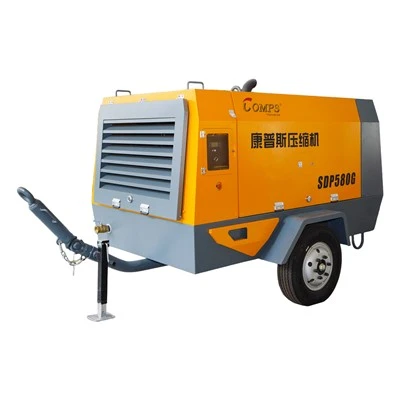
If you’re not sure what compressor is right for your die grinder, or you need help picking the right hose and regulator, feel free to reach out. We’ve got techs who’ve been doing this for decades, we can walk you through what you need based on your specific grinder and the jobs you’re doing. No pressure, just honest advice, like we’ve been doing for years.
Electric Air Compressor Reference: 1. Air Power Distribution Handbook by Compressed Air and Gas Institute, 2019; 2. Pneumatic Tool Performance Guidelines, Occupational Safety and Health Administration (OSHA), 2022; 3. Industrial Air Compressor Operation and Maintenance Manual, Gardner Denver, 2021.
Comps Compressor (Shijiazhuang) Co., Ltd.
As one of the most professional air compressor manufacturers and suppliers in China, we’re featured by quality products and good price. Please rest assured to buy customized air compressor made in China here from our factory. Also, pricelist is available.
Address: No.172, Nanche Road, Shijiazhuang Equipment Manufacturing Industrial Park, Luancheng District, Shijiazhuang City, Hebei Province
E-mail: kpswmb@kangpusi.com
WebSite: https://www.comps-compressor.com/
