Hey there! Let’s cut through the noise for a sec — if you’ve ever watched a local non-profit rally the whole town for a park expansion, disaster relief, or youth mentorship program, you’ve probably seen that rolling, eye-catching thing driving around, blaring a catchy jingle, and stopping dead in a grocery store parking lot to let kids grab free stickers while volunteers pass around clipboards. That, my friend, is a campaign truck. And if you’re like most folks who’ve only ever seen one in passing, you’re probably wondering: what even is a campaign truck for fundraising, anyway? Campaigns Truck
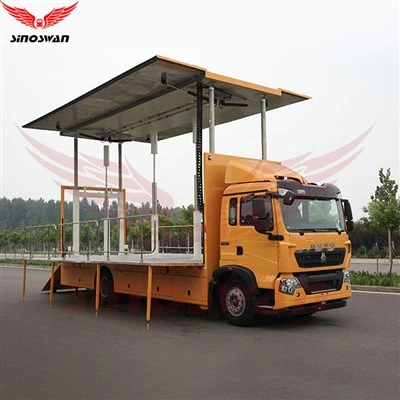
I get it — I sell these bad boys, and even I used to mix up the lingo back when I first got into this game. People think they’re just “pretty food trucks” or “moving billboards,” but let me tell you, there’s a science (and a whole lot of chaos) to how these things actually work. This isn’t just slapping a logo on an RV and calling it a day. For the non-profits, grassroots campaigns, and advocacy groups I partner with, these trucks are their mobile headquarters, their secret weapon, and the thing that turns “maybe I’ll donate” into “wait, I can help right now” — all on a dime, no fancy office space required.
Let’s start with the basics, because I need to make sure we’re all on the same page here. A campaign truck for fundraising is a custom-built, mobile vehicle designed exclusively to power on-the-ground fundraising, outreach, and community engagement for non-profits, political campaigns (wait, yes, political campaigns use these too — more on that later!), and social justice groups. Unlike a standard work truck or a delivery van, every inch of these things is built with one goal: to connect with people, not just move from A to B.
But here’s the part most people don’t see: these trucks aren’t one-size-fits-all. I’ve built ones that double as free first-aid stations for disaster response groups, ones that have a whole mini classroom setup for after-school literacy programs, and ones that have a sound system so good you can hear the jingle three blocks over (and no, I don’t use cheap speakers — trust me, I’ve learned that lesson the hard way). The core is always the same, though: it’s a space to talk to people, collect donations, and build trust, even when you’re parked in a random Target lot on a Saturday afternoon.
Now, let’s get into why these things work so well, because I’ve seen first-hand how they turn casual passersby into monthly donors. Let’s be real: in 2024, most fundraising is online. You get an email, a TikTok, a text asking for $5 — and 9 times out of 10, you ignore it, right? It’s not that you don’t care; it’s that there’s no real person behind the ask. You can’t shake a hand, see someone’s passion, or ask, “Wait, what’s my $20 actually going to do?”
That’s where the campaign truck comes in. It’s the antidote to digital fundraising fatigue. When you pull up to a parking lot with a truck that’s wrapped in bold, clear graphics (“Help 50 kids get winter coats this month!”), has volunteers waving at you, and a table loaded with flyers and swag (think branded stickers, wristbands, or even homemade cookies — yes, cookies work), you stop. You don’t have to open an app or type a credit card number; you can chat for 2 minutes, ask questions, and hand over cash or Venmo right there.
Last year, I worked with a small animal rescue group in Ohio that was struggling to hit their $15k goal for a new spay/neuter clinic. They had a social media following of about 8k, and their online fundraising goal was dragging. We deployed a 20-foot campaign truck, wrapped with photos of the rescue’s happiest dogs (the ones that got adopted) and a sign that read “Drop off a $10 food donation or $20 cash — we’ll take both!” They parked it outside a busy pet supply store every Saturday for a month. By the end of the month, they’d raised $22k — almost 50% of that came from people who stopped at the truck, many of whom had never heard of them before. One lady even said she only stopped because she “loved the sparkly dog wrap on the truck” and left with a $500 check. That’s the power of in-person connection, and that’s exactly what a campaign truck does.
Wait, but don’t let me fool you — these trucks aren’t just for local small-scale groups. I’ve built ones for national advocacy organizations, too. Last year, a national climate group used a 30-foot campaign truck for a tour of 12 mid-sized cities. The truck had a small screen that played short videos of local farms affected by drought, a section where people could sign up for climate advocacy shifts, and a contactless donation kiosk. They raised over $100k on that tour, and more importantly, they got 2,000 people to sign up for ongoing volunteer work — something online asks rarely drive.
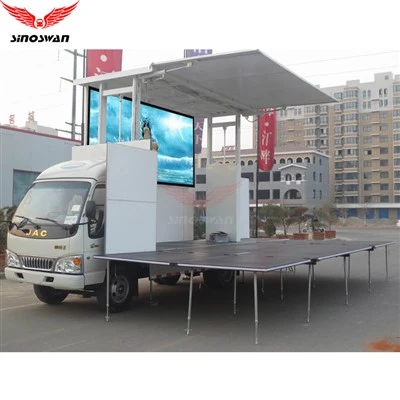
Now, let’s talk about the nuts and bolts, because if you’re a non-profit considering getting one, you need to know what you’re actually paying for (and why it’s worth it). When I build a campaign truck, I start with the base: most people use a step van or a shuttle bus because they’re easy to maneuver in tight parking lots, but some groups that need more space go for box trucks or even converted tour buses. Then we customize it from there:
- The exterior wrap: No boring stuff. It has to be bold, tell a story in 2 seconds, and have a clear call to action. If people can’t read what you’re asking for from 50 feet away, you’re wasting your time.
- The interior: We add a raised counter for volunteers, a secure donation station (cash, card, mobile pay — all encrypted, so no issues with theft), storage for flyers and swag, and sometimes even a small A/C unit or heater, because no one wants to chat with you if you’re sweating through your shirt in July or freezing in January.
- Tech: I don’t skimp here. We put in solar panels so the truck can run all day without hooking up to a power outlet, a sound system for announcements, and sometimes a portable Wi-Fi hotspot so volunteers can process donations on the spot. For groups that do educational stuff, we add small TVs to play videos or a mini stage for guest speakers.
Oh, and something most new groups forget: compliance. When you’re collecting money in public, you have to make sure you’re following local laws for fundraising, and the trucks come with that built-in too — we can get temporary permits for events, and the donation stations track all the paperwork you need for tax receipts. That’s a huge weight off non-profits’ shoulders, because nobody wants to get fined for running a fundraising event without the right papers.
Wait, and let’s not touch on the other use cases, because I lied earlier — campaign trucks aren’t just for fundraising. A lot of political campaigns use them too, right? Think of a mayoral candidate driving a truck to small towns, stopping at diners, chatting with voters, and collecting donations on the fly. Or school districts using them to host “enrollment drives” where parents can sign up their kids for after-school programs and donate supplies. It’s not just a money-making tool; it’s a mobile community hub.
But here’s the real question I get all the time: is a campaign truck worth the investment, especially for a small non-profit with a tight budget? The short answer is: yes, if you use it right. Let’s do a quick numbers check. A basic campaign truck build (a step van with wrap, basic interior, and donation station) runs between $20k and $40k. If a small group uses it to raise an extra $10k a month for 3 months, that’s $30k — and that’s not even counting the volunteer sign-ups, which often lead to long-term support.
I had a client last year: a teen suicide prevention group in Michigan that had $5k total in their bank account, and they thought a truck was out of their price range. We worked out a payment plan, and they used the truck at 8 high school football games and local community events. They ended up raising $18k in 2 months, and now they’re using that money to run weekly peer support groups at the high schools. For them, that truck wasn’t an expense — it was a lifeline.
Now, let’s get real about the challenges, because I don’t want to paint a perfect picture. Building a campaign truck isn’t cheap, and it’s not something you can buy and forget about. You have to maintain it, fuel it, store it when you’re not using it (I offer secure storage for my clients, because nothing sucks more than coming back to a truck with a broken wrap or a dead battery), and you have to have volunteers who know how to use all the tech. Also, you can’t just park it anywhere — you have to coordinate with local businesses or event organizers to get permission, and that takes time.
But here’s the thing: when you weigh the pros against the cons, there’s no other tool in fundraising that combines reach, connection, and flexibility like a campaign truck. You can take it to anywhere people are: farmers markets, music festivals, parades, low-income neighborhoods where people don’t have easy access to computers, college campuses, you name it. You can’t do that with a website or a social media post.
So, if you’re a non-profit director, advocacy coordinator, or community organizer who’s tired of watching your online fundraising goals fall short, or you’re struggling to get people to actually care about your cause beyond a one-time donation, a campaign truck might be exactly what you need. These things aren’t just vehicles — they’re a bridge between organizations and the people they serve. They turn strangers into supporters, small asks into big impact, and “I’ll think about it” into “I’m in.”
I’ve been building campaign trucks for over 10 years now, and I’ve seen so many groups go from scraping by to making real, lasting change because they had that rolling space to connect. I’ve had a single mom come up to a hunger relief truck and donate her last $5 because she saw that the group was handing out free groceries to people like her. I’ve had a group of high school students stop at a mental health truck and sign up to be peer mentors, saying they never would’ve done that if it was just an online form. Those are the moments that make this job worth it, and that’s what a campaign truck is really all about — not just raising money, but building a community around a cause.
If you’re curious about what a campaign truck could do for your group, or you want to chat about customization, pricing, or even how to make one fit your tight budget, I’m here to talk. No sales pitch, no jargon, just real talk about how these trucks work and how they can help you hit your goals. Just reach out, and let’s figure it out together.
Mobile Election Truck References:
- National Council of Nonprofits. (2023). Mobile Fundraising: Trends and Best Practices for 2023. Nonprofit Quarterly.
- Center for Community Engagement. (2022). The Impact of In-Person Outreach on Small Nonprofit Fundraising. Journal of Grassroots Organizing.
- U.S. Small Business Administration. (2021). Custom Mobile Units for Community Outreach: Cost-Benefit Analysis for Small Nonprofits. SBA Office of Advocacy.
- Nonprofit Tech for Good. (2023). Digital Fatigue and the Rise of Offline Fundraising Tactics. Nonprofit Tech For Good Blog.
Zhengzhou Sinoswan Tech Co., Ltd.
Zhengzhou Sinoswan Tech Co., Ltd. is one of the most professional campaigns truck manufacturers and suppliers in China. We are committed to providing high quality customized products for global clients. We warmly welcome you to wholesale durable campaigns truck for sale here from our factory. Also, quotation is available.
Address: No.21 Shangdu Road, Zhengzhou, Henan Province, China
E-mail: info@sinoswan.com
WebSite: https://www.electiontruck.com/
