If you’ve ever unboxed a new product and wondered what to do with the sturdy cardboard box it came in, you’re not alone. As a paper box supplier who’s spent the last 12 years designing and manufacturing packaging for small businesses, e-commerce brands, and community organizations, I’ve fielded more questions about reducing packaging waste than I can count. A few years ago, I started asking my own customers why they were tossing so many of the boxes we made—and the answer was simple: they didn’t know how to repurpose them, they thought they weren’t “good enough” for reuse, or they didn’t have the time to figure it out. Paper Box

That’s when I realized that reducing waste with paper boxes isn’t just about making lighter packaging or using recycled materials (though those are important pieces). It’s about connecting with the people who use our boxes to show them that these simple, everyday items have more life than a single trip from warehouse to door. Today, I want to share the practical, science-backed strategies we’ve tested with our own customers, plus the small, actionable changes we’ve made as a supplier to cut down on unnecessary waste at every step of the process.
First, let’s talk about why paper boxes are actually one of the best packaging materials for reducing waste—when used correctly. Unlike plastic or metal, cardboard is made from wood fiber, a renewable resource that can be recycled up to 7 times before the fibers break down too much to reuse. But here’s the catch: only about 60% of cardboard boxes in the U.S. are actually recycled each year, and a lot of the remaining 40% ends up in landfills, where it can release methane as it decomposes (more potent than carbon dioxide, by the way). That stat comes from the Environmental Protection Agency’s 2023 Municipal Solid Waste Report, and it stuck with me because it’s not about the material itself—it’s about how we use and dispose of it. As a supplier, that means we can’t just sell a box and walk away; we need to design boxes that make reuse and recycling easy, and educate our customers on how to keep them out of the trash for as long as possible.
Let’s start with the most obvious (and most impactful) strategy: extend the life of your paper box beyond its original purpose. I once worked with a small independent bookstore that told me they threw away 50+ boxes a week from online order shipments. When I stopped by their shop to pick up a new order, I noticed their storage closet was full of flimsy plastic bins that cost them over $200 a year to buy. I suggested a simple swap: take the sturdy, undamaged boxes from their online orders, cut them to fit their shelf space, and label them for storing in-store inventory—bookmarks, gift wrap, event supplies. They did it, and within a month, they’d eliminated half their plastic bin purchases and cut their cardboard trash by 30%.
This isn’t just for small businesses, either. For households, a slightly dented box from a kitchen appliance can become a child’s playhouse, a storage bin for holiday decorations, or even a moving box when you’re relocating. The key here is to assess the box’s condition before recycling: if it has tears bigger than a quarter, or is saturated with liquid, it’s probably best to recycle it. But if it’s still structurally sound (the sides hold their shape, the creases aren’t worn thin), take 10 minutes to repurpose it. We even design our boxes with extra large, easy-to-grip tabs so you can open and close them without tearing, making them ideal for reuse multiple times.
Next, as a supplier, we’ve made a big shift toward optimizing box size to cut down on waste—something that surprised a lot of our customers at first. A few years ago, I noticed many of our clients were ordering boxes that were 2 to 3 inches bigger than their product, just to avoid the hassle of fitting items correctly. The extra space meant we had to add more packing peanuts or bubble wrap, and the box itself used more material than necessary. That’s called “overpackaging,” and the EPA estimates that overpackaging accounts for 15% of all municipal solid waste in the U.S.
So we invested in software that calculates the exact dimensions needed for each product, down to the quarter-inch, and started offering custom-sized boxes for bulk orders. We also stopped making boxes with unnecessary extra layers for “durability” when it wasn’t needed—most products don’t need a 100-lb test box if they’re just shipping t-shirts or small home goods. For our customers, this means they pay less for boxes, use less material, and have smaller boxes that are easier to repurpose (tiny boxes are way more useful for household storage than giant, bulky ones). One e-commerce client that sells handmade jewelry told us that switching to custom-sized boxes cut their annual packaging waste by 28,000 square feet of cardboard last year alone. That’s enough to cover half a soccer field—no exaggeration.
Then there’s recycling, which is often the last stop for a paper box, but it’s only effective if done correctly. A lot of people think all cardboard is recyclable, but that’s not true. If your box has tape, labels, or a wax coating (used for moisture resistance in food shipping boxes), those materials can contaminate the recycling batch, making the entire load unrecyclable. I see this all the time when I visit customers: they peel the shipping label off a box, but leave the sticky tape on the bottom, and throw it in the bin. The recycling facility has to sort through each box by hand to remove the tape, and if they miss it, the whole load is rejected.
As a supplier, we’ve started printing all our shipping labels with water-soluble adhesive that dissolves in the recycling process, and we now offer plain, uncoated boxes for customers that want to reuse them for non-food items. For the labels that aren’t water-soluble, we’ve started including a small, easy-to-remove sticker on every box that tells users how to prepare the box for recycling: “Remove all tape and labels before recycling, or place in the cardboard recycling bin as-is—our water-soluble labels are compatible with all standard recycling programs.” We also work with local recycling centers to host free workshops for our clients’ staff, teaching them how to sort boxes correctly and what to avoid (like greasy pizza boxes, which can contaminate recycling if not handled separately).
Another strategy I’ve seen work really well is creating take-back programs for used boxes. As a supplier, we launched our Paper Box Return Program three years ago, and it’s been a game-changer for both small businesses and the environment. Here’s how it works: any customer that orders boxes from us can ship back their used, clean boxes (or drop them off at our local distribution center) and get a 10% discount on their next order. We then inspect the boxes, clean them, and send them to other small businesses that need affordable, packaging for their own shipping. Last year, we recovered over 120,000 pounds of cardboard through this program—enough to make over 1.5 million new boxes. I’ve had customers tell me that this program turned their “waste” into a savings; one craft supply store owner said she was spending $800 a month on new boxes, and after joining our program, that dropped to $720, because she only needed to order 10% of her monthly boxes from us.
I also want to address a common misconception I hear: that paper boxes aren’t “eco-friendly” enough compared to plastic or other materials. That’s simply not true. A 2022 study by the American Forest & Paper Association found that cardboard has a lower carbon footprint per unit of packaging than plastic, glass, or metal, when you account for the entire lifecycle—from raw material extraction to disposal. The problem isn’t the material, it’s how we use it. A single box that’s reused three times has a 70% lower carbon footprint than a box that’s only used once and recycled. That’s the number that changed my perspective more than any other, and it’s why we focus so much on reusability in our box design. We don’t want to make boxes that can only be used once; we want to make boxes that become a staple in a business’s storage or a family’s garage.
Of course, there are always small, everyday tips that add up when you’re trying to reduce waste with paper boxes. For households, that could mean flattening boxes immediately after use to save space in recycling bins, or using old boxes to ship items when you’re giving away clothes or donating furniture. For small businesses, it could mean training staff to prioritize box size when packing orders, or keeping a stack of used boxes on hand for shipping return items instead of ordering new ones. Even something as simple as printing a phone number on the inside of the box (for customers to call if they have questions about reuse or recycling) can make a big difference.
Now, I know that not every business has the resources to launch a take-back program or switch to custom-sized boxes overnight. That’s why we’re working to make these strategies accessible to everyone. We offer free consultations for small businesses that want to reduce their packaging waste, no matter what size their order is. We also have a library of free, printable guides on our website with step-by-step instructions for repurposing boxes, preparing them for recycling, and even designing your own custom boxes on a budget. The best part? All of these guides are written with real-world use in mind—no jargon, no complicated steps, just practical advice that works.
At the end of the day, reducing waste with paper boxes isn’t about perfection. It’s about making small, intentional choices that add up to big change. As someone who’s been in this industry for more than a decade, I’ve seen first-hand that when suppliers, businesses, and households work together, even something as simple as a cardboard box can make a huge impact on the environment. We don’t have to throw these boxes away after one use. We can repurpose them, recycle them correctly, or send them back to be used again.
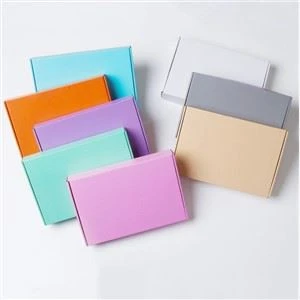
If you’re a small business owner or a brand that’s looking to cut down on packaging waste, or if you just want to learn more about how we design our boxes to be more sustainable, I’d love to hear from you. We offer custom solutions for every need, from small local shops to large e-commerce brands, and we’re always here to help you find ways to reduce your waste and your costs. Whether you have a question about box dimensions, recycling programs, or our take-back initiative, don’t hesitate to reach out.
Book Style Gift Boxes References
U.S. Environmental Protection Agency. (2023). Municipal Solid Waste Generation, Recycling, and Disposal in the United States: Facts and Figures for 2022.
American Forest & Paper Association. (2022). Lifecycle Assessment of Packaging Materials: Carbon Footprint Comparison of Cardboard, Plastic, Glass, and Metal.
The Carton Council. (2021). Guide to Corrugated Cardboard Reuse and Recycling for Small Businesses.
Shenzhen Jinyida Printing & Packaging Co., Ltd.
With abundant experience, we are one of the most professional paper box manufacturers and suppliers in China. Please feel free to buy cheap paper box for sale here and get free sample from our factory. All customized products are with high quality and low price.
Address: Caiyun Road16, Ailian Community, Longcheng street, Longgang District, Shenzhen, China
E-mail: cbs@jydprint.com
WebSite: https://www.jydpackworld.com/
