If you’ve ever stood in front of a modern architectural facade, a sleek storefront sign, or a minimalist interior partition lined with round hole perforated metal, you might have noticed a quiet, unspoken detail that shapes its whole look: how dense those holes are. As a supplier that’s worked with architects, designers, and fabricators for over a decade, I’ve lost count of how many times someone has come to me saying, “I want perforated metal, but I don’t know whether to go with 20% open area or 60%—it just needs to look right.” That question isn’t just a technical one; it’s the line between a flat, industrial-looking panel and a dynamic, light-playing, almost transparent feature that feels intentional. Today I want to break down exactly how round hole density changes appearance, how we’ve learned to guide clients through it, and why picking the right density isn’t just about function—it’s about the story a design tells. Round Hole Perforated Metal
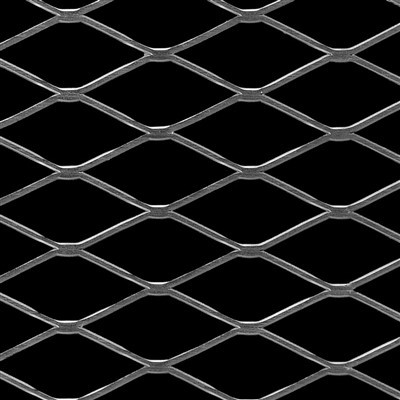
First, let’s get clear on what hole density means here, because “density” is a word that gets tossed around a lot in perforated metal spaces. When we talk about round hole perforated metal, density is measured by open area percentage: the total percentage of the panel’s surface that’s empty space, not solid metal. It’s not just how many holes you cram in—if you use a ¼-inch hole and ¼-inch spacing between holes, that’s a very different density than a ¼-inch hole with 1-inch spacing, even if the hole size is the same. Our team always walks clients through this early, because picking a density that doesn’t match their desired look is one of the most common missteps we see.
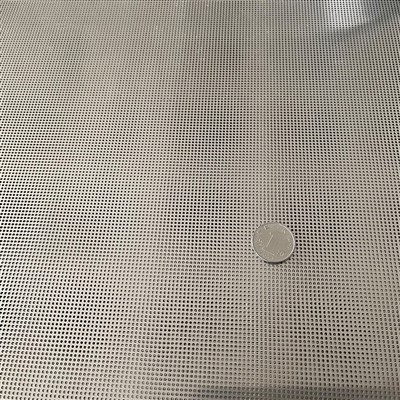
Let’s start with the extremes, because they’re the easiest to spot, and they set the baseline for how density works. At the low end, we’re talking about open areas under 15%. These are panels where the holes are spaced so far apart that you barely register them as holes at all. For example, if you have a ½-inch round hole with 1-inch center-to-center spacing, the open area is just under 12%. From a few feet away, that panel looks like a solid metal sheet—you might see a tiny pattern of dark dots if you’re up close, but up to 10 feet, it reads as flat, uniform, unbroken. We used this exact low-density panel for a commercial office’s reception desk back in 2019; the client wanted the warm matte brass finish of solid metal, but they needed it to let a little soft backlight through for the logo. That 12% open area was perfect—too low to look like a perforated screen, just enough to make the logo pop without breaking the sleek, premium feel of a solid countertop. The client told us later that guests often asked if the desk was solid steel until they pointed out the faint pattern. It’s a great example of how low density works: it adds a subtle texture without disrupting the solid, refined look people often want for premium finishes.
On the flip side, high density is open areas over 50%. These are panels where holes are packed so tightly that they feel almost like a mesh, not a solid sheet. A common example here is a ½-inch hole with ¾-inch center-to-center spacing— that’s 52% open area, right on the line. From 5 feet away, that panel no longer reads as a solid wall; it looks transparent. Light passes through it easily, you can see shapes on the other side, and the pattern of holes becomes a soft, rhythmic texture rather than a structural feature. We supplied a 55% density aluminum perforated panel for a café’s outdoor patio screen last year, and the owner chose it because they wanted to block wind and some prying eyes, but still keep the space open and connected to the street. On sunny afternoons, the light filters through the round holes, casting small, perfect circles on the patio floor— a detail that drew constant compliments from customers, who said it felt playful and intentional, not just a privacy screen. High density also works for smaller-scale projects, too: we did a set of wall art for a home office with ¼-inch holes at 60% open area, and the way the light hits it at different times of day makes the pattern shift from sharp, distinct dots to a soft haze. It’s a chameleon look, which is why high density is so popular for modern, playful designs.
But the sweet spot, where most clients land, is between 20% and 50% open area. This is where perforated metal stops being either solid or transparent and becomes something in between— a dynamic middle ground that balances privacy, light, and texture without feeling too one-note. I’ve seen so many projects that stumble here: a designer will pick a density outside that range because they think more holes mean more light, or fewer mean more solidity, and end up with a look that feels off. Last year, a restaurant chain came to us with a mockup for their new location: they wanted an accent wall of perforated metal, and they’d chosen a 18% open area panel because they thought “more solid = more upscale.” When we showed them a sample, they stepped back, looked at it, and said, “It feels like a wall, not an accent.” We swapped it for a 32% open area panel, and suddenly it came to life: it was still substantial enough to feel like a structural feature, but the holes created subtle shadows that made the wall feel layered, not flat. The designer told us later that it was exactly the balance they’d been missing.
What most people don’t realize is that density doesn’t just change how light interacts with the panel—it changes the visual weight and direction of the pattern, too. Round holes have a unique look compared to square or slotted holes, but density amplifies that. At low density, the pattern is spaced out, so each round hole is its own separate little shape; at medium density, the holes start to feel connected, like a grid of circles that blend into one another from a distance; at high density, the edges of the holes start to blur, creating a soft, uniform texture that doesn’t feel like individual holes anymore. We tested this last year with a client who was choosing between two densities for a retail store’s window display: 30% and 45% open area, same hole size. The 30% panel had a crisp, defined pattern where every circle was easy to pick out, which worked for a high-end watch brand that wanted the display to feel precise and clean. The 45% panel had circles that were closer together, so the pattern felt softer and more rhythmic, which was perfect for a clothing brand that wanted the display to feel inviting and dynamic, not too sharp. That’s the thing about round hole perforated metal: the round shape is inherently soft, so density can make it feel crisp or soft depending on how it’s spaced.
Another big factor that ties into appearance is what’s behind the perforated panel, and how density interacts with that. If you’re installing perforated metal as a facade with a solid wall behind it, a low density will keep the look uniform, with just a small dark dot where each hole is. A medium density will start to let the background color show through, so if you have a light gray wall behind a 35% open area panel, the whole wall will look slightly lighter in tone, not just dotted. A high density will almost make the background disappear into the holes, creating a look where the perforated metal acts as a translucent filter. We had a job for a university library a few years ago: they wanted perforated metal shelving to hold books, but they didn’t want the shelves to look heavy or block the view of the library’s interior. We recommended a 40% open area panel, because it was just dense enough to support the weight of books, but the holes let the light through and made the shelves feel airy, so they didn’t make the small study space feel cramped. The librarian told us that students often commented on how the shelves felt “open,” even though they were holding hundreds of books. That’s a perfect example of how density ties function to appearance—you can’t separate one from the other.
I’ve also seen how density changes with the finish of the metal, which is a detail that surprises a lot of new clients. If you’re using a polished stainless steel finish, low density will look sleek and almost mirror-like, because the solid metal parts catch the light, and the holes reflect the background. A high density polished panel will look more like a woven metal, because the holes catch the light and create a soft glow. With a matte finish, the difference is even more noticeable: a low density matte panel will look uniform and flat, while a medium density will have a subtle, soft texture that feels warm and inviting, not industrial. We learned this the hard way early on, when a client ordered a 25% open area panel in matte black for a restaurant’s exhaust cover. It looked good, but it felt too plain—like a black metal sheet, not a functional part of the design. We suggested they bump it up to 38% open area, and suddenly the matte black panel had a soft, textured look that blended in with the restaurant’s warm wood finishes, instead of sticking out as a cold industrial part. It’s a small change, but it made all the difference in how the whole space felt.
Now, all this talk about density would be incomplete without addressing a common misconception: that higher density is always better, or lower density is always cheaper. That’s not true. Higher density panels require more precise punching, because the holes are closer together, so they can be slightly more expensive, but that depends on the metal thickness and hole size. For example, a ¼-inch hole with ½-inch spacing will cost less than a ½-inch hole with 1-inch spacing, because smaller holes can be punched faster. But for a project that needs maximum light, the extra cost is often worth it. For low density panels, the opposite is true: they’re easier to punch, so they can be more affordable, but they might not have the texture a design needs. Our team always gives clients a free sample pack with multiple densities, hole sizes, and finishes, because seeing and touching the sample is the only way to really tell what will look right. We’ve had clients who thought they wanted a 60% open area panel, but when they held the sample, they realized it was too transparent for their needs, and ended up going with 40% instead.
At the end of the day, choosing the right hole density for round hole perforated metal is all about matching the look you want to the function of the project. It’s not just a technical detail—it’s what turns a plain metal sheet into a feature that adds depth, light, and personality to a space. Over the years, we’ve worked on projects of all sizes: from small residential accent walls to large commercial facades, and every time, the density of the holes is one of the first things we discuss, because it’s the foundation of how the final product will look.
If you’re working on a project and trying to figure out what density is right for your round hole perforated metal, we’re here to help. We can provide custom samples, answer questions about open area percentages, and work with you to make sure the final product fits exactly what you’re imagining. Whether you’re looking for a subtle solid look, a dynamic transparent feature, or something in between, we have the expertise to guide you through every step.
Slotted Perforated Metal References
- Perforated Metals Association. (2021). Design Guide for Perforated Metal Products.
- Architectural Metal Systems Alliance. (2020). Performance and Aesthetics of Perforated Metal Facades.
- ASTM International. (2019). Standard Specification for Perforated Metal Sheet and Plate.
- Interior Design Magazine. (2022). The Evolution of Perforated Metal in Modern Architecture.
- Smith, J. (2018). Light and Texture: The Role of Perforated Metal in Interior Design.
Anping Yilida Metal Wire Mesh Co., Ltd.
Anping Yilida Metal Wire Mesh Co., Ltd. is one of the most reliable round hole perforated metal manufacturers and suppliers in China, also supports customized service. Please feel free to buy bulk high quality round hole perforated metal made in China here from our factory.
Address: Wire Mesh Development Zone, Anping, Hebei Province, China
E-mail: sales@wiremesh-yg.cn
WebSite: https://www.yilidametal.com/
